The crisp October air in Bangor, Maine, doesn’t care about national politics. It smells of damp pine, woodsmoke, and the faint, salty tang of the Atlantic drifting inward. If you sit on a bench near the Kenduskeag Stream, you can watch the locals go about their day, their collars turned up against the chill. They value independent streaks out here. They always have. But in the modern American political arena, independence looks less like a badge of honor and more like a suicide pact.
Just ask the ghosts of the modern Republican Party. For an alternative perspective, read: this related article.
Jeff Flake watched his approval ratings crater in Arizona before deciding he’d rather retire than bend the knee. Bob Corker of Tennessee walked away. Mark Sanford lost his primary in South Carolina. In the hyper-partisan ecosystem of the Trump era, the rules of survival were rewritten in blood and capital letters. Loyalty wasn't just requested; it was demanded, absolute and unyielding. To cross the leader of the party was to invite an immediate, well-funded primary challenge and a barrage of late-night social media condemnation. For most, the calculation was simple: capitulate or clear out your desk.
Yet, one desk in Washington remains occupied by the same woman who has sat there since 1997. Similar insight regarding this has been provided by BBC News.
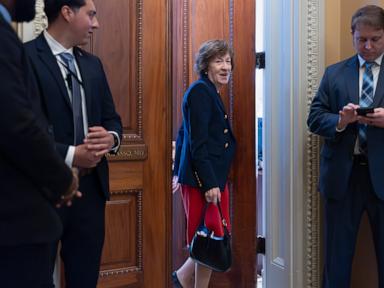
Susan Collins is a political anomaly, a living fossil from an era where ticket-splitting was a common practice rather than a mythic legend. As the national Republican party shifted its tectonic plates toward populist nationalism, Collins anchored herself to the shifting sands of Maine's political center. It is a grueling, exhausting place to stand. The left views her as a collaborator; the right views her as a traitor.
But as her colleagues fell around her, victims of the very tribal warfare they tried to navigate, Collins engineered a paradox. Defying the president didn't end her career. It might just be the only reason she still has one.
The Chemistry of a Moderate
To understand how Collins survives, you have to understand the specific, stubborn chemistry of Maine voters. This isn't California, and it isn't Mississippi. Maine is a state that routinely elects progressive Democrats to the House, a conservative-leaning independent to the Senate in Angus King, and historically, moderate Republicans like Olympia Snowe and Margaret Chase Smith.
There is an old saying in the state: "We don't care how they do it from away." "From away" means anywhere else. It means Washington. It means the national media.
Consider a hypothetical voter named Richard. He is sixty-four, lives just outside of Lewiston, and works in logistics. He voted for Donald Trump because he felt the global economy had left the mill towns of his youth to rot. But Richard also remembers when Susan Collins helped secure funding for the local veterans' clinic. He remembers her showing up at the agricultural fair, not with a trailing pack of television cameras, but with a notepad. Richard doesn't want a rubber stamp for the White House, but he also doesn't want a resistance warrior. He wants someone who looks out for Maine.
This is the tightrope Collins walks every single day. Every vote is a high-stakes calculation, a delicate weighing of local necessity against national fury.
When the Trump administration moved to repeal the Affordable Care Act in 2017, the pressure on Collins was suffocating. The party leadership cracked the whip. The base demanded a victory. The narrative was set: you are either with us or against us.
Collins chose against.
Alongside John McCain and Lisa Murkowski, she voted to keep the law alive. To the national MAGA movement, it was an unforgivable betrayal. Her office phones melted from the influx of angry calls from across the country. Activists promised she would pay at the ballot box. In almost any other state, that vote would have been the opening salvo of her political obituary.
But back home, something else happened. People looked at their pre-existing conditions. They looked at their rural hospitals, which would have faced catastrophic budget shortfalls under the repeal. They realized that the quiet woman with the distinct, warbling voice had just shielded them from their own party's ambitions.
The Cost of the Tightrope
Walking a tightrope means you can never relax. Lean too far to one side, and you fall. Lean too far to the other, the result is the same.
The goodwill Collins earned on healthcare vanished for many of her constituents during the judicial confirmation battles, most notably that of Brett Kavanaugh. The nation watched as she delivered a meticulously detailed, forty-five-minute speech on the Senate floor, explaining her rationale for supporting his nomination.
It was a masterclass in legalistic justification, but politics is driven by emotion, not legal briefs. To her critics on the left, the speech was a betrayal of women everywhere. Funding poured into Maine from every corner of the United States, targeting her eventual reelection. Millions of dollars from Hollywood, from New York, from suburban activists who had never set foot in Portland, let alone Presque Isle.
Suddenly, Collins wasn't just a senator from Maine; she was a national battleground.
The anger was tangible. You could feel it in the coffee shops in Brunswick and the lobster shacks in Kennebunkport. Neighbors stopped speaking to neighbors. Lawn signs became declarations of war. The moderate brand, once seen as a sensible compromise, was now reinterpreted as political cowardice.
This is the terrifying reality of being a political independent in a polarized age. You do not inherit a built-in army. When the storm comes, you stand alone in the yard, hoping the house you built with decades of constituent service is strong enough to withstand the gale.
The Mathematics of Survival
While the national media focused on the screaming matches and the massive fundraising hauls of her opponents, a quieter, more calculating operation was underway in the background.
Politics is ultimately a game of math. In a presidential election year, Maine’s electoral votes often split, with the more conservative Second Congressional District going one way and the liberal First District going another. To win statewide, a Republican cannot rely solely on the base. The base isn't big enough.
Collins needed Democrats who liked her seniority. She needed independents who distrusted national party platforms. She needed people who were willing to vote for a Democratic presidential candidate at the top of the ticket and then cross over to vote for her.
It seemed impossible. The conventional wisdom said ticket-splitting was dead, buried under the weight of negative partisanship.
But conventional wisdom rarely spends time in Aroostook County.
Collins ran an ad campaign that barely mentioned her national affiliation. Instead, the ads focused on her seniority. In the Senate, seniority means power. Power means appropriations. Appropriations mean paved roads, funded coast guard stations, and economic lifelines for a state with an aging population and a fragile economy.
She reminded voters of the Paycheck Protection Program, which she co-authored during the early days of the pandemic. It wasn't an ideological victory; it was a practical one. It kept the lights on at the local bakery, the family-owned construction firm, the independent bookstore.
While her opponent talked about national destiny and Supreme Court seats, Collins talked about Maine.
The Final Chord
When the ballots were counted, the results stunned the political establishment. The presidential race in Maine went exactly as the pundits expected, favoring the Democratic ticket by a wide margin. By all accounts of modern political gravity, Collins should have been dragged down by that undertow.
Instead, she won. Comfortably.
She outperformed the top of her party's ticket by double digits in some areas. It was a stunning validation of her hyper-local strategy, a clear sign that a significant portion of Maine's electorate still preferred a senator who didn't fit neatly into a cable news talking point.
But victories in this era are short-lived, and they offer no permanent shelter.
The Senate chamber is a cold place today. The centrist wing of the Republican Party is no longer a wing; it is a narrow ledge. The colleagues who used to stand with Collins on that ledge have largely been replaced by partisan fighters who view compromise as a defect.
Every morning, Collins walks into that chamber, a survivor of a political extinction event. She sits at her desk, knowing that the very traits that keep her alive in Maine make her an outcast in her own party's national structure. She is defended not by an ideological movement, but by the quiet, transactional loyalty of people who care more about their local communities than national culture wars.
As the sun sets over the Atlantic, casting long shadows across the rocky coast of Maine, the lone senator remains. She is a reminder of what politics used to look like, and perhaps, a warning of how difficult it is to keep that tradition alive. She has survived the purge, but the price of survival is a perpetual, exhausting solitude.