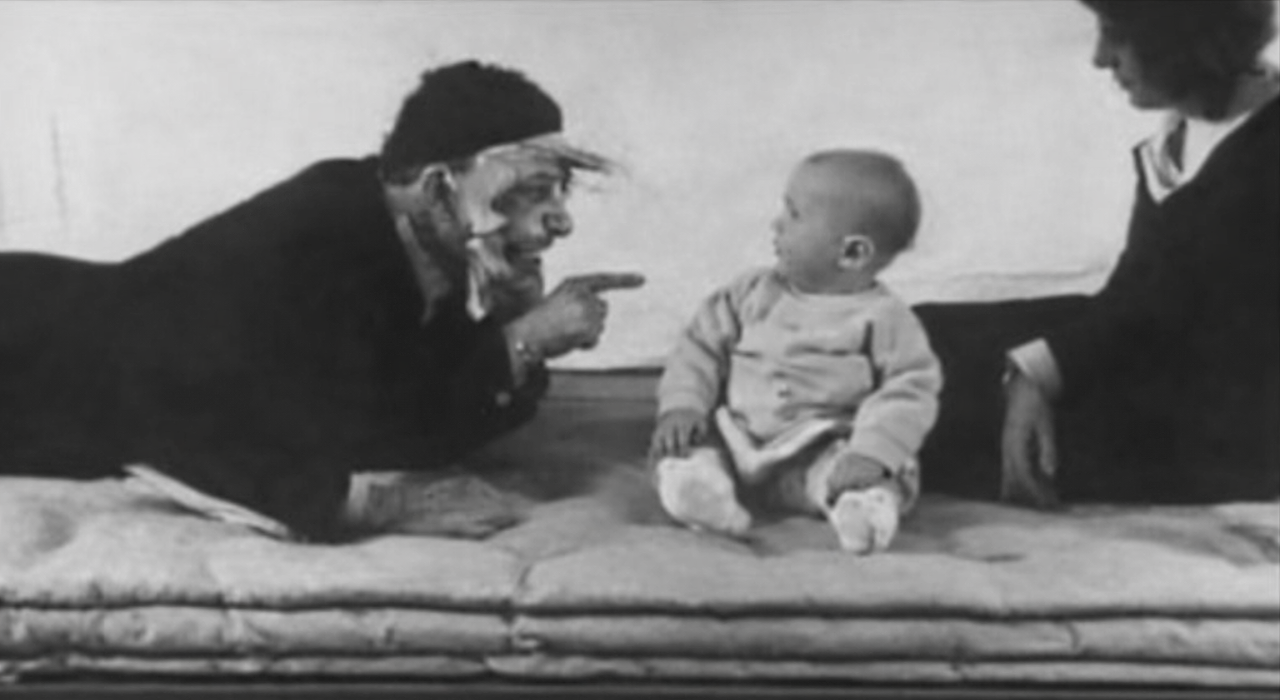
In 1920, John B. Watson and Rosalie Rayner conducted a study at Johns Hopkins University that would eventually define the ethical boundaries of modern psychology. They took an infant, known to history only as "Albert B.," and systematically trained him to scream in terror at the sight of a white rat. While the experiment is often cited in textbooks as a foundational example of classical conditioning, the reality behind the laboratory doors was far more disturbing than a simple lesson in stimulus and response. This wasn't just science. It was a calculated assault on a child's neurological development, performed by a man who would later use these same manipulation tactics to revolutionize the cutthroat world of American advertising.
The "Little Albert" experiment sought to prove that human emotions could be engineered. Watson, a staunch behaviorist, rejected the idea of the unconscious mind or internal mental states. He believed that humans were essentially blank slates, or "tabula rasa," shaped entirely by their environment. To prove this, he needed a subject with no prior emotional baggage. Albert, the son of a wet nurse at the Harriet Lane Home for Invalid Children, became that subject.
[Image of classical conditioning process]
The Mechanics of Manufactured Fear
The experiment followed a rigid, cold logic. Initially, Albert showed no fear of various animals or objects, including a white rat, a rabbit, and a dog. He was a "stolid" child, rarely crying. To create a phobia, Watson and Rayner utilized a heavy steel bar. Every time Albert reached out to touch the white rat, Watson would strike the bar with a hammer directly behind the boy’s head.
The results were immediate and devastating. After only seven pairings of the rat and the loud noise, Albert fell forward, buried his face in the floor, and began to cry. The scientists had successfully linked a neutral stimulus (the rat) with an unconditioned stimulus (the crashing sound) to produce a conditioned response (terror).
However, the experiment did not stop at the rat. Watson was interested in "generalization." He wanted to see if this manufactured fear would bleed into other areas of the child’s life. It did. Albert soon began to recoil from anything white and furry—a rabbit, a sealskin coat, and even a Santa Claus mask with a white cotton beard. The child’s world had been effectively poisoned. Every soft, comforting texture now carried the threat of an ear-piercing metallic crash.
The Disappearance of a Subject
One of the most damning aspects of the study was the lack of "deconditioning." Watson and Rayner knew they had created a lasting trauma, yet they never attempted to reverse the effects. Albert was removed from the hospital on the day the experiments ended. For decades, the fate of the boy remained a mystery, fueling a dark fascination within the psychological community.
Investigative efforts in the early 21st century by psychologist Hall P. Beck suggested that "Albert" was actually Douglas Merritte, a child who died at age six from hydrocephalus. If this identification is correct, it adds a layer of extreme professional negligence to Watson’s work. Merritte was not the "healthy" child Watson described in his papers; he was neurologically impaired. Using a sick child to prove a theory about normal emotional development is a fundamental violation of scientific integrity.
Others argue that Albert was actually William Barger, a man who lived a long life but reportedly harbored a lifelong aversion to dogs and furry animals. Regardless of his true identity, the fact remains that the researchers knowingly released a traumatized infant back into the world without any follow-up care.
From the Lab to Madison Avenue
To understand why Watson was willing to cross these lines, one must look at his subsequent career. Shortly after the Albert study, Watson was forced to resign from Johns Hopkins due to a scandalous affair with his assistant, Rosalie Rayner. He didn't stay unemployed for long. He took his knowledge of fear and behavioral triggers to the J. Walter Thompson advertising agency.
Watson didn't just change how products were sold; he changed how consumers were viewed. He argued that to sell a product, you shouldn't appeal to reason. You should appeal to the "fundamental emotions" of fear, rage, and love. He pioneered the "fear-based" advertisement, convincing mothers that they were failing their children if they didn't use specific brands of talcum powder or soap. The same man who terrified a baby with a steel bar was now terrifying a nation of consumers to drive up profit margins.
The Myth of Scientific Neutrality
The Little Albert study is often presented as a relic of a time before Institutional Review Boards (IRBs) and strict ethical codes. This perspective is dangerously reductive. It suggests that Watson simply didn't know better. On the contrary, his writings suggest he knew exactly what he was doing. He viewed the human psyche as a machine to be programmed.
The experiment was a manifestation of a specific brand of scientific hubris that persists today in various forms, particularly in the tech industry’s approach to user data and behavioral "nudging." When we see social media algorithms designed to trigger outrage or anxiety to keep users engaged, we are seeing the direct descendants of Watson’s steel bar. The goal remains the same: bypass the rational mind and command the emotional response.
Reevaluating the Legacy
The academic community still grapples with how to teach the Little Albert story. Is it a foundational stone of behavioral science, or is it a crime scene? The reality is that it is both. It proved that human behavior could be studied with the same rigor as chemistry or physics, but it also proved that science without a moral compass is merely a sophisticated form of cruelty.
Watson’s work remains a warning about the power of the observer over the subject. By stripping Albert of his humanity and treating him as a biological variable, the researchers paved the way for a century of psychological exploration that often prioritized "the data" over the well-being of the individual.
The scars on the field of psychology are deep. While modern ethics prevent a direct repetition of the 1920 study, the underlying philosophy of "behavioral engineering" has never truly gone away. It has just become more subtle, moving from the laboratory to the smartphone in your pocket.
We must acknowledge that the "Little Albert" experiment was not a failure of science, but a failure of the scientist. Watson achieved his goal. He proved that fear could be taught. In doing so, he taught us something much more important: that the most dangerous thing in a laboratory isn't the stimulus, but the person holding the hammer.
Stop viewing the Little Albert study as a historical curiosity and start seeing it as a blueprint for the psychological manipulation that defines the modern consumer experience.