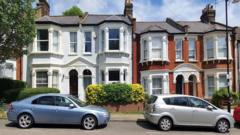
The conflict between vehicle parking and property access hinges on a specific infrastructure element: the dropped kerb. Property owners frequently assume that a driveway creates an automatic, legally enforceable zone of exclusion for external vehicles. This assumption is incorrect. In the absence of a formally lowered footway, the relationship between property access, public highway use, and enforcement mechanics shifts entirely. Resolving a driveway obstruction requires understanding the intersection of highway law, tort, and local authority mandates rather than relying on intuitive property rights.
The Dual-Status Framework of the Public Highway
To evaluate the legality of blocking a driveway that lacks a dropped kerb, one must isolate the two distinct legal regimes at play: the status of the vehicle on the road and the status of the vehicle crossing the footway. Learn more on a similar topic: this related article.
A public highway is primarily dedicated for the passage and repassage of the public. Right of access to an adjoining property is a secondary right, subservient to the primary statutory regulations governing the highway itself. When a vehicle parks on a public road in front of a standard, un-dropped kerb, its presence is evaluated through the lens of highway obstruction rather than property trespass.
The structural barrier of a standard kerb serves a specific regulatory purpose. It delineates the boundary between the carriageway (designed for vehicular traffic) and the footway (designed for pedestrian traffic). Without a dropped kerb, the local highway authority has not sanctioned the footway for vehicular transit. This missing sanction alters the legal rights of both the property owner and the parking motorist. More analysis by Cosmopolitan highlights related views on this issue.
The Access Asymmetry
The property owner lacks a lawful mechanism to cross the footway with a motor vehicle. Doing so violates statutory provisions regarding driving on a footway without lawful authority.
The parking motorist is technically stationary on the carriageway, parallel to a standard kerb line where parking may not be explicitly prohibited by yellow lines or controlled parking zones.
This creates a clear legal asymmetry. A property owner cannot claim unlawful obstruction of an activity—driving a vehicle across a pedestrian footway—that they themselves cannot lawfully perform.
The Mechanics of Obstruction and Enforcement Realities
Enforcement mechanisms for parking offenses are divided between civil parking enforcement, managed by local authorities, and criminal law, managed by the police. The absence of a dropped kerb fundamentally disrupts standard enforcement protocols.
Civil Parking Enforcement Limitations
Under standard civil enforcement codes used by local councils, parking adjacent to a dropped footway, cycle track, or verge is a contravention that triggers a Penalty Charge Notice (PCN). This power is explicitly tied to the physical presence of the dropped kerb, which must have been lowered for the purpose of assisting vehicles entering or leaving premises, or assisting pedestrians or cyclists.
When the kerb is not lowered, the local authority lacks the statutory instrument to issue a PCN based on obstruction of access. The parking warden cannot evaluate the intent of the driveway or the inconvenience caused to the resident. The vehicle is simply parked alongside a standard kerb, which, in the absence of written traffic regulation orders (such as single or double yellow lines), is permissible.
Criminal Obstruction Thresholds
The police retain powers under highway legislation to deal with willful obstruction of the highway. However, the operational threshold for "willful obstruction" is high and heavily dependent on context.
For an obstruction to be deemed unlawful by law enforcement, a vehicle must prevent a road user from exercising their right to pass along the highway. If a vehicle blocks an un-dropped kerb, the police rarely intervene for two structural reasons:
- The resident's vehicle inside the property cannot lawfully exit because doing so requires driving over the un-dropped footway, an action that constitutes an offense under section 72 of the Highways Act 1835 or equivalent regional legislation. The police will not enforce access to facilitate an illegal maneuver.
- If the resident's vehicle is on the road and wishes to enter the driveway, the inability to park on private land does not constitute a total obstruction of their passage along the public highway. They retain the ability to drive further down the road and park elsewhere.
The Cost Function of Unauthorized Kerb Dropping
Faced with persistent obstruction, property owners often consider modifying the kerb independently or laying down temporary ramps. This approach introduces significant civil and criminal liabilities.
The footway is the property of the highway authority. Unauthorized modifications constitute criminal damage and unauthorized works on the highway. The engineering specifications of a dropped kerb are structurally distinct from a standard footway. A standard footway is designed to support pedestrian weight loads, typically up to 150 kilograms. A dropped kerb requires a reinforced substructure, deeper excavation, and thicker concrete layers to withstand repeated vehicular loads of up to several tonnes without crushing underlying utility services, such as gas mains, water pipes, and fiber-optic cabling.
The cost function of executing an unauthorized modification includes:
- Statutory Fines: Immediate financial penalties issued by the highway authority for unauthorized reinstatement of the highway.
- Utility Remediation Costs: Full liability for the repair of any subterranean utility conduits damaged by vehicular compression over an unreinforced footway.
- Third-Party Tort Liability: If the modified kerb or temporary ramp causes a pedestrian to trip, the property owner faces direct civil litigation for negligence, as the obstruction was placed on public land without a statutory license.
Strategic Protocol for Property Owners
To establish a legally enforceable zone of exclusion in front of a property, a structured administrative approach must be followed to transition the space from an unprotected kerb line to a protected access point.
Step 1: Structural and Spatial Feasibility Assessment
Before engaging the local authority, the property frontage must meet specific dimensional criteria. The available depth of the driveway must typically exceed 4.8 meters to ensure that a standard vehicle can park completely within the property boundary without overhanging the footway. If a vehicle overhangs, the property owner commits an obstruction offense, rendering the dropped kerb application void. Furthermore, the proposed crossover point must be clear of street furniture, telegraph poles, and mature trees, as the cost of relocating these assets is borne entirely by the applicant.
Step 2: Formal Crossover Application
An application must be submitted to the local highway authority for a dropped kerb license (often referred to as a vehicular crossover). This process involves a formal site assessment by a highways engineer. The authority evaluates highway safety, checking whether the exit point offers adequate sightlines for oncoming traffic and pedestrians.
Step 3: Approved Execution and Asset Handover
Once approved, the physical excavation and reinforcement must be completed either by the local authority's approved contractors or by a private contractor holding specific street works qualifications and public liability insurance. Upon completion, the modified kerb remains the property of the highway authority, but its status changes. It is now registered in the authority’s database as an official vehicular crossover.
Step 4: Activation of Enforcement Instruments
With the dropped kerb physically installed and legally registered, the property owner gains access to enforcement mechanisms. Local authority parking wardens can now issue PCNs to any vehicle parking across the dropped section. The enforcement logic reverses: the vehicle is now blocking a sanctioned transit point, and the presence of the vehicle inside or outside the driveway becomes irrelevant to the validity of the contravention.
The Limits of the Dropped Kerb Protection
While a dropped kerb provides a robust enforcement mechanism against external vehicles, it does not grant the property owner absolute sovereignty over the road space.
A common operational bottleneck occurs when property owners park their own vehicles across their own dropped kerb. In many jurisdictions, local authorities operate on a complaint-only basis for residential dropped kerbs. If the homeowner blocks their own driveway, no enforcement occurs. However, if the dropped kerb is shared with a neighbor, or if it features an integrated pedestrian tactile paving system designed for visually impaired crossing, the local authority can issue a PCN regardless of who owns the adjacent property. The highway remains public space, and a dropped kerb is an access easement, not a private parking reservation.
Property owners must recognize that the single effective strategy for preventing unpunished driveway obstruction is the conversion of the physical infrastructure. Relying on signage, polite notices, or appeals to highway law without a registered vehicular crossover provides no legal leverage and leaves the property owner without a viable enforcement pathway. The administrative conversion from standard kerb to dropped crossover is the mandatory prerequisite for legal protection.