The air inside the money exchange office in Deira tasted of cardamom, dry dust, and quiet panic. Outside, the midday sun beat down on the corrugated tin roofs and battered pickup trucks, turning the Dubai streets into a shimmering, blinding mirror. Inside, behind a thick pane of bullet-resistant glass, an aging clerk named Farhad stared at a frozen computer terminal.
His fingers hovered over the keyboard. A single digital keystroke separated a family in Tehran from the rent money they desperately needed, and an international banking corridor from total collapse.
For decades, the financial arteries connecting the United Arab Emirates and Iran pulsed with a quiet, chaotic rhythm. Millions of dirhams crossed the Persian Gulf daily, carried in bank wires, hidden in cargo holds, or settled through complex networks of traditional hawala brokers. It was commerce born of geography. You cannot move mountains, and you cannot wish away neighbors. When empires clashed, trade simply found a narrower creek to flow through.
Until the missiles fell.
When the threat transformed from diplomatic posturing into screaming metal streaking across the night sky, the geopolitical weather shifted instantly. The UAE did not respond with more fiery speeches or troop movements. Instead, they reached for the ledger. They reached for the ultimate modern weapon: the bank account.
Consider what happens when a government decides to choke off liquidity. It does not look like a siege with battering rams and scaling ladders. It looks like a spinning color wheel on a monitor. It looks like an account frozen at three in the afternoon. It looks like a broker in a tailored suit receiving a polite, terrifying phone call from central bank compliance officers, advising him that his licenses are suddenly, inexplicably under review.
The financial embargo hit with surgical precision. It targeted the invisible infrastructure of Iranian trade operating on Emirati soil. Front companies that had quietly shuffled petrodollars and industrial goods found their SWIFT codes disabled. Compliance officers across Dubai free zones suddenly treated every transaction involving Persian surnames or cross-Gulf shipping manifests like radioactive waste.
To understand why this matters, you have to look beyond the grand tables where diplomats sip cold water and sign treaties. You have to look at the ground.
Take a hypothetical merchant, let us call him Reza, whose family has shipped dried fruit, carpets, and industrial spare parts across the Gulf for three generations. Reza does not care about ballistic missile trajectories or strategic doctrines. Reza cares about cash flow. He cares about whether the dirham he earns in Dubai can pay for the warehouse lease in Bandar Abbas.
When the embargo tightened, Reza did not see a political statement. He saw a wall materializing overnight in the middle of a hallway he had walked through blindfolded for twenty years. The banks stopped answering his calls. His long-standing relationships with compliance directors, built on years of verified documentation and polite handshakes, evaporated. The risk equation had changed. The cost of doing business with Iran had spiked from a percentage fee to the absolute survival of the institution.
This is the hidden cost of modern statecraft. Economic blockades are rarely blunt instruments anymore; they are laser-guided missiles fired by actuaries. They weaponize the global financial system against itself. By integrating so completely into Western-led financial compliance networks, Gulf economies like the UAE possess immense leverage. But wielding that leverage means burning bridges that took half a century to build.
The rivalry between Abu Dhabi and Tehran is ancient, wearing different masks across different centuries. Once, it was fought over pearl-diving grounds and territorial islands. Later, it was about regional hegemony, proxy wars, and theological supremacy. Today, it is fought in the cold, fluorescent-lit compliance departments of international banks, where analysts trace the origins of shell companies registered in tax havens half a world away.
When the UAE clamped down on these financial channels following the missile threats, the message to Tehran was unambiguous. You can threaten our skies, but we control your oxygen.
Yet, money is a fluid thing. It hates a vacuum, and it despises a border.
Even as the formal banking corridors slammed shut, whispers echoed through the spice markets and shipping docks. Hawala networks, the ancient honor-bound system of trust-based value transfer that predates modern banking by millennia, experienced a sudden, frantic renaissance. When the digital lights go out, the analog shadows grow long. Brokers who had spent years trying to legitimize their operations suddenly found themselves pushed back into the underground economy, forced to rely on couriers, crypto-assets, and complex barter arrangements.
This is the great irony of financial containment. It drives the target underground, making the flows harder to track, harder to regulate, and infinitely more dangerous. You clean the front door while the back alley turns into a torrent.
Back in the exchange office in Deira, Farhad finally lowered his hand. He did not press enter. Instead, he slid a stamped refusal slip across the counter to a young man whose eyes were rimmed with exhaustion. There would be no wire transfer today. There would be no wire transfer tomorrow.
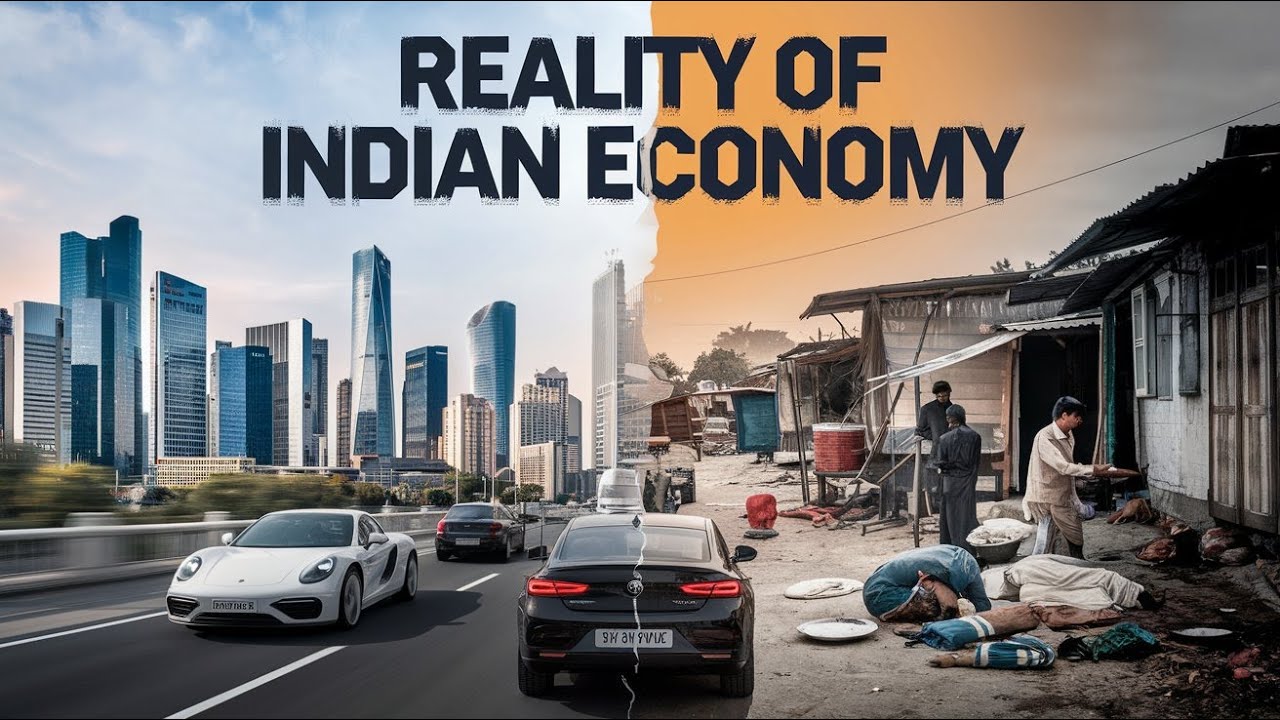
Outside, the heat shimmered off the asphalt, distorting the skyline of glittering skyscrapers that rose like monuments to human ambition, built on sand, sustained by commerce, and perpetually guarded by invisible walls.