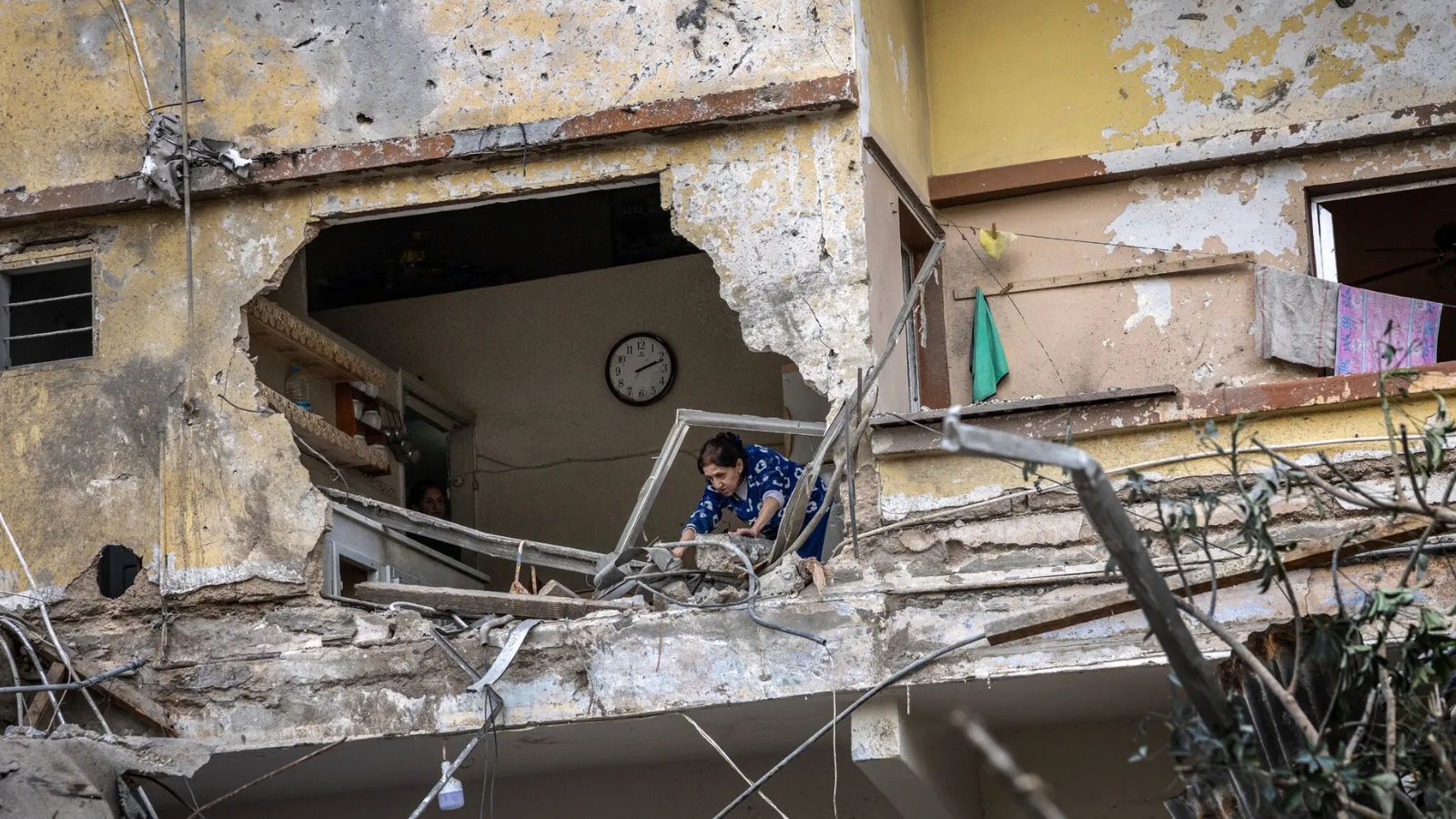
The smoke rising over Teffahta and Qana this Sunday morning is more than just the aftermath of another tactical sortie. It is the physical manifestation of a diplomatic vacuum. While Western capitals spent the last week celebrating a fragile, two-week "pause" between Washington and Tehran, the reality on the ground in southern Lebanon has curdled into a permanent state of high-intensity attrition. At least 24 people were killed overnight in a series of Israeli strikes that targeted residential hubs from Sidon to the coastal plains of Tyre. This is not a "flare-up." It is the deliberate execution of Operation Eternal Darkness, an Israeli military doctrine designed to decouple the Lebanese theater from any regional de-escalation agreements.
The carnage in Teffahta, where the death toll climbed to 13 in a single strike, and the leveling of homes in Qana’s al-Khashna district, underscores a brutal strategic pivot. Prime Minister Benjamin Netanyahu has been explicit: the Washington-Tehran truce does not apply to the Litani River. While Hezbollah signaled a tentative pause in line with the broader regional agreement, the Israel Defense Forces (IDF) responded with the heaviest aerial bombardment since the 2026 war began. By Sunday dawn, the strikes had expanded to Aaitat, Samaya, and Maarakeh, signaling that the "security zone" Israel is carving out is being cleared by fire, not by negotiation.
The Architecture of a Disconnect
The fundamental failure of current diplomacy lies in the assumption that a deal with the patron (Iran) automatically restrains the proxy (Hezbollah) or pacifies the antagonist (Israel). It has done neither. Instead, the temporary ceasefire in the wider Iran war has provided Israel with a window of absolute atmospheric dominance. Without the immediate threat of a multi-front regional escalation, the Israeli Air Force has concentrated its sorties into a ten-minute-per-target rhythm that has overwhelmed Lebanese civil defense.
This isn't just about "hitting targets." It is about structural isolation.
- Bridge Destruction: Every major bridge on the Litani River, including the critical Qasmiyeh crossing, has been methodically neutralized.
- Infrastructure Decapitation: Strikes are no longer confined to known missile silos; they are hitting the administrative and logistics hubs of southern villages.
- Civilian Displacement as Strategy: With over one million Lebanese displaced—nearly 20% of the population—the IDF is effectively creating a "no-man's land" that extends to the Litani.
The "why" is simple: Israel views the 2024 ceasefire as a historical mistake that allowed Hezbollah to rebuild. They are not interested in a 2026 version of the same status quo. Operation Eternal Darkness aims to finish the job that the previous decade of "gray zone" warfare could not: the total dismantling of Hezbollah’s southern infrastructure, regardless of what is signed in Islamabad or Washington.
The Hezbollah Calculus
Hezbollah finds itself in a strategic vice. On one hand, it is under immense pressure from the Lebanese government—which has moved to ban the group's military activities—to avoid dragging the country into a total collapse. On the other, the group cannot allow the IDF to unilaterally redefine the border. Sunday’s retaliatory drone strikes on the Kiryat Shmona barracks and rocket salvos at the Fatima Gate are symbolic gestures of "deterrence," but they lack the scale to halt the Israeli momentum.
The group’s internal logic is currently fractured. Sources within the organization suggest a growing rift between the political wing, which is wary of losing its remaining domestic legitimacy, and the Radwan Force commanders who view any withdrawal from the south as an existential defeat. By continuing to strike even as Hezbollah’s rockets momentarily slowed, Israel is betting that it can force a total capitulation rather than a negotiated retreat.
The Cost of the "Shadow War"
The humanitarian toll is no longer a side effect; it is the primary metric of the conflict's intensity. In the village of Maaroub, a single strike on a family home left six dead, a scenario being repeated with clinical regularity. Hospitals in Tyre and Sidon are operating on generators and dwindling supplies, their wards filled with survivors of the "dawn raids" that have become the new normal.
The international community’s silence is deafening. While the UN and the EU issue standard condemnations, the U.S. government’s refusal to pressure Israel into including Lebanon in the two-week truce suggests a tacit endorsement of the IDF's objectives. It is a dangerous gamble. By allowing the "Lebanon problem" to be solved through scorched-earth tactics, the West is risking a humanitarian catastrophe that will eventually spill over the very borders they are trying to stabilize.
There is no "soft landing" in sight for southern Lebanon. The strikes will continue until either the military objectives are met—the occupation of the territory up to the Litani—or the regional ceasefire collapses entirely, reigniting a broader war that no amount of Islamabad-based diplomacy can contain. For the residents of Teffahta and Qana, the "pause" in the Middle East is a fiction. For them, the war hasn't just continued; it has evolved into its most lethal form yet.
The endgame is no longer about a return to the 1701 resolution. It is about who owns the dirt between the border and the river, and right now, that is being decided by the weight of 2,000-pound bombs.