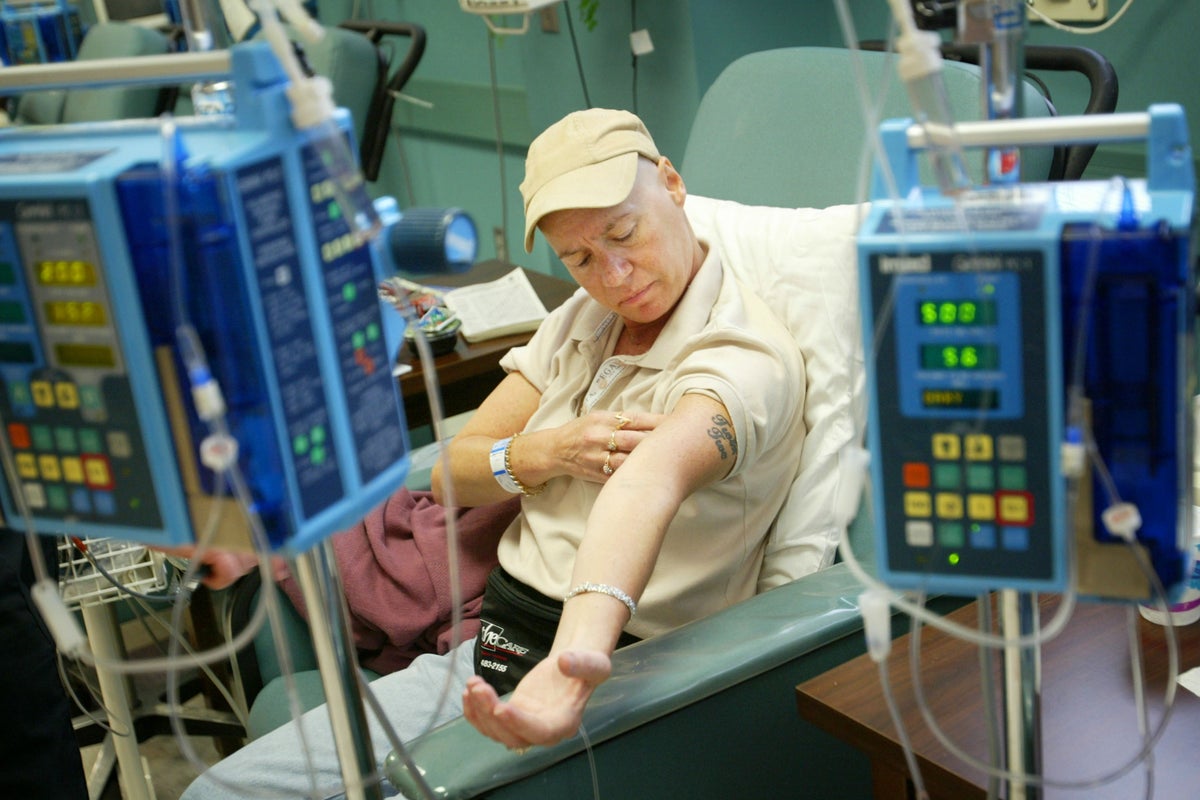
Arthur spent forty-three years checking gauges, calculating fuel-to-weight ratios, and watching the horizon bend across the windshield of a Boeing 747. He was a man ruled by checklists, precision, and the strict laws of aviation. When the oncology team at the hospital quietly stopped talking about recovery and started talking about comfort, Arthur didn’t rage. He just closed his eyes and made a strange request.
He wanted to feel the controls of an aircraft one last time. Not a simulator. A real cockpit. He wanted the hum of the instruments vibrating through his fingertips.
Most people assume hospice care is a sterile countdown. We picture quiet rooms, the rhythmic beep of monitors, muted lighting, and a slow, clinical fading away. We treat the end of life as a medical failure to be managed rather than a human chapter to be lived. But hospice workers know a secret that the rest of society ignores. The dying do not suddenly stop dreaming.
In fact, their desires often become wilder, sharper, and deeply urgent.
The Checklist of the Dying
When a person enters palliative care, the medical community shifts its focus. The goal is no longer longevity; it is quality. Yet, quality is an abstract concept. To a physician, it might mean managing a pain scale down to a stable three out of ten. To the person in the bed, it means something entirely different.
Consider the logistics of Arthur’s request. He was bedridden, dependent on continuous oxygen, and tethered to a cocktail of intravenous medications. To the average hospital administrator, moving him to an airfield was a legal nightmare and a medical impossibility. Liability insurance alone usually kills these ideas before they reach a supervisor's desk.
But hospice nursing operates on a different frequency.
It requires a unique brand of rebellion. A few weeks ago, an ambulance crew in Queensland, Australia, made headlines when they took a detour on the way to a palliative care unit. The patient, a woman named Carmen, mentioned she just wanted to see the ocean again. They didn’t file paperwork. They didn’t ask for permission. They drove the ambulance down to Hervey Bay, wheeled her stretcher onto the sand, and let the saltwater wash over her feet.
That isn't a medical intervention. It is healthcare in its truest, most raw form.
Arthur got his wish too. It took a coordinated effort between his hospice nurse, a local flying club, and two off-duty paramedics who volunteered to haul oxygen tanks into a small Cessna hangar. They lifted him into the co-pilot’s seat. He didn't take off—his body couldn't handle the g-force—but he taxied down the runway. For twenty minutes, the engine roared, the propeller blurred into a silver disc, and Arthur was no longer a patient dying of terminal illness. He was a captain.
When the Exotic Meets the End
These final wishes are rarely reasonable. They break rules. They defy logic.
Take the case of an elderly man named George, who spent his final days in a specialized care facility in England. George had been a zookeeper in his youth, a man who spent decades handling apex predators. As his cognitive functions began to slip under the weight of advanced dementia and physical decline, his memories anchored themselves firmly to his twenties. He didn't want to see his grandchildren; he wanted to see his cats.
He didn't mean tabbies. He wanted tigers.
The care team didn't lecture George on safety protocols or the impossibility of bringing a three-hundred-pound Bengal tiger into a carpeted hospice lounge. Instead, they reached out to a local wildlife sanctuary. While a live tiger couldn't walk through the front doors, the sanctuary brought something else: a collection of enriched materials, raw scents, and recorded vocalizations used by the keepers.
They brought the smell of the wild to his bedside.
George’s hands, which had been clenched and trembling for days due to neurological degeneration, relaxed completely when he touched a piece of coarse burlap that had been rubbed against a tiger's coat. His breathing slowed. The heart monitor showed a drop in his resting rate that no dose of morphine had been able to achieve.
We often underestimate the power of sensory memory. The brain preserves our oldest, most primal connections long after our ability to speak or reason has dissolved. When we honor those connections, we aren't just indulging a dying whim. We are administering a profound form of anesthesia.
The Hidden Strains of Final Requests
It is easy to romanticize these stories. They make for beautiful social media posts and heartwarming local news segments. But the reality behind the scenes is messy, exhausting, and emotionally bruising for the people tasked with making them happen.
Hospice staff carry an immense psychological burden. They build deep, rapid bonds with people they know will die within weeks or days. When a patient asks for something extraordinary—whether it is a trip to a casino, a glass of expensive whiskey despite a failing liver, or a chance to touch a horse one last time—the staff must balance clinical safety with human dignity.
It is a terrifying tightrope walk.
If a nurse allows a terminal patient to drink that whiskey, and the patient suffers an acute esophageal variceal bleed, the nurse faces scrutiny. If they refuse, the patient dies with an unfulfilled wish, trapped in the rigidity of clinical caution. Trust becomes the ultimate currency. The staff must trust the family, the family must trust the medical team, and everyone must collectively agree that the risk of a shortened life is worth the reward of a meaningful one.
The data supports this willingness to bend the rules. Studies in the Journal of Pain and Symptom Management consistently show that patients who achieve a sense of closure or experience a significant positive emotional event in their final days require lower doses of breakthrough pain medication. Joy is a chemical release. It floods the body with endorphins and dopamine, naturally counteracting the stress hormones that exacerbate physical pain.
The Smallness of Grand Desires
We tend to think of bucket lists as grand, sweeping adventures. We think of skydiving, traveling to Paris, or writing a novel. But when the horizon shrinks down to a matter of days, the scale of human desire shifts dramatically. The grand gestures fade away, leaving behind a stark, beautiful simplicity.
Most final wishes do not involve airplanes or tigers.
They involve the mundane things we take for granted every single morning. A cup of coffee made with real cream instead of the thickened liquids prescribed for dysphagia. The feeling of a dog’s fur under a palm. The sound of rain falling directly on skin, rather than watched through a double-paned glass window.
A woman named Elena spent her final week asking for a specific brand of cheap, artificial cherry water ice that she used to buy from a street vendor when she was seven years old. It had no nutritional value. It was terrible for her diabetic diet. Her family spent two days driving across three counties to find a store that still stocked it.
When they brought it to her room, she managed only two small spoonfuls before falling asleep.
To an outsider, it might have seemed like a wasted effort. Two days of searching for two bites of melted sugar. But those two spoonfuls bridged the gap between a sterile hospital room and a sun-drenched sidewalk in 1954. They gave her back her childhood self, just for a moment, before the curtain fell.
The Architecture of a Good Death
We are terrified of death. We hide it away in specialized wings of buildings, behind privacy curtains and code words. Because of this fear, we have forgotten how to allow people to die well. We treat the cessation of life as a medical problem to be solved with more tubes, more lines, and more interventions, even when the outcome is inevitable.
A good death requires a willingness to let go of clinical control. It demands that we ask the patient what matters to them today, right now, rather than what will keep them alive until tomorrow.
When Arthur taxied that Cessna down the runway, he knew he was never going to fly commercial again. He knew his body was failing. The paramedics in the back seat were watching his oxygen saturation dip, adjusting the flow valves in the shadows so he wouldn't notice. Everyone in that hangar knew the score.
But as the plane rolled to a stop and the engine sputtered out, leaving only the sound of cooling metal in the quiet morning air, Arthur looked out at the tarmac and smiled. He didn't look like a man facing the end. He looked like a man who had just conquered the sky one more time, proving that while the body has its limits, the human spirit remains stubbornly, beautifully untamable until the very last breath.