Abu Bakr does not count his age by the turning of the calendar. He counts it by the harvests. Fifty-eight times, he has watched the heavy, amber clusters of dates swell beneath the fierce Nubian sun, heavy as gold drops, promising sweetness in a land where water is a cruel master. His grandfather planted the patriarch palms that shade his courtyard in Sudan. Those trees survived political upheaval, shifting borders, and the fickle whims of the Nile.
Until now.
Stand beneath the fronds of a mature date palm in Northern Sudan today, and you hear a sound that should not exist. It is not the rustle of healthy life. It is a dry, brittle rattling—the sound of green turning to ash before its time. The climate is shifting, and the ancient rhythm of the desert is breaking down.
When the Well Runs Dry
To understand what is happening to Sudan's date palms, you must first understand how a tree survives an inferno.
A date palm is an ecological miracle. It is biologically engineered for endurance, thriving in environments where other flora would wither within hours. Its roots plunge deep into the earth, chasing moisture meters below the scorching surface, while its high canopy catches the furnace winds, sweating away heat. For generations, communities along the Nile carved an entire civilization out of this endurance. They built mud-brick homes from its trunks, wove its leaves into baskets, and traded its fruit across the Sahara.
Water. That is the single thread holding this fragile ecosystem together.
When the annual floods became erratic, the water table dropped. When the pumps failed due to economic collapse and fuel shortages, the roots went thirsty. Picture a marathon runner crossing a desert with a leaking canteen. For miles, the runner pushes forward on sheer willpower. Then, the canteen runs dry. The body begins to consume itself.
That is what drought does to a palm grove. Without sufficient irrigation, the tree loses its internal hydraulic pressure. The sweet sap thickens, turning sluggish. The trunk cracks under the thermal stress of unrelenting heat waves that now shatter regional temperature records year after year.
A thirsty tree is a dead tree waiting for a spark.
The Hungry Flames
Fires in the date groves used to be rare anomalies. Today, they are hunting seasons.
Dry fronds act as natural tinder. When temperatures climb past fifty degrees Celsius and hot, dust-laden winds roar across the desert, a single discarded ember or an electrical short in a makeshift generator is enough to turn an orchard into a furnace.
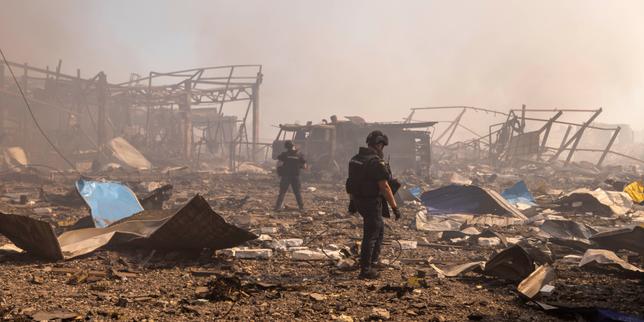
Imagine standing in a grove you have tended for forty years. The air turns thick with acrid, black smoke that stings your eyes and clogs your throat. The heat is so violent it singes your eyebrows from thirty feet away. Within minutes, centuries of agricultural heritage are reduced to charcoal.
Local firefighting infrastructure is virtually nonexistent in these remote river settlements. There are no sirens, no red trucks screaming down paved roads. There are only neighbors with buckets of river water, wet palm branches, and prayers. They beat frantically at the base of burning trunks, fighting a losing battle against an enemy born of the very heat that defines their home.
When the smoke clears, what remains is heartbreaking. Entire generations of towering palms stand like skeletal black fingers pointing at an indifferent sky. A tree that takes seven to ten years just to bear meaningful fruit can be incinerated in less than ten minutes.
The Invisible Price Tag
The loss of these trees extends far beyond agricultural statistics.
Sudan is one of the world's significant producers of dates, supplying regional markets and sustaining local livelihoods in areas where alternative employment does not exist. When a grove burns, the economic blow is absolute. Families lose their primary source of income overnight. Young people pack what little they can carry and head toward urban centers or perilous migration routes, leaving behind elderly caretakers to guard charred earth.
Consider the cascading failure:
- Loss of shade crops grown beneath the palms, such as citrus and alfalfa, which depend on the microclimate created by the canopy.
- Desertification accelerating as the stabilizing root networks die, allowing sand dunes to slowly swallow arable riverbanks.
- Loss of biodiversity as indigenous birds and insects lose their nesting grounds.
This is not merely an environmental crisis. It is the unravelling of cultural memory. Every felled trunk is a library burning down. Every lost harvest erases a chapter of oral history passed down through families who read the weather in the color of the evening sky and the behavior of the desert hawks.
The Hard Choice Ahead
Can the groves be saved?
The answer is brutally honest: not with passive hope. Survival requires a complete reimagining of water management in the region. It demands investment in deep-well solar pumps, modern drip irrigation systems that waste not a single drop, and organized community-led firebreaks to stop blazes from leaping across whole orchards.
It requires acknowledging that the old ways of reading the climate are obsolete because the climate itself has been rewritten.
Abu Bakr still walks his surviving groves every morning before dawn. He touches the rough bark of the trees that survived the latest heat wave, murmuring quiet greetings as if checking the pulses of old friends. He knows the odds. He knows that the desert is pressing closer, carried on hotter winds and hungrier flames.
Yet, he continues to clear away the dead wood. He continues to scoop damp earth around the base of the younger saplings, defying the ash with every handful of soil.
The sun climbs over the Nile, indifferent and blindingly bright, casting long shadows across the sand.