Baseball is a sport built on transience. Lockers are cleared out in minutes. Names are scraped off nameplates with a putty knife before the team bus has even left the parking lot. Uniforms are washed, reissued, and handed to the next hopeful arriving on a red-eye flight from Oklahoma City.
Longevity in this environment is a statistical anomaly. It requires an extraordinary alignment of health, performance, organizational trust, and a stubborn refusal to vanish when the machine decides it no longer needs you.
Max Muncy did not look like an anomaly when he arrived in Los Angeles. He looked like a receipt for a failed investment.
The Refuse Heap
Cast off. Released. Left to wander the independent leagues of baseball’s wilderness.
There is a specific kind of silence that follows being told you are no longer employable at your chosen profession. For Muncy, that silence came after the Oakland Athletics designated him for assignment in March of 2017. He had spent parts of two seasons showing flashes of competence wrapped in an uninspiring slash line. His swing was long. His defensive position was ambiguous. In the brutal economics of modern front offices, an infielder who does not hit enough to justify his defense is simply a roster clog.
Oakland cut him loose. Other teams scrolled past his name on waiver wires. The phone did not ring.
Imagine sitting in a quiet room, waiting for an employer to validate years of grueling labor, only to hear nothing. That was Muncy’s reality in the spring of 2017. He was a minor league free agent signing with the Los Angeles Dodgers, a minor transaction buried under the weight of a marquee franchise chasing championships with high-priced talent and elite prospects. No press conference welcomed him. No pundits analyzed his upside. He was organizational depth. A body to take ground balls in Oklahoma City so the precious few could rest.
Yet, inside the quiet machinery of the Dodgers player development complex, something shifted.
The Anatomy of a Swing
To understand how a discarded utility man becomes the longest-tenured fixture in a billion-dollar clubhouse, you have to look at the mechanics of rejection.
When you have nothing to lose, you stop protecting your swing.
Muncy went to Triple-A Oklahoma City and began to deconstruct everything he knew about hitting. Working closely with minor league hitting coordinators, he identified a fatal flaw in his launch angle and path. His hands were too low. His swing lacked the loft required to punish major league fastballs up in the zone.
He didn't just tweak his stance; he rebuilt his athletic identity. He unlocked the modern holy grail of hitting: maximizing barrel time in the zone while trading contact for damage.
When the Dodgers called him up in April of 2018, it was out of sheer necessity, a paper-thin roster emergency. What they got was a revelation disguised in a nondescript frame.
On May 4, 2018, against the San Francisco Giants, Muncy hit a home run that barely registered as a blip on the national radar. By July, he had hijacked the starting third base job. By October, he was hitting a walk-off, 18th-inning home run in the World Series against the Boston Red Sox—a glacial, exhausted midnight epic that stretched across seven hours and twenty minutes.
The cast-off was suddenly the center of gravity.
The Glue of a Dynasty
Baseball dynasties are rarely remembered for their role players, yet they are invariably built upon them.
Superstars command the back pages and the massive luxury tax contracts. They hit the home runs that sell jerseys and draw millions to the turnstiles. But dynasties require an anchor. They require someone who understands the culture, who has lived through the lean months of organizational transition, and who embodies the collective grit of a clubhouse through changing tides.
As teammates came and went—MVP winners, generational phenoms, high-priced mercenaries, and fleeting rookies—Muncy remained.
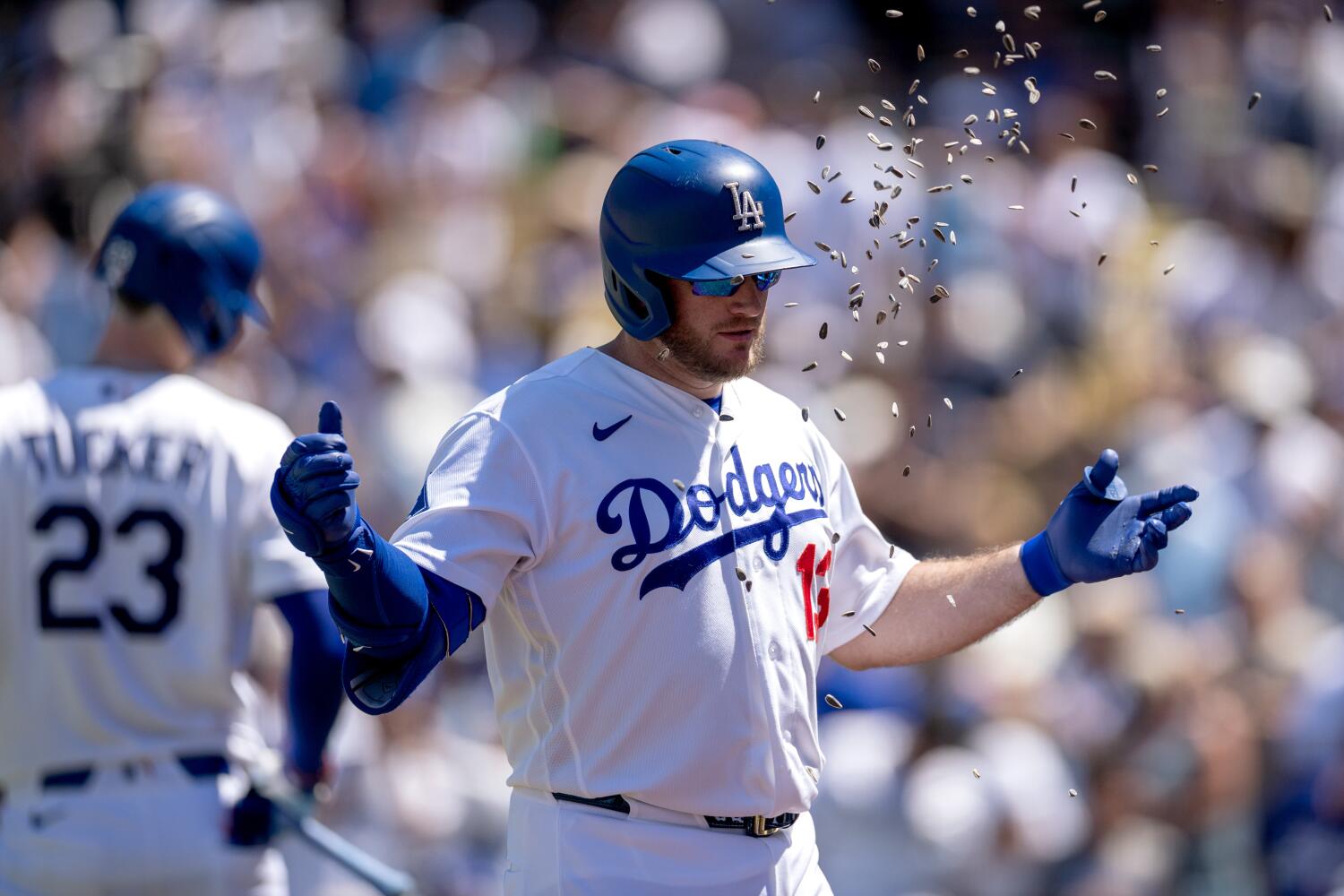
He moved across the diamond with uncomplaining versatility. Third base, second base, first base. Wherever the lineup card demanded a body, Muncy slotted in. His body absorbed the brutal collisions of modern infield play. Hamstrings strained. Elbows flared. Wrists throbbed. Each spring training brought a new wave of elite talent drafted or traded to unseat him. Each autumn found Muncy still standing in the batter's box, taking his trademark passive-aggressive takes, working deep counts, and punishing mistakes with ruthless efficiency.
Longevity in Los Angeles is rare because the standard is perfection. To survive there for nearly a decade requires a unique psychological armor. You must possess the short memory of a relief pitcher combined with the stubborn persistence of a miner working a depleted vein.
The Human Cost of the Game
We often consume sports as a frictionless video game. Statistics scroll across screens in neat rows. WAR, OPS, wRC+. We debate player value as if we are trading commodities on an exchange.
Behind those metrics are human beings wrestling with the terrifying fragility of their livelihood.
Consider what it takes to stand in the box against pitchers throwing 100 miles per hour with breaking balls that drop off the table. Now add the psychological weight of knowing that every single failure brings you one step closer to the unemployment line. For Muncy, that fear was not a hypothetical exercise; he had already lived it. He knew what the other side looked like. He knew the smell of independent league clubhouses where the hot water heater barely worked and the bus rides stretched for twelve hours across interstate blacktop.
That lived experience changes a competitor. It breeds an internal fortitude that cannot be coached or drafted. When the lights are brightest in October, panic belongs to those who have never tasted failure. Muncy had already survived it.
The Quiet Landmark
Time moves differently in professional sports. A single season feels like an epoch. Ten years is an eternity.
When Max Muncy stepped onto the diamond for the start of another campaign wearing the Dodger blue, he crossed an invisible threshold. In a clubhouse filled with flashing lights, mega-contracts, and relentless turnover, he became the longest-tenured active player on the roster.
The boy from Midland, Texas, who was told his career was over before it really started, is now the institutional memory of one of baseball's most storied franchises.
The nameplates change. The lockers turn over. The bus rolls out toward the stadium lights.
And at first base, waiting for the throw, is the man who refused to leave.