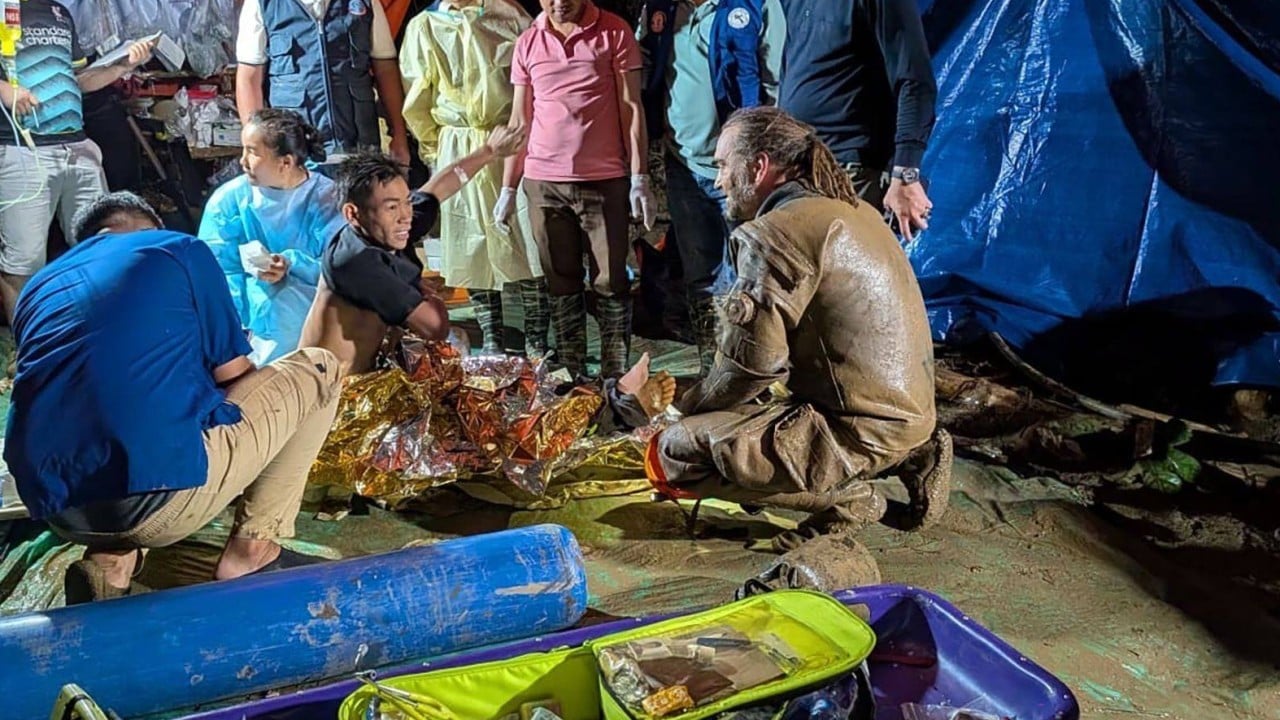
Five villagers spend ten days trapped in a flooded cave in Laos, and the global media machine immediately triggers its favorite script. We get the breathless updates, the dramatic rescue footage, the tears of relief, and the inevitable praise for human resilience.
It is a heartwarming narrative. It is also a dangerous distraction.
When five people are trapped underground for over a week because a sudden downpour sealed the exit of a known cavern, we are not looking at a triumph of the human spirit. We are looking at a systemic failure of rural infrastructure, tourism management, and basic resource allocation. Celebrating the rescue without analyzing the breakdown that allowed it to happen is like applauding a hospital for successfully treating a patient who drank contaminated city water.
The media loves a miracle. But miracles are just policy failures wrapped in sentimentality.
The Illusion of Adventure vs. The Reality of Neglect
The mainstream coverage presents these incidents as freak anomalies—nature catching unsuspecting locals off guard. This is a fundamental misreading of the geography and economics of Southeast Asian cave systems.
In rural Laos, caves are not just recreational checkboxes for adventurous travelers or weekend explorers. They are active resource hubs used for foraging, shelter, collecting potable water, and religious practices. They are deeply integrated into daily survival.
When a flash flood traps people inside, it rarely happens because of an unpredictable "act of God." It happens because of three distinct, preventable failures:
- Deforestation-Driven Hydrology: Decades of aggressive logging and agricultural conversion on the hillsides above these cave networks have destroyed the natural topsoil buffer. Without root systems to retain water, rainfall that used to take days to seep into the subterranean system now flashes into the caverns within minutes.
- The Zero-Communication Vacuum: The villagers were missing for days before anyone even knew where to look. In an era where low-earth orbit satellites can track a delivery truck to a specific driveway, rural communities adjacent to hazardous geological formations still lack basic, low-power emergency beacons or localized check-in protocols.
- Decentralized, Underfunded First Response: The initial response in these regions relies entirely on local volunteers equipped with little more than headlamps, agricultural ropes, and raw courage. Specialized diving and extraction gear must be flown in via international coalitions, creating a fatal time lag.
If you look at the timeline of the ten-day ordeal, the vast majority of that time was spent locating the victims and waiting for adequate pumps to clear the staging areas. That is not a logistical challenge; it is an infrastructure deficit.
Dismantling the People Also Ask Mythos
Whenever a cave rescue hits the headlines, the internet asks the wrong questions. The algorithms surface queries designed to feed curiosity rather than solve problems. Let us correct the record on how subterranean survival and rescue mechanics actually operate.
"How long can a human survive trapped in a flooded cave?"
The public focuses on food and water. They think of starvation.
In reality, the immediate killer in a flooded cave system is almost always hypothermia or atmospheric contamination. Cave water in tropical regions stays deceptively cold—often hovering around 15 to 18 degrees Celsius. When a victim is soaked to the skin and trapped in a high-humidity environment with constant airflow, their core temperature drops rapidly, even if the outside air feels warm.
Furthermore, rising water levels compress the air pocket, trapping carbon dioxide and lowering oxygen percentages. If the cave floor contains decomposing organic matter brought in by the floodwaters, toxic gases like methane or hydrogen sulfide build up. The villagers did not survive ten days because of a miracle; they survived because they found a highly elevated, ventilated shelf that preserved their core temperature and isolated them from the rising water's hydraulic pressure.
"Why don't authorities simply map every cave to prevent this?"
This question assumes that mapping a cave makes it safe. It does not.
3D laser scanning and cave cartography are highly accurate for a snapshot in time. However, dynamic karst topography changes with every monsoon season. New bottlenecks form, old bypasses collapse, and sediment shifts the entire internal layout. A map from three years ago can be worse than useless; it can provide a false sense of security to rescue teams who assume a passage is clear when it is blocked by tonnes of fresh river stone.
The True Cost of the Feel-Good Story
I have spent years analyzing how developing regions manage natural resources and emergency responses. I have seen governments pour millions into flashy high-tech search drones for television cameras while refusing to allocate a fraction of that budget to install basic concrete diversion walls at the mouths of high-risk caverns.
When we focus exclusively on the happy ending of five freed villagers, we grant political cover to the institutions responsible for keeping those villagers safe in the first place.
Imagine a scenario where a mining operation operates with zero structural oversight, collapses, and traps a crew. If the company spends ten days digging them out, do we run front-page stories praising the company's heroism? No. We launch regulatory investigations. We demand accountability. We sue for negligence.
Yet, when rural citizens are trapped by foreseeable seasonal weather patterns in state-managed lands or local communes, the conversation shifts to divine intervention and human endurance. It is a brilliant PR pivot that absolves regional authorities of their obligation to build early-warning weather systems and secure vulnerable entry points.
Shifting the Paradigm: What Real Security Looks Like
If the goal is to stop reading about people starving in the dark for ten days, the playbook needs an immediate upgrade. We must abandon the reactive rescue model and implement a proactive containment strategy.
+-------------------------------------------------------------------+
|                  TRADITIONAL REACTIVE MODEL                       |
|  Flood Event -> Delayed Notice -> Int. Mobilization -> Extraction |
+-------------------------------------------------------------------+
                                  VS
+-------------------------------------------------------------------+
|                   PROACTIVE CONTAINMENT MODEL                     |
|  Monsoon Sensors -> Auto-Alerts -> Physical Barricades -> Safety  |
+-------------------------------------------------------------------+
1. Low-Tech, High-Impact Physical Barriers
You do not need AI-driven sensors to keep people out of dangerous caves during monsoon season. You need steel. Installing heavy-duty, lockable iron grates at the primary entrances of known flood-risk caves during the high-risk months is the simplest, most effective preventative measure available. Local authorities can manage access keys, ensuring that anyone entering for essential resource gathering does so with explicit clearance and a logged return time.
2. Barometric and Acoustic Early-Warning Networks
Flash floods in karst terrain give warning signs if you know how to listen. Sudden drops in barometric pressure inside a cavern, combined with low-frequency acoustic vibrations from upstream water surges, can provide up to a 30-minute window before a passage floods. Installing ruggedized, battery-operated acoustic sensors at key choke points that trigger strobe lights and sirens at the cave mouth would save lives long before a rescue diver ever needs to wet their fins.
3. Decentralized Equipment Caches
Waiting for specialized gear to arrive from capital cities or neighboring countries is a death sentence for the next group that gets trapped. Instead of funding centralized national rescue teams that look great in parades, resources must be distributed into regional hubs. High-capacity diesel pumps, thermal blankets, satellite communication links, and basic diving air tanks need to be permanently stored within two hours of high-risk zones.
The five villagers in Laos walked out of that cave because they were incredibly lucky, disciplined, and resilient. But relying on luck and endurance is a terrible strategy for human survival. The next group trapped in a fluctuating water system might not find an elevated ledge. They might not have ten days of air.
Stop cheering for the rescue. Start demanding the infrastructure.