There are moments when diplomacy sheds its polite wool and stands bare in the wind, trembling with the weight of decades.
Step into the General Assembly hall of the United Nations. The air is always conditioned to a sterile chill, smelling faintly of floor wax, old paper, and the suppressed exhaustion of delegates who have flown across oceans to nod politely at one another. For hours, speeches drift past like autumn leaves—weightless, predictable, designed to offend no one and achieve even less. The words peace, cooperation, and dialogue are stretched thin, wrapped around real-world tragedies like a bandage that refuses to stick.
Then the microphone clicks.
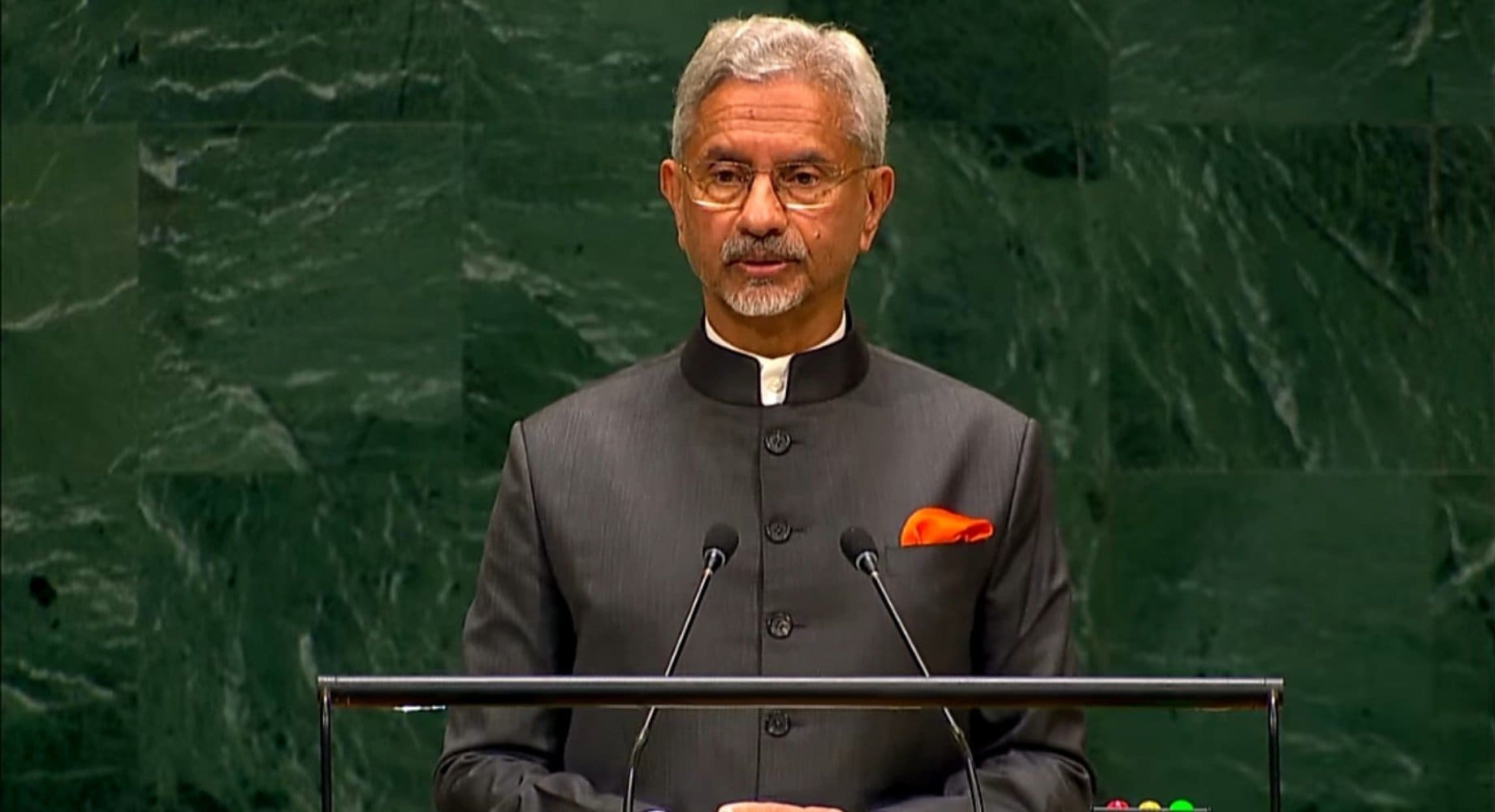
When External Affairs Minister S. Jaishankar stepped up to address the United Nations, he did not offer the usual diplomatic sedative. He bypassed the cautious euphemisms that diplomats spend careers perfecting. He called it what it is. He looked out across the assembly and laid bare a stark, enduring truth: state-sponsored violence is not an accidental spillover of regional friction. It is a deliberate policy. A persistent trade. A serial practitioner at work.
Consider what that phrase means when you strip away the podium and the television cameras.
Imagine living in a border village where the morning mist does not carry the smell of dew, but the sharp, acrid copper of an incoming shell. Imagine sending a child to school with a quiet prayer that the bridge they cross will still be standing this afternoon. For millions along the disputed frontiers of South Asia, terrorism is not a geopolitical abstraction debated by think tanks in New York or London. It is a weather pattern. It arrives unannounced, destroys everything in its path, and is quietly managed by architects sitting safely in government offices hundreds of miles away.
Jaishankar’s indictment at the UN was not merely a rhetorical flourish. It was an urgent diagnosis of an illness the international community has spent decades trying to ignore out of convenience.
For years, the global conversation around cross-border violence has suffered from a peculiar fatigue. When an attack happens, statements of condemnation are drafted with template efficiency. Capitals express sorrow. Ambassadors trade diplomatic notes. Security councils hold closed-door briefings. And then, the world looks away, waiting for the next cycle of grief to begin.
This routine comfort zone is precisely what New Delhi challenged.
To understand why this confrontation matters so deeply, you have to look at the economics of denial. For a long time, the global playbook for dealing with nations that harbor militant networks relied on a strange sort of appeasement through engagement. The theory went that if you invite them to enough conferences, offer enough economic aid packages, and pretend their domestic crackdowns are just around the corner, they will eventually reform.
History has shattered that theory into sharp fragments.
When a state builds its strategic identity on the export of chaos, economic incentives do not deter; they subsidize. Every dollar of aid or diplomatic grace extended without strict accountability simply greases the machinery of instability. Jaishankar’s words cut through this diplomatic theater by pointing out a fundamental moral failure of the multilateral system itself: how can an institution dedicated to global security harbor infinite patience for those who traffic in destruction?
The reality is uncomfortable. It forces powerful nations to choose between comfortable trade relationships and the unyielding defense of human life. It demands that the world stop treating the victim and the perpetrator as equivalent moral actors trapped in a mutual misunderstanding.
Think of a courtroom where a judge refuses to look at the security footage, preferring instead to listen to the defendant's poetic speeches about grievance and historical injustice. That is what global diplomacy often looks like when confronting terrorism originating from state roots. Excuses are dressed up as legitimate political grievances. Proxy wars are sanitized as freedom struggles.
India's message from the highest global stage was simple, brutal, and long overdue: accountability has no expiration date.
You cannot sponsor bloodshed on foreign soil by night and pose as an innocent victim of regional instability by day. The ledger must balance. The double standards that allow nations to maintain a polite veneer while quietly operating training camps and funding radical networks must end.
The silence that followed Jaishankar’s address in the hall was telling. It wasn't the silence of agreement; it was the heavy, startled quiet of a room where someone has finally pointed out that the Emperor has no clothes, and worse, is holding a match.
Outside the building, the autumn afternoon in New York bustled with yellow cabs and hurried pedestrians rushing toward their evening routines. Inside, a small tectonic shift occurred in the vocabulary of international relations. A line was drawn not in ink, but in undeniable clarity.
The shadows of conflict are deep, and the smoke does not clear easily. But until the world finds the courage to name the arsonist while the house is still burning, peace will remain nothing more than a word whispered in a cold, quiet room.