Stop Blaming the Powder
The Western media narrative surrounding West Africa’s kush crisis is as predictable as it is ineffective. Journalists land in Freetown or Monrovia, photograph young men collapsed in gutters, quote horrified public officials, and declare a sensational emergency over a "zombie drug." They paint a picture of an alien, synthetic monster that suddenly descended upon Sierra Leone and Liberia, destroying a generation overnight.
It is a comfortable lie. It allows governments to declare wars on drugs, appeal to international donors for law enforcement aid, and blame a chemical compound for a social catastrophe created by decades of systemic failure.
I have spent years analyzing illicit supply chains and state collapse across post-conflict zones. When you look past the sensationalized headlines, you realize kush is not the root problem. Kush is a symptom. Treating this epidemic purely as a narcotics issue ensures that Sierra Leone and Liberia will remain locked in this nightmare indefinitely.
The Chemical Mirage: What Kush Actually Is
To fight an enemy, you must define it accurately. The media loves to label kush a "mysterious synthetic cannabinoid mixed with human bones." This urban legend about crushed human bones—repeated endlessly by local rumor mills and lazy foreign reporting—is a distraction from the brutal economic reality of how the drug actually operates.
Kush is not a single, static formula engineered in a master laboratory. It is an opportunistic concoction.
- The Base: Low-grade, locally grown cannabis or dried plant matter.
- The Potentiators: Industrial synthetic cannabinoids imported cheaply in bulk from overseas chemical suppliers.
- The Fillers: Acetone, tramadol, formaldehydes, rat poison, and whatever cheap toxic industrial solvent is on hand to stretch the volume.
By focusing on the lurid myth of human bones or treating kush as a uniform chemical threat, policymakers miss the point entirely. The recipe changes week by week based on whichever cheap chemical makes it past leaky port security in West Africa.
Attempting to eradicate kush by banning specific precursor chemicals is like trying to drain the ocean with a thimble. As long as the demand remains bottomless and the logistics costs remain near zero, illicit labs will swap out chemical bonds faster than international bodies can update their schedules of controlled substances.
The Real Accelerator: Post-War Trauma Meets Youth Abandonment
Why did kush explode in Sierra Leone and Liberia rather than in neighboring states with similar shipping routes?
Look at the demographics and the history. Both nations share a specific, unhealed wound: brutal civil wars followed by the Ebola outbreak, followed by systemic economic stagnation.
Imagine a nation where 60% of the population is under the age of 25, facing youth unemployment rates hovering above 70%. These are young people raised in households broken by historical violence, living in towns with no functional public infrastructure, no industrial job base, and no path toward adult economic independence.
Traditional Narrative:
[Synthetic Chemical Appears] ──> [Hooks Youth] ──> [Destroys Community]

The Uncomfortable Reality:
[Economic Despair + Trauma] ──> [Demand for Anesthesia] ──> [Market Creates Kush]
Kush did not create the despair in Freetown's slums. The despair created the market for kush.
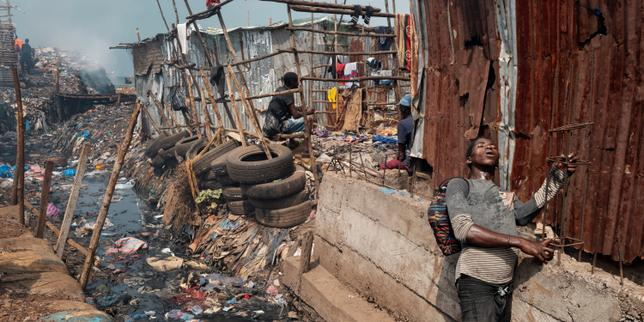
The drug offers cheap, immediate chemical obliteration for less than fifty cents a hit. For an unemployed 20-year-old living on a trash heap with no prospects of ever owning a home, finding a job, or supporting a family, chemical oblivion is not a mistake—it is a rational, short-term escape.
The Failure of the Prohibitive Mindset
In early 2024, Sierra Leone’s government declared a national emergency on substance abuse. Police raids intensified. Users were rounded up. Public burnings of seized packages were broadcast on state television.
It was great PR. It was terrible public health.
Criminalizing the user base in a country with almost no functional rehabilitation facilities is an exercise in futility. Sierra Leone, a country of over 8 million people, possesses only one dedicated public psychiatric hospital, which was historically underfunded and understaffed. Liberia’s mental health infrastructure is similarly hollowed out.
When you arrest an addict in an environment without treatment capacity, you accomplish three things:
- You overcrowd prisons, creating breeding grounds for further radicalization and criminal networking.
- You drive the drug trade further underground, spiking the price and increasing the violence associated with local distribution.
- You force producers to use even more dangerous, unvetted chemical substitutes to bypass border seizures, making the drug more lethal, not less.
Prohibition does not destroy markets; it merely subsidizes the margins for the most ruthless operators.
The PAA Flaw: "How Can Governments Stop the Supply of Kush?"
When people search for solutions to this crisis, they ask the wrong questions. They ask how to seal borders, how to arrest cartels, or how to intercept chemical shipments.
The premise is fundamentally broken. You cannot secure thousands of miles of porous West African coastline and unpoliced land borders when the enforcement officers themselves earn wages below the local cost of living. Border guards earning $50 a month will always prove susceptible to a $500 bribe from a smuggling syndicate.
Instead of asking how to stop the supply, we must ask why the demand is so intensely inelastic.
If you magically wiped every grain of kush off the continent tomorrow morning, another compound would replace it by next Friday. The market demands cheap anesthesia. Capitalist logic guarantees that where there is a hyper-concentrated demand, supply will find a way.
The Blueprint Nobody Wants to Discuss
If the goal is actually to save lives rather than score political points for foreign aid agencies, the playbook needs to flip entirely. It requires steps that sound counter-intuitive, radical, and politically dangerous to conservative leadership.
1. Shift Funds from Interdiction to Basic Harm Reduction
Stop spending millions on police militarization to raid slums. Direct those funds into basic, decentralized community-level harm reduction. Establishing drop-in centers that offer clean water, basic medical care for necrotic wounds caused by toxic fillers, and low-cost psychological support does not "encourage" drug use—it keeps users alive long enough to access recovery.
2. Radical Decriminalization of the User
Remove the threat of arrest for simple possession. Treat the addict entirely as a medical patient. When users are not terrified of law enforcement, they present to clinics before their health collapses completely, drastically reducing the burden on emergency health systems.
3. Public Works as Substitution Therapy
The most effective anti-addiction program in a post-conflict zone is a paid job. Targeted public infrastructure projects—building roads, clearing drainage systems, constructing public housing—that pay a daily cash wage specifically targeted at high-risk youth disrupt the addiction cycle far better than any awareness campaign. A young person with cash in their pocket, physical fatigue from honest labor, and a purpose tomorrow morning buys far less kush than an idle youth trapped in a slum.
4. Direct Pressure on Precursor Origin Points
Instead of chasing local street pushers in Monrovia, international counter-narcotics efforts must focus exclusively on the industrial chemical exporters operating out of overseas shipping hubs. Disrupting bulk chemical exporters at the source requires international diplomatic muscle, not armed raids on West African shantytowns.
The Hard Truth About Recovery
There is no silver bullet here. Acknowledging that kush is a structural socioeconomic crisis rather than a simple police matter means admitting that the fix will take decades, not months. It requires building a functional state apparatus, generating real economic opportunities, and addressing deep-seated national trauma.
Governments favor wars on drugs because they offer quick photo opportunities and clear villains. Admitting that your youth population is poisoning itself because your society offers them no viable future requires a level of political courage that few leaders possess.
Until Sierra Leone and Liberia stop treating kush as an invading enemy and start treating it as a mirror reflecting their deepest structural failures, those gutters in Freetown and Monrovia will remain full.
Stop fighting the powder. Rebuild the prospect of a life worth staying conscious for.