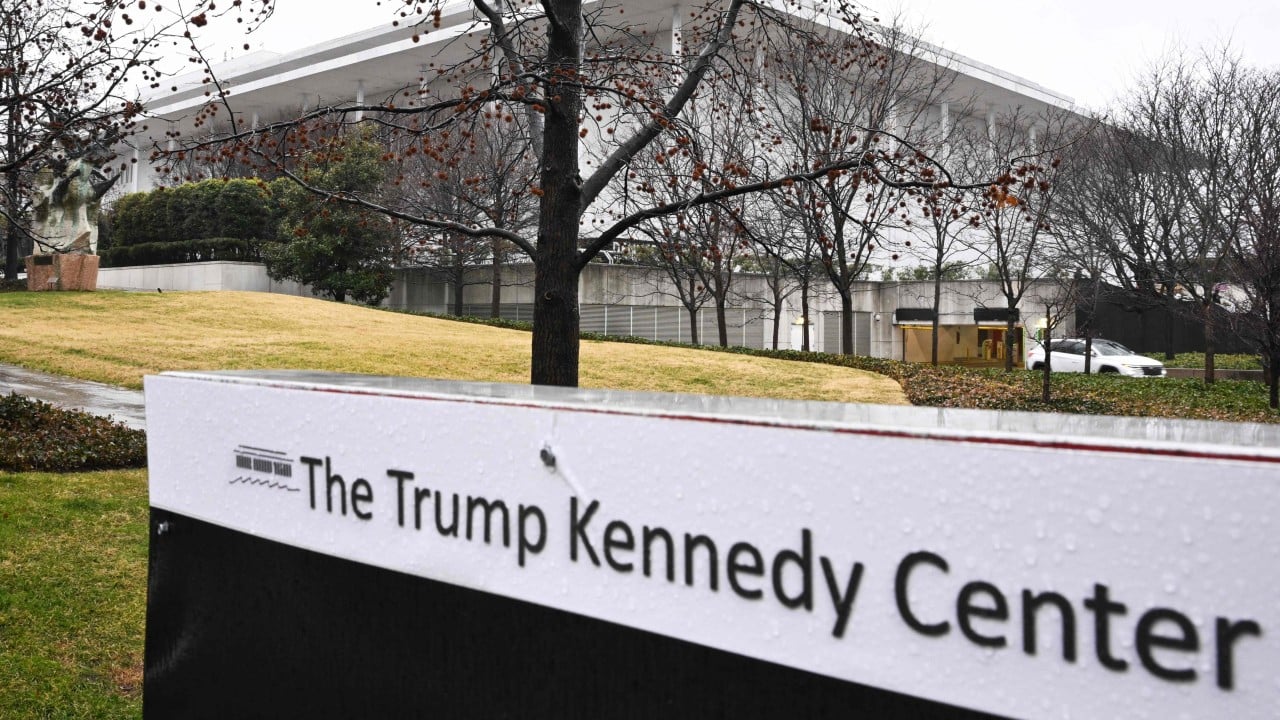
The media obsession with parsing court battles over political names on buildings is missing the entire point of how modern cultural institutions survive. When a federal judge weighs in on whether a controversial figure's name belongs on an arts venue, the public treats it like a standard partisan shouting match. It is not. It is a symptom of a deeper, systemic failure in how we finance public spaces.
The lazy consensus dominating the headlines views this as a simple moral victory or defeat. Activists celebrate the scrubbed signage as a triumph for decency. Partisans decry it as cancel culture. Both sides are fundamentally wrong. They are arguing over the window dressing of an economic structure that has been broken for decades.
If you think removing a politician’s name from a wall changes the ideological trajectory of a cultural monolith, you do not understand how boards of trustees operate.
The Myth of the Neutral Public Space
We love to pretend that national cultural institutions are sacred, neutral grounds funded entirely by the pure, unvarnished goodwill of the state. They are not. The John F. Kennedy Center for the Performing Arts is a presidential memorial, yes, but it is also a massive, cash-hungry operation that relies heavily on a complex mix of federal appropriations and aggressive private philanthropy.
When a name gets attached to a wing, a theater, or a program, it is rarely a pure act of state-sponsored reverence. It is a transaction.
- The Funding Gap: Congress covers basic facility maintenance, but the actual programming—the opera, the theater, the education initiatives—requires hundreds of millions in private capital.
- The Ego Economy: Wealthy donors and political mega-donors do not write eight-figure checks purely out of the goodness of their hearts. They buy legacy. They buy proximity to power.
- The Contractual Trap: These naming rights are governed by ironclad, multi-decade legal agreements.
When a judge gets involved to strip a name, it is almost never about "doing the right thing." It is about a breach of contract or an interpretation of statutory authority. I have watched boards of cultural institutions spend more money on billable legal hours trying to untangle a toxic donor agreement than the actual donation was worth in the first place. The real tragedy is that the public thinks justice is being served, while the institution's endowment is being eaten alive by elite white-shoe law firms.
Why Scrubbing Names Achieves Absolutely Nothing
Removing a name from a facade provides a temporary dopamine hit for political activists, but it changes exactly zero structural realities. It is a cosmetic fix for a systemic problem.
Imagine a scenario where every single building in Washington D.C. was successfully stripped of any name that caused a single segment of the population discomfort. What happens the next day? The building still needs a new roof. The stagehands still need to be paid. The lighting rigs still need to be replaced.
When you weaponize the courts to alter the physical branding of an institution, you create an incredibly volatile environment for future financing. Philanthropists are egotistical, but they are also risk-averse. If a billionaire realizes that a shift in the political wind or a judicial ruling can erase their family name from a museum wing twenty years after they sign the check, they will stop writing the checks.
The alternative is not a pure, state-funded utopia. The alternative is a decaying infrastructure. The federal government is not going to suddenly triple the budget for the arts to make up for the flight of private capital. If you chase away the mega-donors by retroactively changing the rules of the game, the quality of the art suffers, ticket prices skyrocket, and the institution becomes less accessible to the very public you claim to protect.
The Flawed Premise of Cultural Purity
People constantly ask: shouldn't our national institutions reflect our highest collective values?
The question itself is flawed because it assumes a collective consensus that simply does not exist in a polarized nation. A presidential memorial is, by definition, political. It is named after a partisan figure. To expect the sub-elements of that institution to remain entirely sanitized of political friction is naive.
Let us look at the mechanics of how these naming disputes actually play out legally. Courts do not rule on whether a politician is "good" or "bad." They look at the text of the enabling legislation and the specific terms of the trust or donation.
| Dimension of Dispute | Public Perception | Judicial Reality |
|---|---|---|
| The Core Issue | Moral accountability and historical justice. | Statutory interpretation and contract law. |
| The Impact | A major shift in institutional culture. | A massive expenditure on legal fees and rebranding. |
| The Future Risk | A cleaner, more respectful public space. | Chilled donor relations and reduced private funding. |
When a judge rules that a name must come down because an agency exceeded its authority, it is a technical correction, not a moral endorsement. Treating it as a cultural reckoning is a delusion manufactured by commentators who need content to fill the 24-hour news cycle.
Stop Demanding Pure Heroes
The elite class that funds cultural institutions has always been populated by flawed, compromised, and highly controversial figures. The historical reality is that great art has almost always been financed by questionable money. The Medici family were not saints. The robber barons who built the American library system and museum network were ruthless monopolists.
If we apply a modern purity test to every name etched into marble across the country, we will be left with empty plazas and blank walls.
The current playbook for dealing with controversial names is completely broken. Institutions try to hide behind PR statements, activists demand total erasure, and judges are forced to arbitrate disputes that should have been managed by competent governance in the first place.
Instead of fighting multi-million dollar legal battles to tear letters off a wall, institutions need to change how they structure these agreements from day one.
- Sunset Clauses: No naming rights should be permanent. Period. If you donate fifty million dollars, your name stays on the building for twenty-five years. After that, the institution has the right to resell the real estate to the next generation of funders.
- Morality Carve-outs: Contracts must explicitly define what constitutes reputational damage to the institution, allowing for immediate termination of naming rights without a five-year court battle.
- Diversified Funding: Relying on single, massive checks from highly polarizing political figures is lazy management. It creates an existential crisis every time that figure enters the news cycle.
The obsession with the courtroom drama surrounding the Kennedy Center is a distraction from the real work of cultural sustainability. We are cheering for the destruction of signs while the foundations are rotting. If we want public institutions that serve the public, we need to stop treating them like battlegrounds for proxy wars and start treating them like the fragile economic ecosystems they actually are. Stop looking at the name on the door and start looking at the balance sheet. That is where the real power lies, and that is exactly what everyone is ignoring.