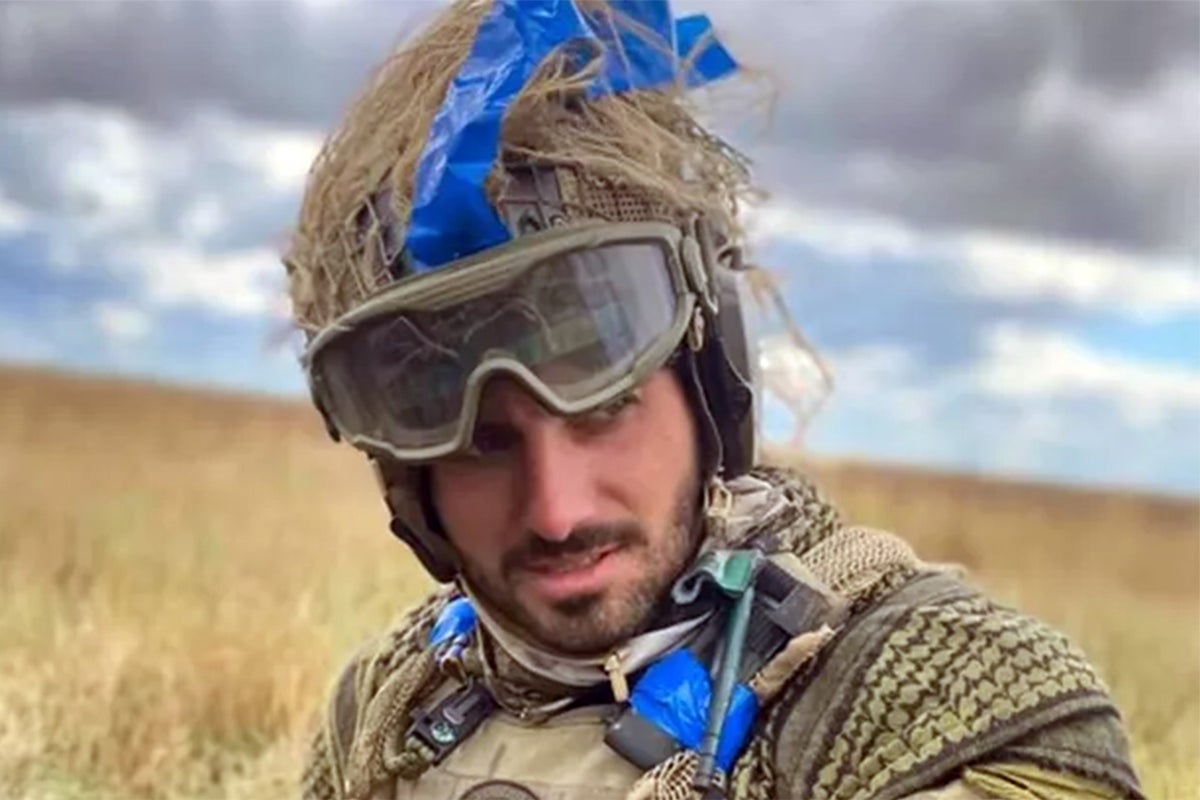
The recent decision by a Moscow court to issue an arrest warrant in absentia for Conor Kennedy, son of United States Health and Human Services Secretary Robert F. Kennedy Jr., and great-nephew of President John F. Kennedy, highlights the intersection of modern state jurisprudence and international volunteer combatancy. Judicial actions taken against foreign nationals who participated in the Russo-Ukrainian conflict operationalize domestic penal codes for geopolitical signaling. By targeting high-profile individuals linked to prominent American political dynasties, Russian prosecutorial bodies convert individual military participation into an instrument of state messaging.
Understanding this development requires examining the legal mechanics governing foreign combatants under Russian federal law. Article 359 of the Criminal Code of the Russian Federation explicitly criminalizes "mercenary activities," defining them through criteria such as material compensation exceeding standard local military pay and direct participation in armed conflict without holding official citizenship or combatant status recognized by the prosecuting state. While the International Legion of Territorial Defense of Ukraine integrates foreign volunteers directly into the formal chain of command of the Armed Forces of Ukraine—granting them regular military status under international humanitarian law—Russian jurisdictions systematically reject this categorization. Instead, state prosecutors classify these individuals uniformly as foreign mercenaries to apply penal measures ranging from seven to ten years of imprisonment.
The specific case of Conor Kennedy underscores structural patterns observed among foreign fighters since the escalation of hostilities in 2022. Documented public disclosures indicate that Kennedy enlisted anonymously in the International Legion during the initial months of the full-scale invasion, serving briefly on the northeastern front in the Kharkiv sector. The tactical choices made by volunteers seeking anonymity often conflict with the publicity generated by their familial backgrounds. When individuals associated with prominent political dynasties enter active combat zones, their presence transitions from a tactical variable at the squad level to a high-value strategic asset within information warfare operations.
State-level responses to foreign recruitment highlight divergent legal frameworks across international borders. While nations such as Ukraine actively institutionalize foreign military assistance through formalized enlistment structures, other governments maintain ambiguous or restrictive statutes regarding citizens engaging in foreign wars. Concurrently, adversarial states utilize in absentia prosecutions and international wanted lists to deter future mobilization. These legal maneuvers serve a dual function. Domestically, they reinforce statutory prohibitions against participating in unauthorized military formations. Externally, they establish formal indictments that constrain the future international mobility of targeted individuals, subjecting them to potential detention if they transit through jurisdictions maintaining extradition treaties or security agreements with the issuing state.
The formalization of these warrants years after the active combat period concluded points to a broader bureaucratic hardening within Russian judicial administration. Prosecutions of foreign volunteers are no longer treated merely as battlefield byproducts but as permanent legal records maintained within federal databases. This institutional archiving ensures that historical participation in the Ukrainian armed forces carries enduring legal liabilities under Russian jurisdiction, independent of the individual's current operational status or geographic location outside the combat zone.
Strategic planning for individuals formerly or currently embedded in foreign military formations must account for long-tail juridical exposure. Sovereign states possessing expansive extraterritorial or in absentia enforcement mechanisms treat military integration as a lifelong legal liability. Consequently, the mitigation of personal risk requires continuous monitoring of international transit corridors and diplomatic alignments, as bilateral security cooperation agreements can transform dormant arrest warrants into active extradition vectors without prior warning.
Conor Kennedy on fighting in Ukraine
This discussion provides context on the geopolitical dimensions of the conflict and the involvement of foreign volunteers as viewed through various international perspectives.