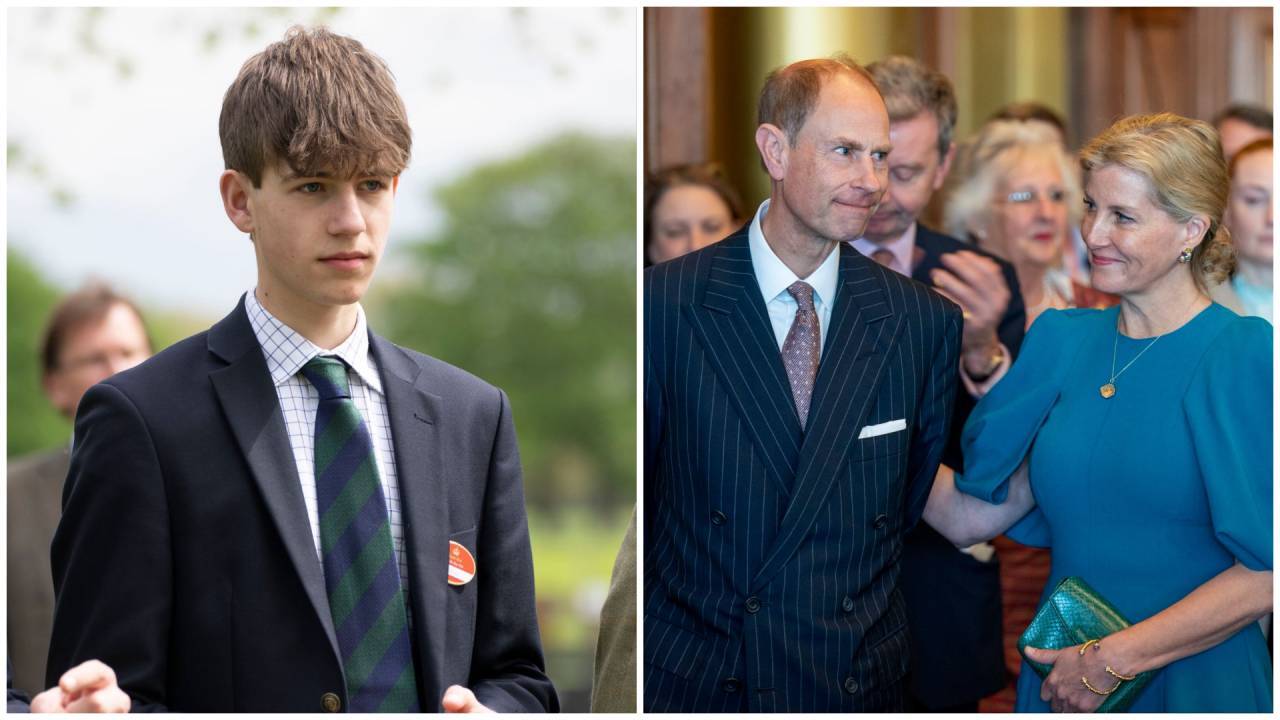
James, Earl of Wessex has secured his A-level results and opted for a future at the Royal Agricultural University, bypassing the traditional royal playbook of elite traditional universities like Oxford or Cambridge. At eighteen years old, the youngest grandchild of Queen Elizabeth II has made a calculated detour from standard ducal expectations. Instead of reading history at a redbrick institution or pursuing a standard military commission at Sandhurst, Prince Edward’s son is heading to Cirencester.
The choice tells a broader story about how the younger generation of the House of Windsor is quietly restructuring its public trajectory. For decades, royal education followed a rigid script. You went to Eton or Gordonstoun, secured a spot at St Andrews or Exeter, and emerged with a general arts degree designed to prep you for ribbon-cutting ceremonies and patronages. James has discarded that manual. By choosing the oldest agricultural college in the English-speaking world, he is signaling a distinct shift toward vocational utility, land management, and practical enterprise.
The Cirencester Pivot
Founded in eighteen forty-four, the Royal Agricultural University is not where you go to coast through tutorials on nineteenth-century poetry. It is a working hub for rural economy, estate management, and sustainable agriculture. The curriculum demands dirt under the fingernails. Students spend their days studying soil science, real estate valuation, and agricultural technology.
For the Earl of Wessex, this academic destination aligns with a quiet upbringing engineered by his parents. Edward and Sophie made the deliberate choice to raise their children outside the immediate glare of working royal life. James grew up at Bagshot Park in Surrey, far from the frenzied London paparazzi desks. His teenage years involved ordinary milestones. Working a part-time summer job at a local garden center made headlines only because it felt so aggressively normal.
That normality is now being codified into a career path. Managing vast landed estates requires an intricate understanding of property law, ecological conservation, and modern farming subsidies. The Crown Estate and the Duchy of Cornwall hold massive swathes of British land. Having family members trained in the actual mechanics of estate administration provides a functional asset that a standard politics degree simply cannot touch.
Breaking the Oxbridge Monopoly
The British aristocracy has long suffered from a collective obsession with Oxbridge degrees. For generations, second sons and distant cousins were funneled into ancient lecture halls to study classics or philosophy. It created a detached ruling class skilled in rhetoric but frequently unequipped for the practicalities of managing physical assets in a changing economic climate.
James choosing a specialized institution marks a structural break from this tradition. The modern economy values specialized, technical competence over generalized prestige. Agricultural management is an increasingly complex discipline. Climate change regulations, shifting government grants for farmers, and the integration of automated agricultural technology mean that modern estate owners must act as sophisticated business executives.
By immersing himself in this environment, James is acquiring a hard skill set. The university environment at Cirencester is notoriously unpretentious. It attracts the children of landowners, tenant farmers, and international agribusiness entrepreneurs. There is little room for courtly affectations when you are knee-deep in a livestock management seminar at eight in the morning.
The Quiet Reframing of Royal Expectations
The public often misinterprets the financial and professional realities of modern royals who sit outside the direct line of succession. They are expected to look the part while funding their own ventures. Prince Harry and Meghan Markle chose a high-profile, commercialized escape route to California. Zara and Mike Tindall built lucrative careers through equestrian sports and brand sponsorships. Princess Beatrice and Princess Eugenie maintain corporate positions in the private sector while supporting minor royal duties.
James and his sister Lady Louise Windsor occupy a unique middle ground. They are grandchildren of a monarch, yet their parents deliberately styled them as children of an earl rather than using prince and princess titles. This gave them a constitutional buffer. They escape the intense financial scrutiny directed at senior working royals while retaining the social capital of their lineage.
Choosing agriculture rather than media or corporate finance reveals a long-term strategy. Land ownership remains the bedrock of British wealth and generational power. A royal who understands how to make rural land profitable, ecologically sound, and legally secure possesses a rare brand of influence.
The Reality of Modern Estate Management
To understand why this choice matters, look at the shifting pressures on rural Britain. Traditional estates face existential economic hurdles. Maintenance costs for historic buildings are astronomical. Energy grids are straining under transition mandates. Tenant farming models are evolving.
A degree from Cirencester provides direct immersion into these structural shifts. Students do not just read textbooks; they analyze actual balance sheets of working farms. They learn how to audit carbon footprints, negotiate agricultural leases, and deploy precision farming equipment.
James will not graduate into a ceremonial vacuum. He enters a network of professionals who run the commercial machinery of the British countryside. The relationships forged over muddy fields and lecture hall coffee breaks often dictate land deals for decades.
A Pragmatic Departure
The British press often treats royal education choices as grand statements of national identity. In reality, the decision made by the eighteen-year-old Earl of Wessex looks like a remarkably sensible career move. He is eighteen, pragmatic, and positioning himself for a functional role in a changing economy.
The era of the aristocratic dilettante is closing. When even the younger members of the royal family are swapping philosophy seminars for soil science, the message is unmistakable. Practical competence is back in style, and the path to modern relevance runs right through the mud.