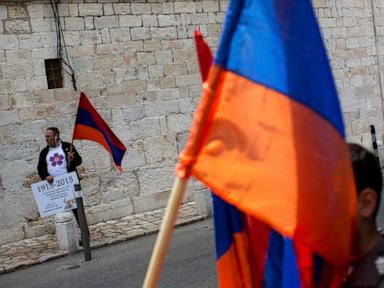
Geopolitics has a funny way of clearing a nation's moral blockages. For decades, Israel flatly refused to officially call the mass murder of 1.5 million Armenians by the Ottoman Empire during World War I a genocide. It wasn't because Israeli historians doubted the slaughter. It was because keeping Turkey happy mattered more than acknowledging a historical atrocity.
That era of tip-toeing is officially over.
Israel’s Cabinet unanimously approved a proposal to formally recognize the Armenian Genocide. Initiated by Foreign Minister Gideon Sa'ar, the measure now heads to the Knesset for a final parliamentary vote. Sa’ar framed the decision cleanly, calling it a long-overdue fulfillment of a "moral and historical duty" for the Jewish state.
But let’s be honest. This isn't just a sudden, spontaneous burst of pure ethical alignment. It is a calculated diplomatic counterpunch. Relations between Jerusalem and Ankara haven't just cooled over the last couple of years; they have completely cratered.
The breaking point with Turkey
For a long time, Israel and Turkey were close strategic allies in a volatile neighborhood. They shared intelligence, conducted joint military exercises, and built deep commercial ties. Whenever activists or politicians tried to bring an Armenian recognition bill to the Knesset floor, the government quieted it down. The fear of triggering an explosive reaction from Turkey always won the argument.
Then came Turkish President Recep Tayyip Erdogan's long, steady pivot toward Islamism, which set the relationship on a multi-decade downward slide. The total collapse happened after October 7, 2023. Erdogan aggressively championed Hamas, compared Israeli actions to Nazi Germany, and eventually severed almost all trade ties between the two countries.
By August 2025, Prime Minister Benjamin Netanyahu broke decades of prime ministerial silence by stating for the first time that he recognized the Armenian Genocide. Turkey immediately fired back, accusing him of exploiting a past tragedy for cheap political points.
When asked about the current bill, Netanyahu didn’t blink. He gave it his full public backing, shrugging off any worries about what Ankara might do next. When your opponent has already cut trade and labeled you a terrorist state, you run out of leverage to lose.
The genocide definitions game
The actual history of the 1915 atrocities isn’t what is being debated here. Historians widely agree that between 664,000 and 1.5 million Armenians died during forced marches, mass starvations, and systematic executions orchestrated by the Ottoman Empire. Thirty-two countries, including the United States, Germany, and France, have already formally called it a genocide.
Turkey’s official line has remained stubbornly identical for a century. They argue that the deaths happened during the chaotic backdrop of a global war, that civil unrest went both ways, and that the numbers are wildly inflated. They fiercely reject the word genocide.
The timing of Israel’s sudden shift carries immense irony. Right now, Israel is facing intense international pressure, including scathing reports from United Nations experts and constant accusations from Turkey itself, claiming its military operations in Gaza constitute a genocide. Israel rejects this entirely, calling the allegations a libelous sham.
By formally recognizing the Armenian Genocide now, Israel accomplishes two things simultaneously. It aggressively highlights Turkey's historical hypocrisy on the global stage, and it tries to reclaim the moral high ground as a nation founded in the literal shadow of the Holocaust.
What happens next
The Cabinet vote is a huge hurdle cleared, but it isn't the final law. The resolution still has to go through the Knesset. Given the current political climate in Israel and the unanimous backing of the Cabinet, the bill has a clear, unblocked path to passage.
If you are tracking international relations or Middle Eastern policy, you need to watch how this plays out in the coming weeks. Do not look for Turkey to stay quiet. Anticipate fierce rhetoric from Ankara, potential diplomatic expulsions of whatever low-level staff remain in the embassies, and a deepening of Turkey's alliance with regional anti-Israel factions.
For observers, the immediate move is to watch the Knesset scheduling. Once the vote is locked in, the diplomatic floorboards in the Eastern Mediterranean will shift permanently. The old status quo is gone. Israel has decided that when an ally becomes a permanent adversary, historical truths suddenly become very convenient.