The rain in Manchester does not fall; it lingers. It settles over the brickwork like a damp memory, grey and enduring, soaking through wool coats and seeping into the foundations of old cotton mills that once clothed half the world.
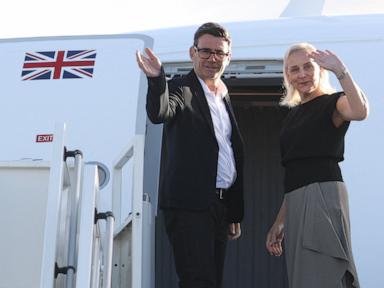
Down on the waterfront, past the crane skeletons sketching geometry against a low sky, the city's mayor, Andy Burnham, checks his watch. He is a man built for these skies—sturdy, pragmatic, carrying the perpetual urgency of someone who knows that when the rain stops, the work has only just begun. Within hours, he will swap the drizzle for the glass-and-steel expanse of the United Nations headquarters in New York.
Distance changes nothing about the air you breathe, but it changes how far your voice carries.
For decades, political gravity pulled toward capitals. Westminster held the keys; Whitehall drew the maps. Yet mayors of industrial powerhouses have grown tired of waiting for permission from Whitehall to survive the future. They watch the world reorder itself around server racks and algorithms while old manufacturing belts rust quietly in the background. They know a hard truth. Nations do not build the modern economy; cities do. Or rather, the people inside them do, working late under flickering fluorescent lights, turning raw electricity into code, models, and futures.
When Burnham steps up to speak on the global stage, he is not merely pitching a location. He is pitching a resurrection.
Consider what happens next. In New York, beneath the quiet hum of translators' booths and the low murmur of diplomats sipping lukewarm coffee from paper cups, he meets with Donald Trump's inner circle. The juxtaposition is jarring on paper. A northern English socialist mayor, forged in the trade union halls of Liverpool and the council chambers of Salford, sitting across the table from the orbit of an American populist billionaire.
Ideology is a noisy thing. It sounds like shouting matches on cable news and furious threads on social media. But ambition is quiet. Ambition speaks the universal language of supply chains, power grids, and talent pools.
Burnham’s message is disarmingly simple, stripped of the usual diplomatic doublespeak. Britain is open for business, yes, but not the old kind. Not the kind built on coal seams and shipping lanes. He is offering something invisible, weightless, and infinitely more valuable. Compute.
Artificial intelligence is usually discussed as if it arrived by magic—a sudden, unbidden storm generated by Silicon Valley gods. We talk about parameters, weights, and large language models as though they exist in a cloud, detached from gravity. But models require cooling fans the size of houses. They demand massive rivers of electricity. Most importantly, they require a specific kind of human stubbornness—the kind found in places where people spent generations figuring out how to build engines that wouldn't blow up under pressure.
Manchester knows about pressure.
To understand why a British mayor is crossing oceans to pitch artificial intelligence to American power brokers, you have to look at the map of data centers currently creeping across the British landscape. For years, the assumption was that if you wanted to build the digital future, you bought a one-way ticket to California. You rented a desk in a garage in Palo Alto. You accepted that the centers of gravity were fixed, immutable, and far away.
Except gravity shifts.
Energy costs in parts of America are skyrocketing. Water scarcity threatens the cooling systems of massive server farms in the desert southwest. Meanwhile, northern England sits on a different kind of wealth: cooling rain, reliable grid infrastructure, universities churning out thousands of computer science graduates every June, and, crucially, land that is affordable enough to dream on.
When Burnham pitches the UK as a major AI player, he is leveraging a historical asset. This is the birthplace of the industrial revolution. The very first stored-program computer, the Manchester Small-Scale Experimental Machine—affectionately dubbed the Baby—ran its first program in 1948 in a damp laboratory down the road. The logic gates that power modern machine learning trace their lineage directly back to Alan Turing pacing the floorboards of Oxford Road.
We forget our own ghosts too easily. We treat history as a museum piece rather than a toolkit.
The political calculus of seeking common ground across the Atlantic is fraught with hazard. Critics back home roll their eyes, questioning whether a municipal leader has any business playing geopolitics. Why is a mayor dabbling in international trade agreements and tech diplomacy?
Because isolation is a slow death.
If a city waits for national government policy to catch up to technological change, it will drown in its own bureaucracy. The mayors who matter in this century are those who act like chief executive officers of sovereign city-states, cutting through red tape, making direct deals, and offering foreign investors something Westminster cannot: agility.
Imagine a young software engineer sitting in a cramped flat in the Northern Quarter of Manchester. Outside her window, the trams rattle past red-brick Victorian warehouses converted into artisan coffee shops. She is training an open-source model designed to parse medical imaging for early signs of lung cancer. Her server costs are brutal. Her access to high-performance computing is limited to whatever scraps she can rent on cloud platforms based in Oregon or Frankfurt.
Now, imagine that same engineer with local municipal backing—a secure regional tech hub powered by localized data centers, backed by international partnerships brokered in New York, fueled by investment that bypasses the London bottleneck.
That is what is actually at stake in these high-level meetings. It is not about photo ops with politicians or glossy brochures handed out at UN side events. It is about whether the next generation of technological infrastructure belongs entirely to a handful of coastal monopolies, or whether it can be decentralized, rooted in communities that actually remember how to make things.
The meeting with Trump's team is not an endorsement of political theatre; it is an acknowledgment of hard reality. American capital is looking for stable, energy-rich, regulation-smart jurisdictions to house the infrastructure of the next fifty years. Britain has the talent and the history. What it has lacked is the audacity to demand a seat at the high table without asking for permission first.
Diplomacy in the age of algorithms looks less like velvet-rope handshakes and more like venture capitalism wrapped in a flag.
Burnham’s journey represents a quiet mutation in how regions govern themselves. When local leaders realize that national governments are paralyzed by culture wars and short-term electoral cycles, they take matters into their own hands. They become salesmen for their own futures.
The rain continues to fall on the Irwell. The cranes on the skyline keep turning, slow and deliberate, lifting steel into the damp air. Somewhere in a server room in Trafford Park, a fan hums at a steady, deafening pitch, burning through megawatts of power to train a model that will decide tomorrow's logistics routes or diagnose tomorrow's illnesses.
The future is not being written in the abstract. It is being forged in places that refuse to stay quiet, driven by leaders who understand that if you do not go out into the world and claim your piece of the digital map, the world will map right over you.