Power is a strange thing to watch from a distance.
On television screens across the globe, history often looks like a clean game of chess. Leaders stride across polished floors. Pens scratch against heavy paper. Microphones capture declarations that shift the gravity of nations. But when you get close enough to hear the air leave a room, you realize diplomacy is less like chess and more like a high-stakes poker game played in a mirrored hall, where every player is trying to read a reflection of themselves.
Consider the architecture of a public boast.
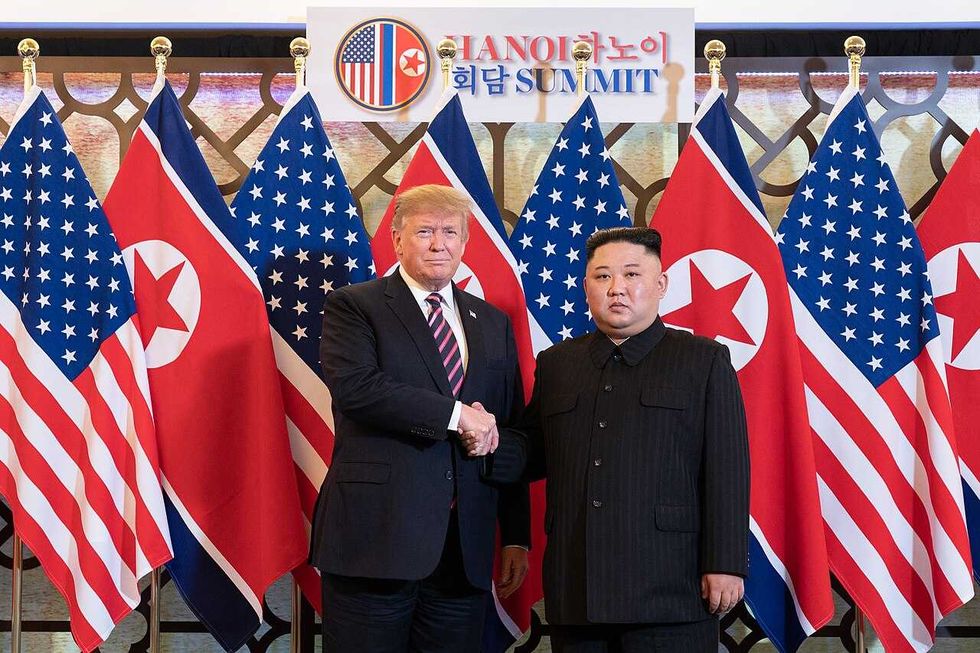
Donald Trump stepped up to a podium, his shoulders squared in that familiar posture of absolute certainty, and let the words fly. He pointed to his relationship with Kim Jong Un as a masterclass in personal leverage. He spoke of letters exchanged, of mutual respect carved out of nuclear threats, of a unique bond that only two strongmen could forge across an ideological chasm. It was a performance designed for an audience of millions. It was meant to project an image of unshakeable dominance.
Silence.
Then came the reply from the hermit state, delivered not with the stuttering hesitation of a defensive bureaucracy, but with the cold, practiced precision of a regime that has perfected the art of the insult. The North Korean response did not just disagree with the former president's narrative; it picked it apart thread by thread, exposing the frayed edges of a political fantasy. State media outlets didn't merely push back. They mocked. They used words that stung, framing the boasts as the desperate delusions of a fading politician grasping at old headlines.
Humiliation is a sharp weapon.
I remember standing near the edge of the demilitarized zone years ago, staring across that narrow strip of concrete that separates two entirely different realities. The air feels heavier there. You can taste the history in the wind, a mix of tension, paranoia, and unyielding pride. When you look across the border, you realize that the leaders in Washington and Seoul are not just dealing with a government; they are dealing with a mythos. The Kim regime survives by cultivating a narrative of absolute invulnerability. Every foreign statement is weighed, measured, and countered with maximum theatrical force.
Trump thought personal rapport could bypass institutional walls.
He believed that flattery, handshakes, and a disregard for traditional diplomatic protocol could tame a dynasty built on generational defiance. For a brief moment, it felt like it might work. Summits in Singapore and Hanoi dominated the news cycles. Pyrotechnics of peace played out on evening broadcasts. But reality has a stubborn way of breaking through stage lighting. Nuclear programs did not halt. Enrichment facilities did not close their doors. The hardware of war remained oiled and ready in underground bunkers.
When a boast meets an unyielding wall of state-controlled propaganda, the collision is messy.
The North Korean response was a masterclass in diplomatic coldness. It reminded anyone paying attention that personal chemistry is a poor substitute for structural leverage. You cannot charm an autocrat out of his ultimate insurance policy. To the regime in Pyongyang, nuclear weapons are not bargaining chips to be traded for a photo-op; they are the entire foundation of the state's survival.
Think about what happens inside the negotiation room when the cameras turn off.
Imagine the aides holding their breath. Imagine the frantic scrambling behind the scenes as press secretaries try to spin a stinging rebuke into a misunderstanding. Politics relies on momentum. Once a leader puts their personal brand on the line—claiming friendship where there is only strategic calculation—they leave themselves wide open to public rejection.
That is precisely what happened.
The boast was meant to cement a legacy. Instead, it provided an opening for an adversary to deliver a public rebuke that echoed around the world. It laid bare the limits of transactional diplomacy. You can offer friendship, you can offer praise, and you can offer the promise of economic transformation. But if the other side has nothing to lose and everything to gain by holding their ground, your words become nothing more than ammunition handed directly to your critics.
We live in an era that worships the soundbite.
We crave the quick fix, the bold claim, the dramatic reversal that proves complex geopolitical entanglements can be solved by sheer force of personality. Yet every time reality crashes into these grand illusions, we are reminded of a harder truth. Statecraft is grinding, unglamorous, and painfully slow. It requires patience, institutional memory, and an understanding that history does not bend simply because someone wills it to on a television stage.
The microphones have long since been turned off in those grand halls. The press releases have faded into the archives. But the memory of that sharp, public slap down remains etched into the record of modern diplomacy. It stands as a monument to the danger of confusing performance with power, leaving behind a quiet echo that lingers every time a politician steps up to a podium and promises an easy answer to an impossible question.