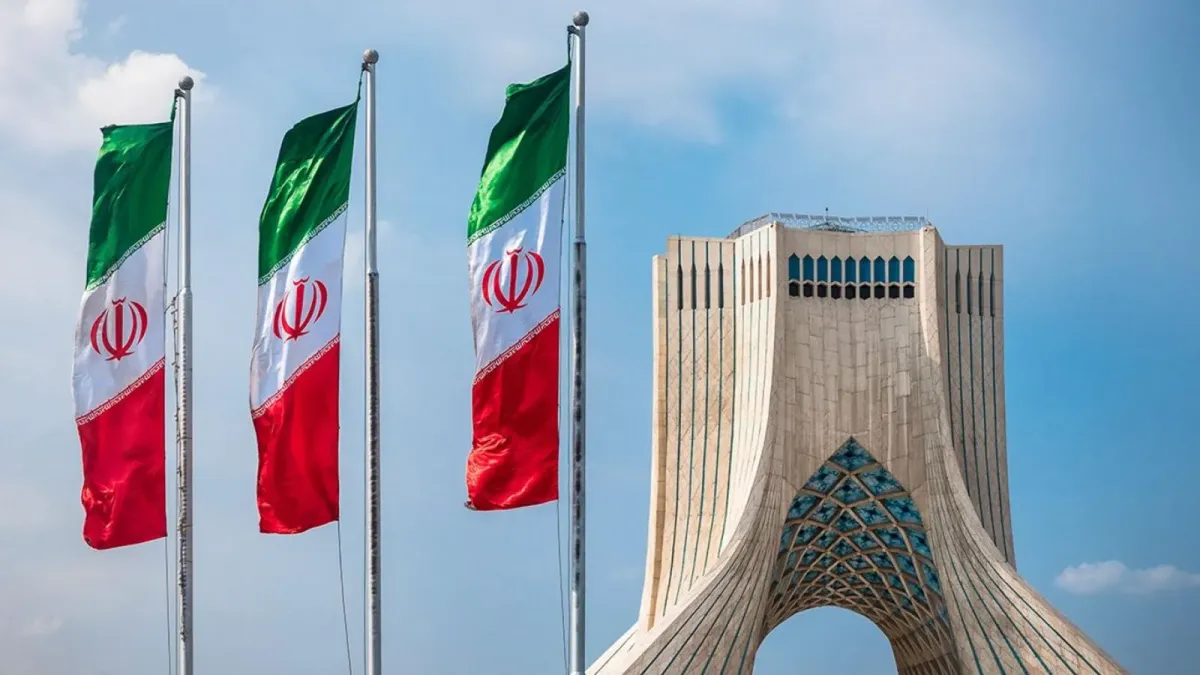
Tehran is celebrating a victory that never happened.
Following the November 2026 midterm elections, senior officials in the Islamic Republic wasted zero time spinning the results. Their narrative is simple, neat, and completely divorced from reality. According to Tehran’s state-aligned media and leadership, American voters stepped into the ballot box and issued a sweeping repudiation of President Donald Trump’s maximum-pressure posture and military escalations in the Middle East. The Western press, addicted to horse-race political framing, swallowed the bait whole. Headlines echoed the premise that domestic political shifts in Washington just handed Iran a get-out-of-jail-free card.
That is lazy consensus. It misunderstands how the American presidency actually operates in its final two years, misreads why voters pull the lever in midterm cycles, and completely ignores the structural mechanics of U.S. foreign policy.
Tehran is reading American domestic tea leaves through an authoritarian lens. When you run a closed system where every public signal is top-down theater, you assume a democratic midterm swing means the executive branch has been neutered. In reality, a president facing domestic legislative gridlock does not become less aggressive abroad. They become more aggressive.
The Myth of the Foreign Policy Referendum
American voters do not cast midterm ballots based on the Persian Gulf. Period.
I have spent years watching foreign ministries and intelligence analysts in rival capitals burn millions of dollars trying to map U.S. congressional races onto overseas deterrence. They hire Washington consultants. They parse district-level polling. They convince themselves that a shift in the House or Senate translates to a sudden wave of anti-interventionist pacifism in the American heartland.
It never works because the premise is flawed. Exit polling across decades of American midterm elections—from the 2006 backlash during the Iraq War to the 2010 and 2018 waves—consistently proves that domestic pocketbook issues dictate turnout. Inflation, housing costs, healthcare premiums, and local governance drive the electorate. Foreign policy barely registers in the top five priorities unless thousands of American boots are actively bogged down in a ground occupation.
Even when foreign friction does register with voters, a vote against the incumbent party is rarely a vote for an adversary's geopolitical demands. Tehran is mistaking domestic voter fatigue over grocery prices and partisan polarization for sympathy toward the Islamic Revolutionary Guard Corps. That is a fatal analytical error.
Why Lame-Duck Presidents Turn Outward
Here is the geopolitical reality that Tehran’s leadership is missing: losing legislative leverage at home makes a U.S. president more dangerous abroad, not less.
When a president loses control of Congress—or sees their legislative margin evaporate—the domestic agenda hits a brick wall. Tax bills stall. Judicial confirmations slow to a crawl. Domestic regulatory overhauls get tied up in endless committee subpoenas and funding standoffs.
Where does an American commander-in-chief turn when Congress locks the doors on domestic policy? To the one arena where the Constitution and decades of statutory precedent grant the executive branch near-unilateral authority: national security and foreign affairs.
Political scientists and historians have documented this pattern for generations. Look at Bill Clinton in the late 1990s after the Republican takeover of Congress. Look at Barack Obama pivoting aggressively toward executive-driven foreign deals and drone campaigns after 2010 and 2014. When domestic avenues close, the Oval Office looks outward to secure its legacy and project strength.
For Donald Trump, who views foreign policy through the prism of personal leverage, deterrence, and unpredictable escalation, a constrained domestic legislative calendar removes distractions. He no longer has to spend political capital whipping votes on Capitol Hill for domestic bills that are dead on arrival. His bandwidth shifts straight back to the Situation Room.
The Structural Trap of "Congressional Oversight"
Tehran’s propagandists are banking on the idea that a newly empowered congressional opposition will pass War Powers resolutions, block weapons transfers, or starve the Pentagon of operational funds to halt confrontation with Iran.
Anyone who understands how the U.S. Code actually works knows this is pure fantasy.
1. The War Powers Resolution Is a Paper Tiger
Since its passage in 1973, the War Powers Resolution has never successfully stopped a U.S. president from conducting targeted military strikes, naval blockades, or covert operations. To override a presidential veto on a War Powers restriction, Congress needs a two-thirds supermajority in both chambers. In a hyper-polarized Washington, getting 67 Senators and 290 House members to agree on what day of the week it is borders on impossible—let alone uniting to tie the commander-in-chief's hands during an active standoff with a regime that chants "Death to America."
2. Sanctions Are Hardwired Into Law
Even if a new congressional majority wanted to ease economic pressure on Tehran to de-escalate tensions, they cannot simply flip a switch. The sanctions architecture strangling Iran’s oil exports and central bank is a dense web of overlapping executive orders and statutory mandates passed over multiple administrations. Lifting them requires active presidential waivers or new legislation that can survive a veto. Neither is happening.
3. The Bipartisan Hawk Consensus on Iran
Tehran fundamentally misreads the American political spectrum. While progressive and libertarian wings of both parties loudly criticize military adventurism, the institutional center of gravity in both the Democratic and Republican caucuses remains deeply hostile to Tehran’s nuclear program, ballistic missile proliferation, and regional proxy network. A shift in congressional control does not mean Capitol Hill suddenly wants to send pallets of cash to Tehran. At best, it means lawmakers demand more briefings before strikes occur. It does not mean the strikes stop.
What Analysts Actually Get Wrong About Deterrence
Let us pause and run a thought experiment. Imagine a scenario where Tehran takes its own rhetoric seriously.
Suppose Iran’s Supreme National Security Council genuinely believes that Trump is politically crippled after the midterms. Operating under that assumption, the IRGC decides to test Washington’s resolve. They ramp up uranium enrichment closer to weapons-grade thresholds, greenlight asymmetric harassment of commercial shipping in the Strait of Hormuz, or activate regional militias to strike U.S. assets, betting that the White House is too scared of domestic political fallout to retaliate.
What happens next?
Trump does not back down to appease midterm voters—because he never has to face voters again. A second-term president post-midterms is completely insulated from future electoral consequences. There is no re-election campaign to protect. There is no swing-state polling to babysit.
If Tehran pushes a lame-duck president with zero electoral constraints and a penchant for overwhelming, unpredictable retaliation, the response will not be a calibrated diplomatic demarche. It will be massive kinetic force designed to re-establish deterrence overnight. By believing their own propaganda about U.S. domestic weakness, Tehran walks straight into a catastrophic miscalculation.
The Real Reason Tehran Is Celebrating
If the midterm results do not actually rescue Iran from U.S. pressure, why are Iranian leaders broadcasting this narrative so loudly?
Because the intended audience is not Washington. It is Tehran.
Iran’s economy is buckling under severe currency devaluation, chronic inflation, energy shortages, and structural corruption. Public discontent inside the country is a simmering powder keg. When the ruling establishment tells the Iranian public that American voters just rejected Trump’s war, they are buying time. They are trying to convince domestic skeptics, nervous currency traders, and restive citizens that relief is just around the corner—that the regime simply needs to hold out a little longer while the Great Satan collapses under its own internal divisions.
It is an old authoritarian survival tactic: project external inevitability to suppress internal dissent.
The Downside of the Contrarian View
To be intellectually honest, there is one scenario where Tehran’s reading holds a sliver of truth.
If the midterm shift triggers a prolonged, scorched-earth constitutional crisis in Washington—such as paralyzing impeachment proceedings, extended government shutdowns, or acute economic shock—the White House’s crisis-management bandwidth could become severely degraded. Foreign adversaries historically exploit moments when Washington is completely consumed by internal chaos. Furthermore, if public exhaustion over foreign entanglement spikes alongside a domestic recession, future defense appropriations for prolonged, open-ended deployments could face genuine friction on Capitol Hill.
Acknowledging that friction, however, is worlds apart from claiming that U.S. voters delivered a mandate to save the Iranian regime. Friction slows down bureaucrats; it does not stop airstrikes or unfreeze central bank assets.
Stop Reading Headlines and Watch the Leverage
If you are trying to forecast what happens next between Washington and Tehran, stop reading translated speeches from Iranian parliamentarians and stop listening to pundits who treat geopolitics like a cable news panel.
Watch the actual levers of power instead:
- Track Treasury enforcement, not speeches: Look at secondary sanctions enforcement against third-party shipping networks and illicit oil buyers. If tanker seizures and financial blacklistings continue unabated, U.S. policy has not softened by a single millimeter.
- Watch force posture in CENTCOM: Carrier strike group rotations, bomber task force deployments, and air defense placements tell you the truth about executive intent. Pentagon hardware movements do not lie for partisan spin.
- Ignore congressional theater: Floor speeches demanding "restraint" or "consultation" are standard midterm posturing. Until you see a veto-proof majority stripping funding from specific operational accounts, Congress is a spectator.
Tehran is confusing a routine American electoral cycle with a collapse of American resolve. History shows that adversaries who mistake democratic noise for strategic paralysis pay a steep price. Trump has two years left, zero elections left to win, and absolute executive command over the world's most lethal military apparatus—and Tehran just convinced itself he is harmless.