Every defense analyst with a podcast is currently pushing the same lazy script. They look at a few drone deliveries, a redeployment of naval assets, and a shift in rhetoric out of Tehran, then they rush to type out the same tired headline: Iran is finally pivoting to an aggressive, offensive posture for the next war.
It is a neat narrative. It fits neatly into budget cycle requests and cable news countdown timers. It is also entirely wrong.
I have spent the better part of two decades watching western intelligence agencies, think tanks, and media echo chambers misread Tehran’s operational doctrine. Analysts love to treat military strategy like a chess match where pieces swap roles on command. They see a counter-strike or a forward-deployed missile battery and assume a defensive power is suddenly morphing into an expansionist regional empire seeking total victory.
They are confusing tactical escalation dominance with strategic offensive doctrine. Iran is not preparing an offensive war. It is doubling down on a defensive architecture built around asymmetric denial. If you think Tehran is building an expeditionary invasion force, you do not understand how the Islamic Revolutionary Guard Corps operates, how its geography dictates its limitations, or why offensive operations are the exact opposite of what its leadership actually wants.
The Myth of the Expeditionary Force
Let us clear up the core misconception immediately. An offensive military posture requires power projection. It requires logistics trains that can sustain armor, infantry, and air superiority hundreds of miles away from home territory, across contested borders, against modern air defense systems.
Look at Iran's actual order of battle. Their armored corps is aging, reliant on patchwork maintenance schedules and domestic refurbs of vintage Soviet hardware. Their blue-water navy consists of patrol boats and converted container ships fitted with helicopter pads. They do not have the airlift capacity, the tanker fleets, or the amphibious landing capability to seize and hold territory outside their immediate periphery.
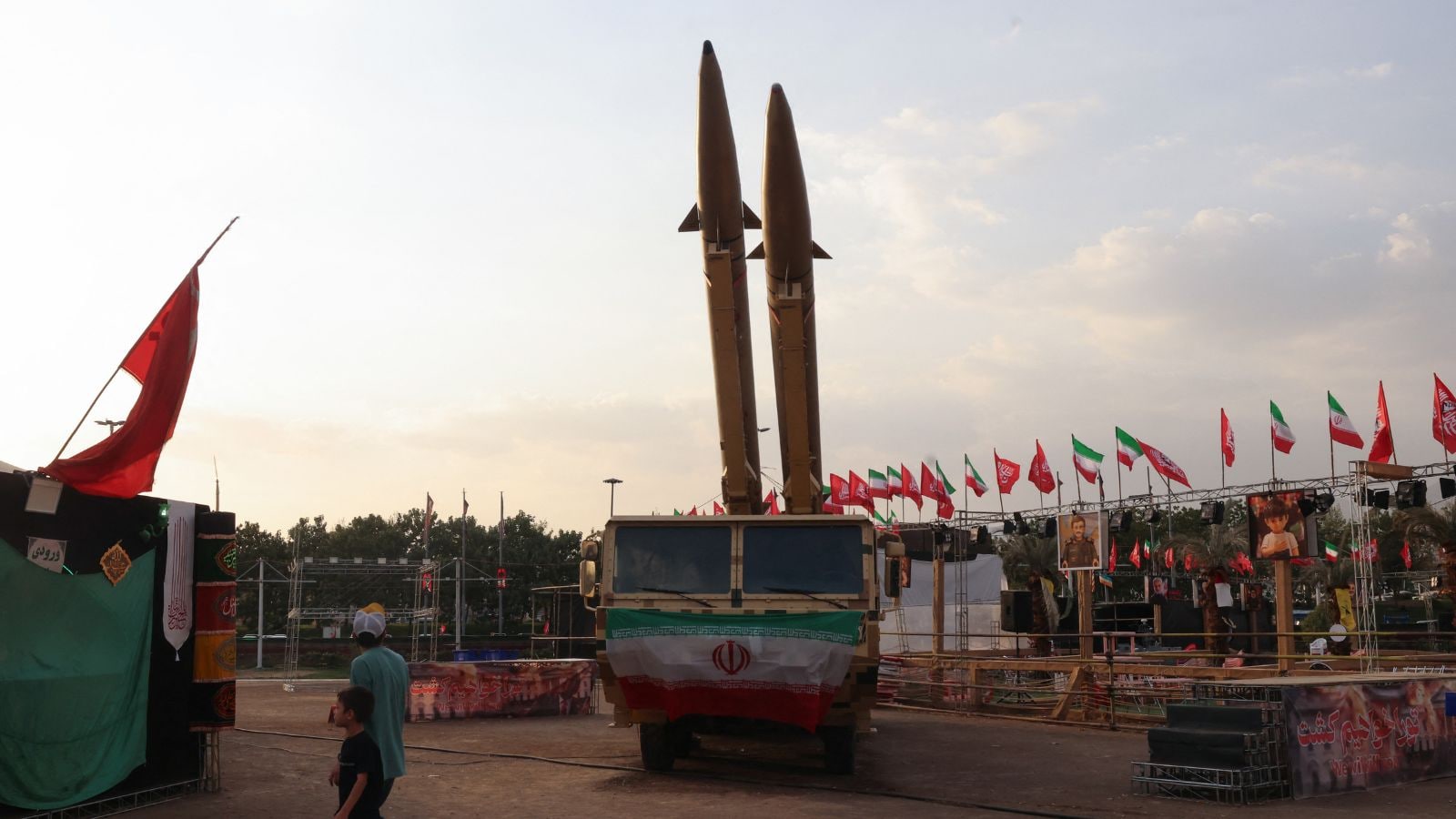
When western media outlets report on an offensive pivot, they point to ballistic missile salvos and proxy coordination. But firing a missile from Isfahan into a neighboring country is not an offensive military campaign; it is a long-range tactical standoff maneuver designed to shape adversary behavior. It is an act of coercion, not conquest.
Conquest requires boots on the ground that can hold a corner against a counter-offensive. Tehran knows this better than anyone. Their entire military modernization program since the Iran-Iraq War has been explicitly designed to avoid conventional land wars of choice. They watched the United States dismantle conventional militaries in Iraq and Afghanistan and realized that fighting a western-style offensive war is national suicide.
Instead, they built the world’s most sophisticated asymmetric defense network. That network relies on depth, underground tunnel cities, missile dispersal, and proxy militias. None of those assets can cross an ocean or march across a desert to conquer a capital city. They are anchor points for regional deterrence. Calling this an offensive pivot is like calling a porcupine a predator because it shoots quills when cornered.
Why the Pentagon Loves the Offense Narrative
To understand why this falsehood persists, follow the money and the institutional incentives.
I have sat in defense briefings where threats are systematically inflated. If you tell Congress that an adversary is building a defensive militia network designed to bleed you through a thousand cuts, the funding response is complicated, messy, and requires long-term diplomatic and intelligence work.
If, however, you tell Congress that a hostile state is pivoting to an offensive posture—that they are building a strike force capable of dominating the region—the checkbook opens immediately. The narrative of an aggressive, expanding adversary justifies missile defense contracts, carrier strike group deployments, and permanent regional posture increases.
The media eats it up because nuance does not generate clicks. "Iran Shifts to Strategic Defense via Distributed Missiles" does not make anyone turn on the evening news. "Iran’s Military Pivots to Offensive Mode" makes people panic.
The danger of this misdiagnosis is not just academic. When policymakers believe an adversary is going on the offensive, they advocate for preemptive escalations. They misinterpret defensive signaling as preparation for a first strike. That is how accidental wars start—not because an actor wants to conquer, but because both sides convinced themselves the other was about to attack.
The Reality of Asymmetric Deterrence
Let us look at what is actually happening on the ground. Tehran's recent military adjustments are reactions to acute vulnerabilities, not expressions of newfound strength.
The elimination of key leadership figures, cyber attacks on critical infrastructure, and persistent intelligence breaches inside their borders have exposed massive gaps in their security. Their response has been to decentralize command structures and push authority down to local commanders.
This decentralization is often misread as a preparation for chaotic offensive action. In reality, it is a survival mechanism. It ensures that if a command node is vaporized tomorrow, regional networks can still execute pre-planned retaliatory fire without waiting for a phone call from Tehran. It is a dead-man's switch, not a blitzkrieg.
Furthermore, their drone and missile programs are fundamentally cheap substitutes for a modern air force. Building a fifth-generation fighter jet requires trillions of dollars and an advanced industrial base that sanctions have kept out of reach. Building a delta-wing suicide drone requires off-the-shelf commercial electronics and a fiberglass mold.
Using cheap drones to overwhelm expensive air defense batteries is smart economics, but it is not an offensive breakthrough. It is the weapon of a state that knows it cannot win a conventional air war, so it chooses to bankrupt its enemies one interceptor missile at a time.
The Downside of the Defensive Shell
My contrarian take has its own vulnerabilities, and intellectual honesty requires admitting them.
By arguing that Iran is strictly defensive, critics will claim I am minimizing the very real terror and instability their regional network inflicts. They will point to maritime disruptions in key shipping lanes, rocket barrages targeting civilian areas, and the destabilizing actions of allied militias across Lebanon, Yemen, and Iraq.
They are right to point that out. A military strategy does not need to be "offensive" in the traditional Clausewitzian sense of conquering territory to be devastatingly destructive. Iran's reliance on asymmetric proxy warfare creates a gray-zone conflict zone that bleeds economies, disrupts global commerce, and keeps the Middle East on a permanent knife-edge.
Calling it defensive does not make it benign. It makes it harder to defeat. You cannot deter a conventional army by threatening to destroy its capital if its doctrine relies on distributed, non-state proxies who live among civilian populations. The western security apparatus keeps trying to apply 20th-century deterrence models to a 21st-century network adversary, and it fails every single time.
Stop Waiting for the Blitz
The next time you read a breathless analysis about Iran's aggressive new war plans, look past the aggressive phrasing. Ask yourself a simple question: Where are the divisions? Where is the logistics tail capable of sustaining an invasion?
They do not exist.
Iran’s military is not pivoting to offense. It is hunkering down. It is refining a doctrine of cost-imposition, keeping its head low, and ensuring that any direct military intervention against its regime costs more than any rational actor is willing to pay.
Stop buying the marketing copy designed to justify defense budgets. Look at the logistics, look at the geography, and look at the doctrine.
They aren't coming for you. They are just trying to survive.