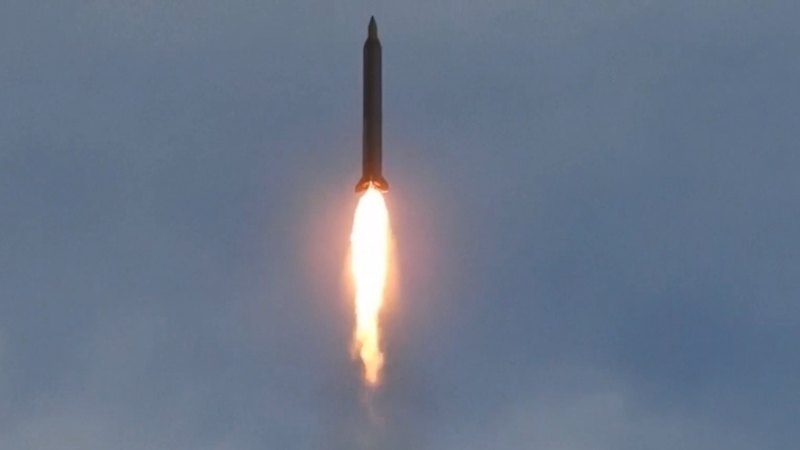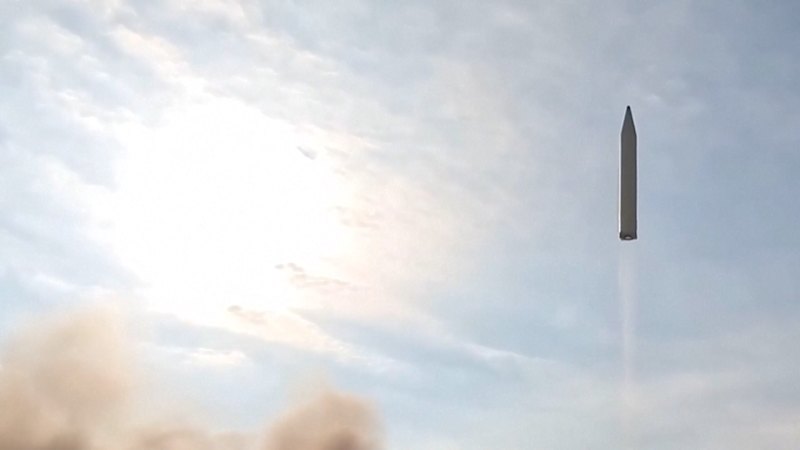
The footage released by Iranian state media this week, showing a series of ballistic missiles screaming into the night sky, was intended to be a show of force for a domestic audience. To the trained eye of a weapons analyst, however, the grainy video revealed something far more unsettling than mere saber-rattling. Iran has shattered its self-imposed 2,000-kilometer range limit, proving it can now strike targets as far as 4,000 kilometers away. This leap in capability, demonstrated by an attempted strike on the joint UK-US base at Diego Garcia in the Indian Ocean, effectively places every European capital within Tehran's reach and ends a decade of Western strategic assumptions.
The Diego Garcia Incident
On March 21, 2026, the Islamic Revolutionary Guard Corps (IRGC) launched two intermediate-range ballistic missiles toward the remote atoll of Diego Garcia. While one failed in flight and the other was intercepted by American defenses, the technical reality of the launch is what matters. Diego Garcia sits roughly 4,000 kilometers from southern Iran. For years, Tehran claimed its missile program was purely defensive and capped at 2,000 kilometers. That lie is now dead.
The precision and distance of this launch suggest that Iran has successfully adapted its satellite launch vehicle (SLV) technology for military use. By utilizing a multi-stage rocket—likely a variant of the Qaem-100 or a modified Khorramshahr-4—the IRGC has transitioned from a regional threat to a transcontinental one. This is not just a longer fuse; it is a different class of warfare.
The Clandestine Physics of Range Extension
Engineering a missile to fly twice its previous distance requires more than just extra fuel. It requires a sophisticated understanding of stage separation and weight management. Intelligence reports suggest the IRGC may have achieved this by deploying a significantly lighter warhead on an existing airframe.
- The Light-Warhead Tradeoff: By reducing the payload from the standard 1,500 kilograms to approximately 500 kilograms, the missile can maintain atmospheric exit speeds for longer, extending its ballistic trajectory.
- Multi-Stage Ignition: The use of solid-fuel second and third stages allows for rapid deployment and less preparation time than liquid-fueled predecessors like the Shahab-3.
- Re-entry Vehicles: The footage shows what appear to be Maneuverable Re-entry Vehicles (MaRVs), which are designed to bypass traditional missile defense systems like the Patriot or the Arrow 3 by shifting their flight path during the final descent.
This technical evolution was likely accelerated by the "Second Iran War" which began in February 2026. Under the pressure of intense Israeli and American airstrikes, the IRGC has been forced to "use or lose" its most advanced experimental hardware.
A System Under Siege
While the missile launches look impressive on camera, they are the desperate gasps of a military infrastructure being systematically dismantled. Since the start of Operation Roaring Lion, coalition forces have reportedly eliminated nearly 70% of Iran’s mobile launcher array. The strikes have not just targeted the missiles themselves, but the specialized personnel required to fire them.
Over the weekend of March 20–21, five simultaneous strikes in western Iran targeted the heart of the ballistic missile array. These weren't just hits on warehouses; they were assassinations of the technical elite. Two senior scientists, known only by the aliases Khoda Bakhsh and Mohammad Reza, were reportedly killed in a surgical strike on a research site at Malek Ashtar University.
Despite these losses, the IRGC continues to launch waves of "saturation attacks." The strategy is simple: overwhelm air defenses with a mix of cheap drones and a few high-end ballistic missiles. On March 19 alone, Iran launched five salvos at Jerusalem and northern Israel within a single hour. The debris from an intercepted cluster munition hit a daycare in Rishon Lezion, while another impact at the Haifa oil refinery served as a reminder that even a "failed" strike can cause catastrophic economic damage.
The European Wake-up Call
The most profound consequence of this range extension is political. For years, European nations viewed the Iranian missile threat as a Middle Eastern problem. With the 4,000-kilometer barrier broken, that luxury is gone.
London, Paris, and Berlin are now theoretically within the crosshairs of the IRGC’s newest hardware. The NATO air defense umbrella, which is largely focused on the Russian frontier, is ill-equipped to handle a saturation strike coming from the south. This shift in the "azimuth of threat" renders existing directional defenses insufficient.
The IRGC's influence over the regime's decision-making has only tightened as a power vacuum grows in Tehran. Following the death of Supreme Leader Ali Khamenei in the early days of the conflict, his son Mojtaba Khamenei has struggled to maintain the same level of authority. In this vacuum, the most aggressive elements of the military are now the ones holding the launch keys.
The Attrition Reality
The footage released by Tehran is a curated image of strength, but the data tells a story of depletion. The rate of fire has dropped from dozens of missiles per day at the start of the month to single, sporadic launches.
The coalition has struck at least 77% of the 107 known tunnel entrances to Iran's underground "missile cities." If the IRGC cannot move its launchers out of these bunkers, the missiles are nothing more than expensive lawn ornaments. However, the 4,000-kilometer breakthrough proves that even a crippled regime can still produce a strategic shock.
The era of assuming Iranian restraint was a product of technical limitation is over. It was always a choice, and that choice has been revoked.
Move your focus to the Strait of Hormuz, where the IRGC has threatened to target global energy infrastructure in response to any further strikes on their power plants.