The diesel generator kicks in with a mechanical cough, followed by a thick, acrid plume of black exhaust.
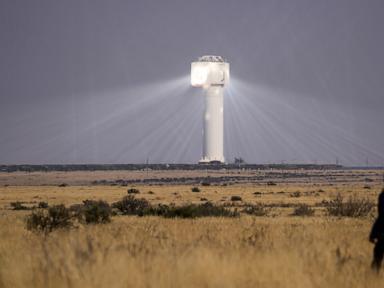
It is two in the afternoon. The sky outside is a blinding, uninterrupted expanse of blue. The sun beats down with a ferocious, infinite energy, baking the corrugated roofs and radiating off the asphalt. Up above, there is enough raw, free, thermodynamic power bombarding the continent to run every factory, light every hospital, and power every smartphone a thousand times over.
Down below, the grid has just failed. Again.
The factory floor goes dark for three agonizing seconds before the backup generators roar to life. The air quickly fills with the smell of burning diesel, the expensive, dirty lifeblood of an economy forced to rely on itself when the system fails.
We talk about the global energy transition as if it were a purely technological challenge. We obsess over the falling price of photovoltaic cells. We track the rising energy density of lithium-ion batteries. We marvel at the sheer size of offshore wind turbines. The narrative we are fed is one of hardware and engineering. If we just manufacture enough panels, if we just build enough batteries, the fossil fuel era will end.
But the real problem lies elsewhere. The hardware is ready. The engineering is solved. The sun is waiting.
The barrier between a continent desperate for electricity and the limitless energy falling from the sky is not made of silicon or glass. It is made of paper.
The Anatomy of a Dead Deal
To understand why the world’s sunniest continent is still burning expensive, imported diesel, let us invent a woman named Amara. Amara is a hypothetical composite of a dozen frustrated project developers I have spoken with over the years, a stand-in for a very real, very quiet tragedy happening in boardrooms every day.
Amara wants to build a fifty-megawatt solar farm.
She has the land secured. She has the engineering plans approved. The cost of the solar panels has dropped by ninety percent over the last decade. She runs the math. The electricity her farm produces will be vastly cheaper than the current power floating around the national grid. It is an obvious, undeniable win. She takes her proposal to a global infrastructure fund in London or New York to get the millions of dollars needed to buy the equipment and pay the workers.
The investors sit across the table. They look at her financial model. They agree that the sun is bright. They agree that the panels are cheap.
Then, they ask the questions that actually matter.
"Who is buying this power?" they ask.
Amara tells them it will be sold to the state-owned national utility company.
"Is the utility solvent?" they reply. "Do they collect enough money from their citizens to actually pay you every month for the next twenty years? If a new political party wins the election next year, will they honor the contract you sign today? If inflation spikes, is the tariff we agreed upon protected? If a dispute arises, do the local courts have the independence to rule against the government?"
Amara hesitates. She knows the national utility is deeply in debt. She knows the regulatory commission is appointed directly by a president who is facing a tough reelection and might artificially freeze electricity prices to win votes. She knows the courts are backlogged and politically sensitive.
The investors close their folders.
The risk is too high. The money stays in London. The solar farm is never built. Amara goes home. And the diesel generators keep running.
The Physics of Money
Energy poverty is not a lack of resources. It is a lack of trust.
Money behaves like water. It flows downhill, always seeking the path of least resistance. When a pension fund in Europe decides where to invest a billion dollars, it is looking for predictability.
If that fund builds a wind farm in Germany or a solar park in Texas, the return on investment might be low—perhaps three or four percent—but the certainty is absolute. The laws are fixed. The utility will pay its bills. The courts will enforce the contracts.
If that same fund looks at a project in a developing economy, the lack of institutional trust creates a dam. To convince that money to flow, the project has to offer massive returns to offset the risk. This is known as the cost of capital.
Because the institutions governing the energy markets in many African nations are fragile, opaque, or politically compromised, the cost of capital skyrockets. A solar project that would cost three percent to finance in Europe might cost fifteen or twenty percent to finance in sub-Saharan Africa.
The physical solar panel costs the exact same amount whether it is shipped to Berlin or Accra. The sun shines much brighter in Accra. But the electricity produced by that panel ends up being significantly more expensive in Accra entirely because of the invisible cost of financial risk.
We are losing the fight for clean energy not in the laboratories, but in the ministries.
The Unsexy Revolution
This is the uncomfortable truth about the future of energy. You cannot parachute a twenty-first-century technological grid into a mid-twentieth-century bureaucratic framework.
When international summits convene to discuss climate goals, the headlines always focus on the billions of dollars pledged for "green infrastructure." Politicians smile for the cameras, shaking hands in front of massive wind turbine blades.
Nobody takes a photo in front of a well-drafted legal statute. Nobody throws a parade for the establishment of an independent energy regulatory board. Nobody writes breathless news articles about a state utility company successfully auditing its billing department to reduce commercial losses.
Yet, this deeply unsexy, tedious, institutional plumbing is the only thing that actually matters.
Building stronger institutions means divorcing the physical reality of the power grid from the volatile theater of politics. It means creating regulatory bodies that are funded independently and staffed by technocrats who cannot be fired just because they approved a necessary, but unpopular, tariff increase.
Consider what happens when a utility is heavily subsidized by the government to keep consumer prices artificially low. It feels like a political victory in the short term. The citizens are happy. But behind the scenes, the utility is bleeding cash. It cannot afford to maintain the existing wires, let alone pay private developers for new renewable energy. The grid begins to rot from the inside out. Blackouts become frequent. The citizens, angry at the darkness, turn to expensive, polluting generators. The political attempt to make power cheap ultimately makes it wildly expensive and entirely unreliable.
Breaking this cycle requires a specific kind of courage. It requires politicians to willingly surrender power, handing the keys of the energy sector over to independent institutions.
The Friction of Reality
I have sat in rooms where these transitions are attempted. It is maddening. It is exhausting.
You find yourself arguing over the definition of "force majeure" in a Power Purchase Agreement for six months. You watch as a brilliant technical plan is stalled because three different government ministries claim jurisdiction over a single piece of land, and the internal rivalries paralyze the paperwork.
It is easy to become cynical. It is easy to look at the sprawling, tangled mess of overlapping authorities, underfunded courts, and indebted utilities and conclude that the transition to renewables will never happen fast enough.
I have felt that despair. I have watched brilliant engineers pack up and leave because they could not secure a basic grid connection permit after two years of waiting. The friction of reality wears you down.
But you also see the alternative, and you realize failure is not an option.
The Demographic Time Bomb
By the year 2050, one in four people walking the surface of the Earth will be African. The continent is urbanizing at a speed unprecedented in human history. Entire megacities are rising, demanding steel, concrete, cooling, transportation, and light.
They will get their energy. Human beings always find a way to power their survival.
If the institutional roadblocks remain, if the cost of capital for solar and wind remains prohibitively high, these growing economies will do what every industrialized nation before them has done. They will dig up coal. They will drill for gas. They will burn whatever is cheapest and easiest to finance locally, regardless of the carbon output.
You cannot lecture a mother cooking over a toxic charcoal fire about global emissions. You cannot tell a hospital operating by flashlight to wait for a greener alternative.
If the industrialized world wants Africa to leapfrog the fossil fuel era, the focus must immediately shift from donating technology to fortifying systems. The climate battle will be won or lost based on the legal frameworks adopted in Nairobi, Lagos, and Johannesburg over the next five years.
Blueprint for the Invisible
So, what does this actually look like in practice? How do you build an institution?
First, you restructure the monopolies. For decades, electricity in most African countries was handled by a single, monolithic, state-owned enterprise. They generated the power, they transmitted the power, and they billed the customer. When an entity controls everything, it is accountable for nothing. Inefficiencies are hidden. Corruption finds dark corners to thrive.
The modern shift requires breaking these titans apart. You create one entity solely responsible for the high-voltage transmission lines—a neutral referee. You create separate, competitive companies for generation. When a private solar developer knows they are connecting to a neutral grid, rather than a grid owned by a state company they are actively competing against, trust begins to form.
Second, you modernize the revenue collection. A shocking amount of electricity generated in developing grids simply vanishes. It is stolen through illegal hookups, or it is lost because the billing software is ancient and millions of customers simply never receive an invoice.
If a utility cannot collect money from its citizens, it cannot pay the solar developers. Digitizing the grid, installing smart meters that require prepayment, and tracking the electron from the panel to the plug transforms a bleeding utility into a bankable business. When the utility has a clean balance sheet, the global infrastructure funds in London and New York stop asking questions and start writing checks.
Third, you pool the risk. African nations are beginning to realize that their individual grids are too small to absorb massive renewable projects. A solar farm large enough to power half of a small country is incredibly risky; if a cloud covers the sun, the whole nation goes dark.
By building massive interconnectors across borders, nations are creating regional power pools. The West African Power Pool is slowly stitching together fourteen countries. If it rains in Senegal, they can buy solar power from Mali. If the wind dies in Ghana, they can draw hydroelectric power from Ivory Coast.
This requires the highest level of institutional trust. It requires sovereign nations to trust their economic lifeblood to the stability of their neighbors. It is diplomacy measured in megawatts.
The True Cost of Delay
Every month that passes without regulatory clarity is a month that locks in another decade of pollution.
When a government delays the publication of a new grid code, or when a regulatory board abruptly cancels a scheduled auction for renewable contracts due to internal politics, the damage is not merely a postponed press release.
Capital is impatient. The investors who had earmarked hundreds of millions of dollars for that country will simply pivot. They will send that money to a wind farm in the North Sea. They will buy utility-scale batteries in Australia. The capital flees, leaving the developing nation starved of the very infrastructure it desperately needs to grow.
The citizens are the ones who pay the price. They pay it in the form of respiratory illnesses from indoor smoke. They pay it in the form of rolling blackouts that destroy the profit margins of small businesses. They pay it in the form of lost educational hours, as children strain to read textbooks under the flickering, uneven glow of kerosene lamps.
The stakes are impossibly high. The mechanics are painfully slow.
We must stop treating energy access as an engineering problem waiting for a technological savior. We have the technology. We have had it for years. What we lack is the organizational stamina to rewrite the rules of how power—both electrical and political—is distributed.
In the end, the physical wire that carries electricity into a home is just the final, visible manifestation of a much deeper, invisible infrastructure.
It is the culmination of a contract that held up in court. It is the result of a regulatory tariff that reflected reality rather than political fantasy. It is the product of a utility that learned to balance its books.
When the lights finally come on, and stay on, it will not just be the victory of a solar panel catching the afternoon light. It will be the victory of a quiet, unglamorous bureaucracy that finally decided to work.