Consider a crisp five-dollar bill. It feels solid between your fingers. It has weight, history, and a promise printed right on its face. But if you walk into a grocery store today, that same slip of paper behaves differently than it did just a few years ago. It buys less milk. It buys fewer eggs. The paper hasn't shrunk, and the ink hasn't faded, but something quiet and relentless has eaten away at its soul.
This is not an accident of nature. It is the result of human decisions made in quiet rooms decorated with mahogany and brass, far away from the checkout lines where ordinary people have to stretch their paychecks.
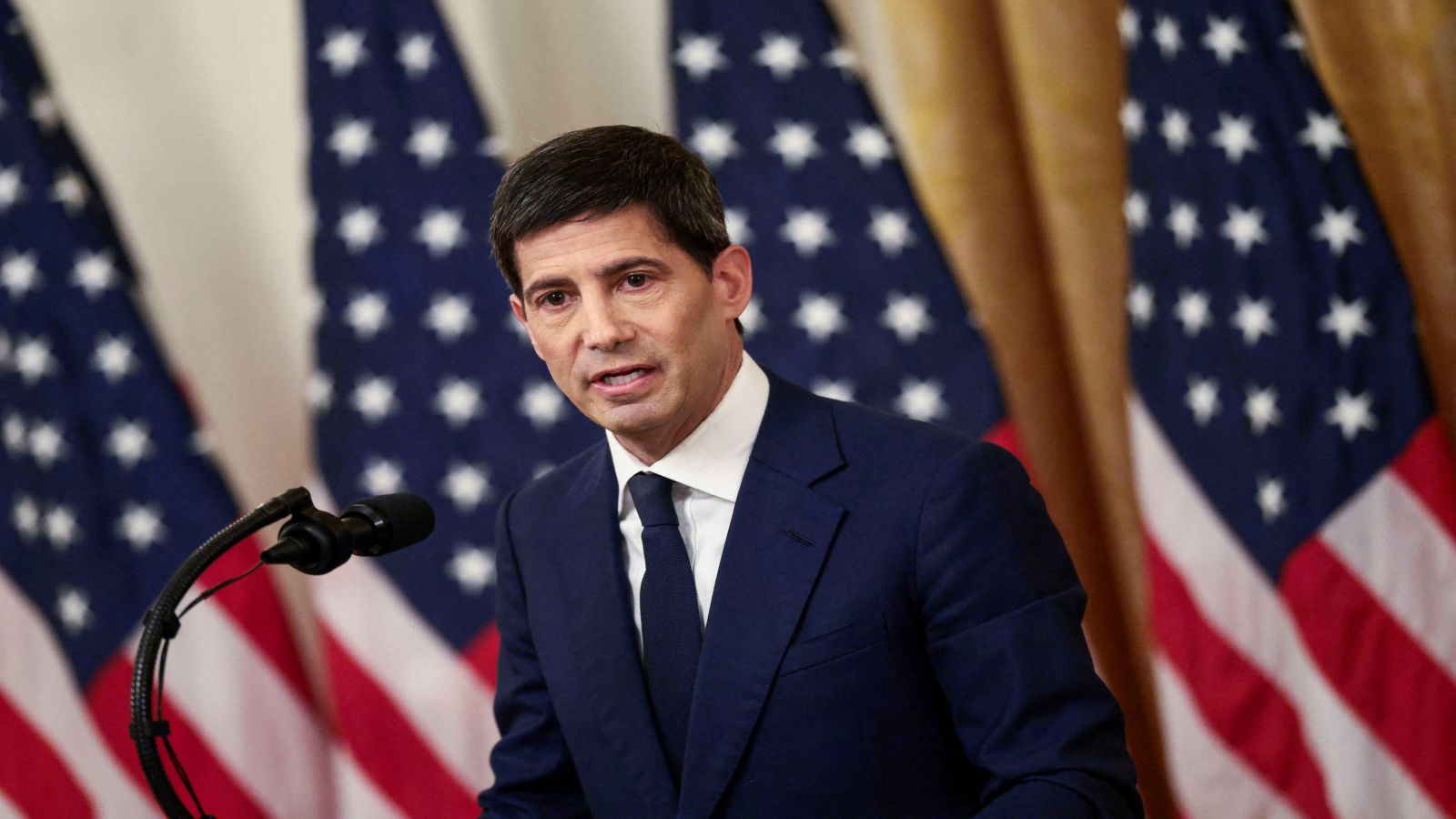
When Kevin Warsh, a former member of the Federal Reserve Board of Governors, stepped up to criticize the current state of American monetary policy, he did not just talk about interest rates, yields, or bond purchasing programs. He pointed his finger at a deeper, more corrosive reality. He called inflation a tax. But it is not a tax voted on by Congress. It is a silent levy on the working class, a penalty for saving, and a reward for debt.
To understand why this matters, we have to look past the dense jargon of central banking and look at what happens at the kitchen table.
The Chemistry of a Shrinking Dollar
Imagine a hypothetical worker named Sarah. She lives in Ohio. She is not an economist. She does not read the minutes of the Federal Open Market Committee. Sarah manages a local medical supply office, earns a steady salary, and puts a little money away each month for her daughter's college fund.
A decade ago, Sarah's savings felt like a sturdy brick wall. Today, that wall feels like it is made of ice, slowly dripping away under a warm sun.
When the central bank prints more money or keeps interest rates artificially low for too long, the supply of dollars increases. But the number of actual goods in the world—the gallons of gasoline, the boxes of cereal, the hours of dental care—does not automatically multiply to match. More dollars chase the same amount of stuff.
The math is brutal.
$$\text{Value of Dollar} \propto \frac{\text{Goods and Services}}{\text{Money Supply}}$$
When the denominator grows without a corresponding rise in the numerator, the value of each individual dollar plummets.
For Sarah, this is not a theoretical equation. It is a weekly calculation at the supermarket. She watches the price of ground beef climb. She notices the cereal boxes getting slightly thinner—a phenomenon known as "shrinkflation," where companies charge the same price for less product. She is working just as hard, performing the exact same duties, yet her labor is worth less with every passing season.
This is the human face of inflation. It is a slow-motion transfer of wealth from those who work for a living to those who own assets that appreciate with rising prices. If you own real estate, stocks, or gold, inflation can make you wealthier on paper. If you rely on a paycheck and a savings account, you are left holding a basket that is constantly leaking.
The Broken Compass of the Federal Reserve
The Federal Reserve was created to bring stability to the American economy. It was designed to be an independent referee, insulated from the chaotic winds of politics, making tough choices to keep the currency stable and employment high.
But Kevin Warsh argues that the Fed has lost its way, turning into an institution that is overly reactive, deeply bureaucratic, and prone to groupthink.
Instead of acting as a steady anchor, the central bank has often behaved like a driver constantly slamming on the brakes and then stomping on the gas. During periods of economic anxiety, the Fed flooded the financial system with cheap money. When the predictable result—surging prices—finally arrived, they were forced to aggressively hike interest rates, making it incredibly expensive for ordinary people to buy a home, secure a car loan, or start a small business.
This constant shifting of the goalposts makes planning for the future almost impossible.
How can a small business owner decide whether to hire a new employee when they cannot predict what their borrowing costs or material prices will be in six months? How can a young couple buy their first home when mortgage rates double in a matter of seasons, pricing them out of the neighborhood they grew up in?
The system is broken because the incentives are skewed. When the Fed miscalculates, the policymakers do not lose their jobs. They do not face foreclosure. It is the Sarahs of the world who bear the brunt of the correction, facing higher bills and tighter margins.
The Case for a Complete Overhaul
A true overhaul of the Federal Reserve is not just about changing the face on the television screen or tweaking a few percentage points here and there. It requires a fundamental shift in how we view the role of money in a free society.
Warsh’s critique suggests that the Fed needs to return to its core mission: maintaining price stability. This means moving away from the complex, interventionist policies that try to micro-manage every fluctuation of the stock market. It means accepting that a central bank cannot solve every social or economic problem with the printing press.
True reform would involve:
- Increased Accountability: Bringing transparency to the decision-making process so that the public can understand the long-term consequences of current policies.
- A Focus on Long-Term Stability: Prioritizing the preservation of the dollar’s purchasing power over short-term market boosts.
- Predictability: Establishing clear, rules-based frameworks for monetary policy rather than relying on discretionary, ad-hoc decisions that catch the market by surprise.
When money is unstable, society itself becomes unstable. Trust begins to erode. Neighbors look at each other with suspicion as prices rise. The implicit contract of the working class—that if you work hard, save your money, and play by the rules, you will get ahead—is broken.
The Cost of Doing Nothing
It is easy to get lost in the sea of economic data, GDP growth rates, and employment reports. But behind every statistic is a human story.
There is a retired schoolteacher watching her fixed pension buy fewer groceries each month. There is a young graduate who has done everything right, yet finds the dream of homeownership drifting further out of reach. There is a small business owner staying up late into the night, staring at a spreadsheet, wondering how to pay her staff without raising prices so high that she drives her customers away.
These are not macroeconomic abstractions. They are the quiet, daily tragedies of an unstable currency.
If we continue down the current path, treating inflation as an unavoidable weather pattern rather than the direct consequence of policy choices, we risk hollow out the very foundation of the American dream. The dollar is more than just a medium of exchange. It is a promise between the government and its citizens. Every time that promise is broken, a little bit of trust dies.
The debate over the future of the Federal Reserve is not a dry academic argument reserved for Wall Street analysts and university professors. It is a fight for the integrity of our labor, the security of our families, and the preservation of a system where honest work is met with an honest reward.
Sarah walks out of the grocery store, holding two bags that cost her fifty dollars. She remembers when those same bags cost thirty. She puts them in the back of her car, sighs, and starts the engine, wondering how much further the road will go before the ground gives way beneath her feet.