Silence has a weight. Anyone who has ever lived inside a house where truth is forbidden knows how heavy the air feels right before a bedroom door clicks shut. You learn to read the floorboards by their creak. You memorize the rhythm of breathing in the dark, calculating whether sleep is real or a trap.
For years, Joanne Young lived inside that silence. Don't forget to check out our earlier article on this related article.
To the outside world in rural Somerset, her marriage looked entirely unremarkable. A husband, a wife, a shared life, a quiet domestic routine. Yet behind the curtains of that ordinary English home, Philip Young was systematically drugging his wife into unconsciousness, raping her, and inviting other men into their bedroom to do the same. He filmed the assaults. He cataloged them. He turned the most sacred space of trust—a shared bed—into a site of calculated, industrialized violation.
When the truth finally surfaced in a British courtroom, the shockwaves went far beyond the horrific details of one man's crimes. The case exposed a terrifying blind spot in how modern society, medicine, and the law understand consent, domestic abuse, and bodily autonomy. Joanne Young waived her right to anonymity, stepping out from behind the protective curtain afforded to sexual assault survivors in the United Kingdom, because she realized something chilling. Her nightmare was not an isolated aberration. It was the symptom of a legal and cultural architecture utterly unprepared for weaponized chemistry inside the home. If you want more about the context here, The Washington Post offers an excellent breakdown.
The Architecture of Betrayal
To understand how a crime like this persists for years without detection, we have to dismantle a comfortable myth. Most people still imagine sexual violence as a sudden collision with a stranger in a dark alley. That narrative is comforting because it keeps danger outside the front door. It implies that if you lock your deadbolt at night, you are safe.
The reality is far darker.
When the threat holds the key to the front door, the weapons change. In cases of prolonged domestic drug-facilitated sexual assault, the perpetrator does not need physical force or loud threats that might alert a neighbor. All they need is a cup of tea, a glass of wine, or a routine evening vitamin. A dissolvable sedative leaves no bruises. It triggers no alarms. The victim simply feels an overwhelming, inexplicable wave of exhaustion, slips into a chemical abyss, and wakes up hours later with a dull headache, fragmented memory, and a lingering sense of physical unease that their own mind desperately tries to rationalize away.
Consider a hypothetical scenario to see how easily doubt takes root. Imagine you wake up on a Tuesday morning feeling groggy, sore, and disoriented. Your partner is already downstairs making coffee, humming a familiar tune, asking if you slept well because you looked exhausted last night. You have no memory of anything unusual. Your rational brain immediately reaches for the simplest explanation. I must be coming down with a virus. I worked too hard yesterday. Maybe I had one glass of wine too many. You blame your own body before you ever suspect the person handing you toast.
That psychological trap is the abuser’s greatest shield. Over months and years, the victim begins to doubt their own sanity, their stamina, and their memory. Gaslighting ceases to be just a verbal manipulation; it becomes a physiological reality induced by pharmacology.
Lessons Written in Blood Across the Channel
Britain did not arrive at this reckoning in a vacuum. Just across the English Channel, France had already been forced to stare into the exact same abyss during the landmark trial of Dominique Pelicot in Avignon. For nearly a decade, Pelicot crushed sleeping pills and anti-anxiety medications into his wife Gisèle’s meals, rendering her comatose before recruiting dozens of men online to assault her in their home.
When Gisèle Pelicot famously declared that shame must change sides, she triggered a global seismic shift. Suddenly, legislators, prosecutors, and everyday citizens were forced to confront a horrifying reality: digital anonymity had allowed predators to form networked communities dedicated to the exploitation of unconscious women, often their own spouses.
Yet while the French trial sparked urgent debates across Europe, many in Britain initially treated it as a uniquely continental horror. Joanne Young’s ordeal shattered that complacency. Her case proved that the exact same playbook—domestic poisoning, digital coordination, and systematic violation—was operating quietly in British towns.
The parallels are unmistakable, and they point to a structural failure in how we police both substances and the internet.
| The Myth of Stranger Danger | The Reality of Domestic Chemical Abuse |
|---|---|
| Assault happens in public, isolated spaces. | Assault occurs in the victim's own bed. |
| Physical resistance leaves visible defensive wounds. | Sedatives eliminate resistance and physical struggle. |
| The victim remembers the event immediately. | Amnesia obscures the crime for months or years. |
| Evidence is gathered within hours of the attack. | Toxicology windows close before suspicion arises. |
Look at the final row of that comparison. That is where the justice system quietly fails victims before a case ever reaches a police station.
The Forensic Clock Working Against Survivors
Standard forensic protocols for sexual assault are built around a ticking clock. Most date-rape drugs and prescription sedatives—benzodiazepines, Z-drugs like zopiclone, or liquid anesthetics—metabolize rapidly. Within twelve to seventy-two hours, they vanish from blood and urine.
Think about what that means for someone like Joanne Young.
If a survivor does not know they were drugged on Tuesday night, they will not visit a sexual assault referral center on Wednesday morning. By the time a victim stumbles across a hidden hard drive, a suspicious message thread, or an unexplained prescription bottle months later, the chemical trail inside their body has completely evaporated. Without toxicology, prosecutors are often left trying to prove a crime where the victim has zero conscious memory of the event and no immediate medical swabs.
In Joanne Young’s case, the digital trail left behind by her husband provided the undeniable proof that biology could not preserve. But what happens to the countless women whose abusers are more careful with their digital footprints? What happens when there are no videos, no encrypted chat logs, and no surviving urine samples?
Right now, under existing frameworks, those cases frequently vanish into thin air.
Why Britain’s Legal Definitions Are Straining at the Seams
As Britain confronts Joanne Young’s calls for reform, the conversation has zeroed in on specific, glaring gaps in the law. Under the Sexual Offences Act 2003, having sexual contact with someone who is asleep or unconscious is already legally defined as rape, because an unconscious person cannot consent. On paper, the law looks clear.
In practice, it is full of cracks.
First, there is the issue of sentencing and categorization. Administering a substance with intent to commit a sexual offense is a distinct crime, yet when folded into broader domestic abuse investigations, the systematic nature of long-term poisoning often fails to carry the specific aggravating weight it deserves. Campaigners argue that covertly drugging a partner over months or years constitutes a unique form of psychological and physical torture—an ongoing deprivation of liberty and consciousness that existing sentencing guidelines struggle to capture adequately.
Second, there is the medical blind spot. General practitioners and pharmacists rarely have systems flagged to detect subtle patterns of proxy prescribing or sudden, unexplained requests for heavy sedatives within a household. Even more troubling is the ease with which powerful muscle relaxants, veterinary tranquilizers, and unlicensed sleeping pills are purchased through illicit online pharmacies and delivered straight through British letterboxes in plain brown envelopes.
Third, and perhaps most urgent, is the digital ecosystem that enables these crimes. Philip Young did not act in a vacuum; he communicated with and brought other men into the abuse. Encrypted messaging platforms and niche forums act as accelerators, turning isolated predators into organized networks. When one man decides to drug his partner, the internet provides him with instructions on dosage, advice on avoiding detection, and an audience eager to participate or watch.
The Courage to Reject Shame
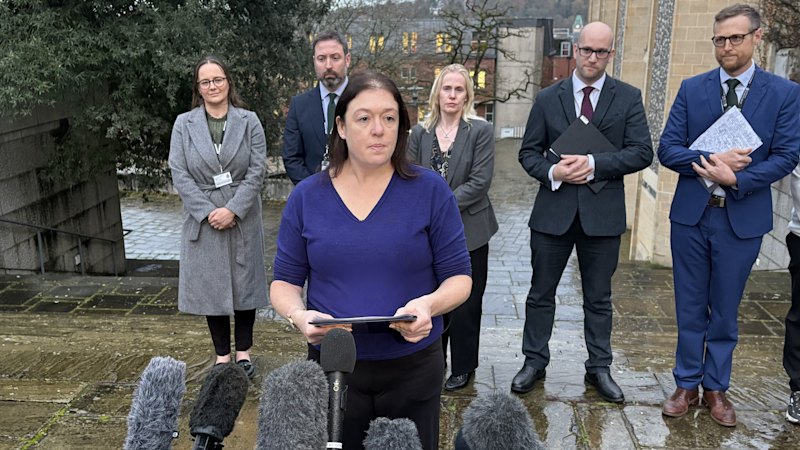
It is impossible to overstate what it costs a human being to stand on the steps of a courthouse, look into a bank of television cameras, and attach their real name and face to crimes of this magnitude.
By default, British law grants lifelong anonymity to victims of sexual offenses. That protection exists for good reason. The stigma attached to sexual violence remains suffocating, and victims frequently endure intrusive questioning, public scrutiny, and misplaced judgment about their personal lives. Stepping outside that shield means your name becomes permanently tethered in search engines to the worst moments of your existence.
Joanne Young made that choice deliberately.
I remember the first time I had to speak publicly about a trauma I had spent years hiding. My throat felt packed with dry cotton, my hands shook beneath the table, and every instinct screamed at me to retreat back into silence where nobody could stare at my scars. You quickly realize that silence protects everyone except the person who was hurt. It protects the perpetrator’s reputation. It protects the comfort of neighbors who prefer not to think about dark things happening behind neat hedges. It protects politicians from having to rewrite messy, difficult laws.
When Joanne Young spoke out, she stripped away that collective comfort. She forced lawmakers in Westminster, police chiefs, and ordinary citizens to look directly at the reality of coercive control taken to its absolute, chemical extreme.
What Needs to Change Now
If Britain truly intends to honor the courage of survivors like Joanne Young, sympathy from politicians will not be enough. Press releases expressing shock do not protect women sleeping in their own beds. Meaningful reform requires concrete structural shifts across four fronts:
- Mandatory Domestic Toxicology Protocols: Police forces and healthcare providers need updated guidance on hair-strand testing. Unlike blood or urine, human hair traps drug metabolites for months as it grows. Standardizing hair-strand toxicology in suspected cases of prolonged domestic abuse can reconstruct a timeline of covert drugging long after the immediate forensic window has closed.
- Tighter Controls on Illicit Sedatives: Border Force and online regulators must treat the import and sale of unlicensed sedatives and heavy tranquilizers with the same urgency applied to street narcotics. Every unmonitored pill entering the postal system is a potential weapon in a domestic setting.
- Aggravated Sentencing for Covert Administration: Parliament must examine statutory reforms that explicitly recognize prolonged, covert drugging within a relationship as an aggravated form of abuse, ensuring sentences reflect both the physical assaults and the systematic theft of a victim's consciousness.
- Accountability for Digital Enablers: Tech platforms operating in the UK under the Online Safety Act must be held strictly liable for hosting communities that facilitate non-consensual sexual abuse, share dosage advice for incapacitating victims, or trade recordings of assaulted individuals.
None of these measures are radical. They are basic defensive walls designed to catch up with predators who have already modernized their methods.
The Quiet Revolution in the Bedroom
History shows that legal systems rarely evolve until a single human voice refuses to be quiet. For centuries, marital rape was not even recognized as a crime under English common law; a wife was legally presumed to have given irrevocable consent upon marriage. It took until 1991 for the House of Lords to finally overturn that archaic fiction.
We are living through the next chapter of that exact same struggle.
Today, the battleground is no longer just about whether a spouse has the right to say no. It is about protecting a person’s right to remain conscious, autonomous, and safe from chemical subversion inside their own home. It is about recognizing that trust is not a blank check, and marriage is not a license to erase another human being’s agency.
Joanne Young walked out of a nightmare that was designed to keep her asleep, voiceless, and invisible. Now awake, she has handed Britain a mirror—and the country can no longer afford to look away.