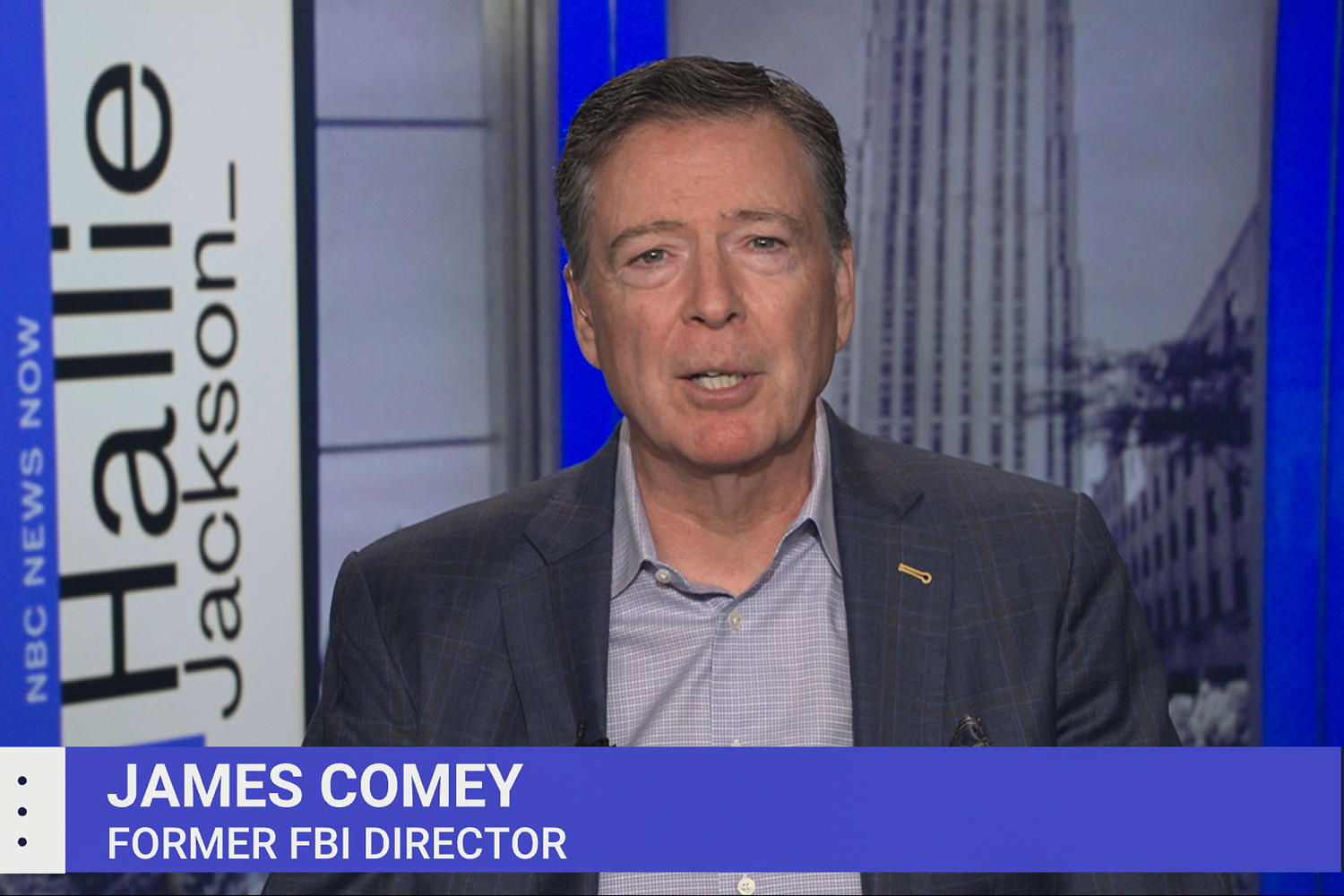
The Department of Justice (DOJ) functions as the central clearinghouse for the application of coercive state power, making its adherence to the principle of institutional neutrality a prerequisite for democratic stability. When high-level officials like James Comey characterize the DOJ as a "guardian" of justice, they are describing a specific operational state: the insulation of legal adjudication from political volatility. To maintain this state, the executive branch must operate within a rigid framework that separates the mission of the department from the personal or partisan objectives of the administration in power. This separation is not a product of goodwill, but a result of structural friction designed to prevent the weaponization of the federal prosecutorial apparatus.
The Triad of Institutional Independence
The integrity of the American legal system relies on three distinct pillars of operational independence. If any of these pillars are compromised, the department transitions from an objective arbiter to a tool of political utility. Also making headlines in related news: The Price of a Promise in Lima.
- The Norm of Non-Interference: This is the internal policy barrier that prevents the White House from communicating with the DOJ regarding specific investigations. The friction here is intentional. By restricting communication to the highest levels (Attorney General and White House Counsel), the system creates a documented trail that discourages casual or corrupt influence on low-level career prosecutors.
- Prosecutorial Discretion as a Non-Partisan Function: Evidence must be evaluated against a static set of legal thresholds rather than a dynamic set of political goals. The "Principles of Federal Prosecution" dictate that a case should only proceed if the admissible evidence is sufficient to obtain and sustain a conviction. Any deviation—prosecuting out of malice or declining to prosecute out of favoritism—destroys the department's credibility.
- The Continuity of Career Civil Service: While the Attorney General is a political appointee, the vast majority of DOJ employees are career professionals. This "civilian core" acts as a ballast, ensuring that legal precedents and investigative standards remain consistent across changing administrations.
The Cost Function of Political Encroachment
When a Department of Justice is perceived as a political instrument, the costs are quantifiable across several social and legal metrics. This isn't an abstract loss of "faith"; it is a measurable degradation of the legal system's efficiency.
- Erosion of Jury Impartiality: In a polarized environment, a "politically charged" prosecution makes it statistically harder to seat an unbiased jury. This leads to higher rates of mistrials or verdicts driven by jury nullification rather than evidence.
- The Chilling Effect on Cooperating Witnesses: Potential informants and witnesses are less likely to step forward if they believe the department’s motives are secondary to a political agenda. The risk-reward calculus for a whistleblower shifts toward silence when the "guardian" is viewed as an advocate for a specific faction.
- International Legal Reciprocity: The U.S. relies on Mutual Legal Assistance Treaties (MLATs) to fight transnational crime. If the DOJ is seen as a political actor, foreign judiciaries are less likely to extradite suspects or share sensitive intelligence, citing fears of "political persecution."
Theoretical Framework: The Independent Agency Model vs. The Unitary Executive
The debate over the DOJ’s role often centers on two competing legal theories. The "Unitary Executive" theory posits that because the President is the sole head of the executive branch, they possess absolute authority over all subordinates, including the Attorney General. Under this view, "independence" is a courtesy, not a requirement. Further insights on this are explored by NBC News.
The counter-framework—the Independent Agency Model—suggests that certain functions of government, specifically law enforcement and intelligence, require a "quasi-independent" status to prevent the concentration of power. This model views the DOJ as a specialized entity that serves the law first and the President second. The tension between these two theories creates the operational environment in which the DOJ exists.
The Mechanism of Professional Norms
Structural safeguards like the Inspector General (OIG) and the Office of Professional Responsibility (OPR) serve as the internal "antibodies" of the DOJ. Their role is to investigate allegations of misconduct or political bias. However, these offices are reactive. The proactive defense of the department’s integrity is found in "Normative Adherence."
Norms are the unwritten rules that dictate behavior within the bureaucracy. Within the DOJ, the primary norm is that the law is "blind." When leadership emphasizes this, it creates a cultural expectation among thousands of Assistant U.S. Attorneys. If leadership instead signals that the law is a "sword" for the administration, that cultural expectation shifts, leading to "anticipatory obedience"—a phenomenon where subordinates take actions they believe will please their superiors without being explicitly told to do so. This is how systemic bias enters an organization without a single "illegal" order ever being signed.
The Paradox of Transparency
A significant challenge for the DOJ is the "Transparency Paradox." To prove it is being fair, the department often feels pressured to release information about ongoing investigations (e.g., the 2016 Clinton email investigation or various probes into the Trump administration).
However, transparency in the middle of an investigation often violates the department’s own rules regarding the privacy of uncharged individuals. This creates a feedback loop:
- The department is accused of bias.
- To disprove bias, it breaks protocol to show its work.
- Breaking protocol is itself seen as evidence of bias.
- Institutional trust drops further.
The only way to break this loop is a return to "Silence as Standard." The department’s most powerful statement is a well-argued indictment in a court of law, not a press conference or a televised testimony.
Strategic Recommendation for Institutional Recovery
Restoring the DOJ as the "guardian" of justice requires more than rhetoric; it requires a tactical shift in how the department interacts with both the executive and the public.
The first priority is the re-establishment of the "Communications Firewall." The Attorney General should issue a directive clarifying that any unauthorized contact between the White House and the Department will be treated as a breach of ethics and reported immediately to the OIG. This creates a high-friction environment that discourages the casual exchange of information that precedes political influence.
Second, the department must adopt a "Precedent-First" charging policy. For cases involving political figures, the DOJ must produce a "Comparative Analysis Memo" for the internal record, demonstrating how the proposed charges align with historical prosecutions of non-political figures for similar conduct. This creates an audit trail that can be used to defend the department’s actions against claims of selective prosecution.
Finally, the DOJ must resist the urge to provide "public interest" updates on sensitive matters. The department's legitimacy is derived from its ability to ignore the news cycle. By reverting to a "speak only in court" posture, the DOJ removes itself from the daily political discourse, effectively lowering its profile and allowing its career professionals to execute their duties without the distortion of external pressure. The objective is to make the DOJ predictable, boring, and relentlessly consistent—the three hallmarks of a functioning legal system.