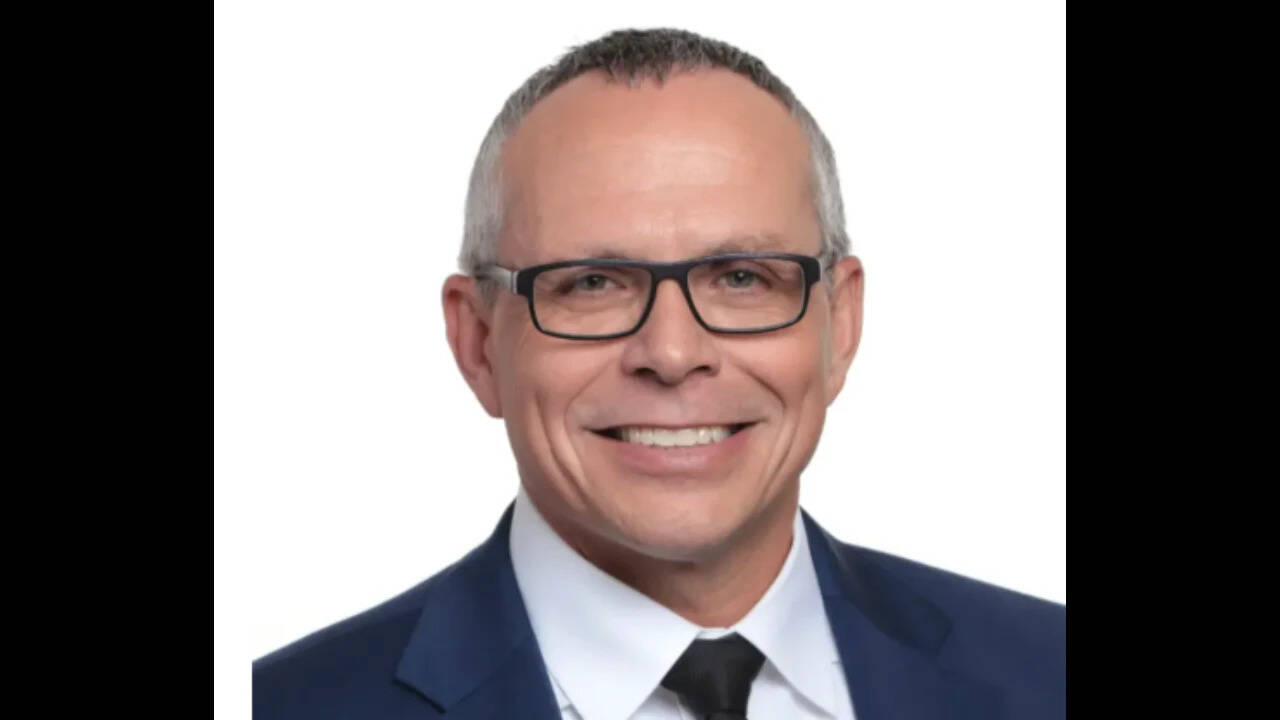
President Donald Trump abruptly removed Vice President JD Vance from nuclear and ceasefire negotiations with Tehran in November 2026, declaring on social media that Washington no longer needs an agreement because American forces hold Iran's frozen assets and control the Strait of Hormuz. Reported by outlets including the Associated Press and The Guardian, the public directive ordered Vance to pivot entirely toward investigating alleged corruption and crime in Democratic-led cities. Beneath the surface of that Truth Social post lies a bitter post-midterm power struggle over the economic fallout of the Iran war, unworkable Iranian demands, and Vance's positioning for 2028.
The Anatomy of a Public Sidelining
To understand why the White House slammed the brakes on diplomacy, you have to look at the sequence of events immediately preceding the announcement. For months, Vance had served as the administration's point man on backchannel diplomacy, attempting to salvage a ceasefire and restart nuclear talks amid an active military conflict involving the United States, Israel, and Iran. Discover more on a similar topic: this related article.
The friction boiled over in early November, immediately following the 2026 midterm elections. Republicans suffered heavy losses, relinquishing control of the Senate. Rather than sticking to standard party talking points, Vance issued a blunt post-election assessment blaming the military campaign against Iran—and the resulting spike in domestic fuel prices—for the electoral defeat.
"If you'd like to argue it was worth it, that losing the Senate for the next six years was worth it, then do so," Vance wrote in remarks documented by the Associated Press. "Argue it was a worthwhile cost to pay. Agree or disagree, that's at least honest." Additional reporting by Associated Press highlights comparable views on this issue.
According to The Wall Street Journal, Vance was actively weighing a fresh round of direct talks with a senior Iranian official on Wednesday, November 11. Less than twenty-four hours later, Trump pulled the plug. By publicly reassigning his vice president to domestic crime and corruption probes, Trump stripped Vance of his primary foreign policy portfolio. In Washington, reassignment to a broad, undefined domestic crusade is rarely a promotion. It is a containment strategy.
Why the Negotiations Collapsed on Substance
While personal and political friction accelerated the break, diplomatic sources and public statements from both capitals show the negotiations were already hitting a structural wall. Even if Vance had remained at the table, the gap between Washington's red lines and Tehran's opening bid had grown virtually unbridgeable.
As detailed in reporting by Iran International and The Korea Times, Tehran's conditions for an agreement required Washington to surrender every point of leverage before substantive nuclear talks even began. The Iranian negotiating posture rested on several non-starters:
- Full War Reparations: Iranian officials pegged their wartime losses at roughly $270 billion and demanded financial compensation from Washington, a condition Secretary of State Marco Rubio dismissed as absurd and Trump flatly rejected.
- Control Over the Strait of Hormuz: Tehran insisted on managing transit routes and collecting tolls in the vital waterway, effectively asking the international community to pay for the reopening of a maritime chokepoint that Iranian forces had disrupted.
- A Multi-Front Ceasefire: Iran demanded an end to hostilities across all regional fronts, tying its bilateral nuclear posture to ongoing conflicts involving Tehran-backed militias like the Houthis in Yemen.
- Binding Future Guarantees: Having watched Trump exit the 2015 nuclear accord during his first term, Iranian negotiators demanded ironclad legal guarantees against future American strikes or withdrawals—a promise no U.S. president has the constitutional authority to impose on a successor.
From the White House perspective, accepting those terms meant unfreezing hundreds of billions of dollars in Iranian assets and lifting a naval blockade while Tehran retained its enriched uranium stockpiles and missile capabilities. Days after pulling Vance from the talks, Trump stood in the White House briefing room alongside Vance and Rubio and laid out his rationale in blunt terms. "They want to make a deal, but they don't want to make a deal that's acceptable to me," Trump told reporters, accusing Iranian leaders of stalling diplomacy for decades.
The Strait of Hormuz Illusion
Trump's claim that the United States "got their Strait" and "got their money" projects total dominance. On paper, the economic pressure on Tehran is severe. The U.S. naval blockade has choked off Iranian port traffic, frozen reserves remain out of reach, and Trump has publicly asserted that the Iranian regime is struggling to pay its own soldiers.
Yet veteran maritime analysts and regional observers see a dangerous flaw in treating a military blockade as a permanent substitute for diplomacy. Holding a chokepoint by force is fundamentally different from securing safe commercial transit.
The reality in the Persian Gulf is messy. Iranian military forces have continued to target commercial shipping, claiming responsibility for explosions hitting four oil tankers that ignored Iranian warnings. Meanwhile, Houthi militants in Yemen continue to threaten vessels moving through the Bab el-Mandeb Strait, creating a dual-chokepoint crisis that keeps global shipping insurance rates elevated and energy markets jittery.
America's Gulf allies are absorbing the collateral damage of this indefinite standoff. During the earlier phases of the war, the United Arab Emirates alone absorbed nearly 3,000 missile and drone attacks, according to Financial Times reporting cited by Iran International. Regional partners face persistent airspace closures, delayed infrastructure projects, and disrupted trade. A strategy of "no deal needed" normalizes a state of permanent attrition. It relies on the assumption that Tehran's economy will collapse before global energy prices inflict unbearable political pain on Washington, or before a single miscalculation triggers a wider regional escalation.
The Moscow Backchannel Complication
Complicating the White House narrative is a parallel diplomatic track operating out of Moscow. While Trump publicly dismissed the need for negotiations, Iranian Parliament Speaker Mohammad Bagher Ghalibaf claimed in an interview with Al Jazeera that American officials had quietly asked Russian President Vladimir Putin to intervene and persuade Tehran to engage in direct talks.
According to Ghalibaf, the secretary of Iran's Supreme National Security Council, Maj. Gen. Mohsen Rezaei, traveled to Moscow to brief Putin on the details of the negotiations. The White House declined to directly confirm or deny whether it had requested Russian mediation.
If accurate, the Moscow outreach exposes a sharp contradiction between the administration's public posture and its private urgency. Calling for a total freeze on Vance's diplomatic efforts while simultaneously leaning on the Kremlin to keep a backchannel open suggests that Washington knows a pure blockade cannot resolve the nuclear question—especially as intelligence concerns linger over activity at hardened Iranian sites like Pickaxe Mountain, which Trump has threatened to strike if suspicious work is detected.
Vance and the 2028 Tightrope
For JD Vance, the Iran portfolio was always a political minefield. Earlier in 2026, commentators openly questioned whether the vice president was being set up as the fall guy for a faltering peace process. As an ideological standard-bearer for the "America First" movement's restraint wing, Vance built his political brand on skepticism toward Middle Eastern entanglements.
Defending a war that spiked gasoline prices and cost Republicans the Senate threatened to alienate the exact populist base Vance needs for a potential 2028 presidential run. Trump has notably withheld an early endorsement for 2028, leaving Vance to navigate his own political survival while remaining loyal to a president who demands absolute alignment.
The tension was palpable during a November 20 White House press conference. When a reporter asked Vance directly whether he stood by the decision to strike Iran and if he would do it again, the vice president sidestepped the question entirely. Trump stepped in to cover the awkward silence, acknowledging that Vance was right about the war driving up fuel prices while insisting that he personally had zero regrets.
By pulling Vance off the Iran file, Trump unintentionally handed his vice president a political lifeline. Vance is no longer tethered to the daily failures of a stalled peace process or the economic blowback of an open-ended naval blockade. Instead, he gets to spend the next two years campaigning on domestic crime and anti-corruption themes—territory far safer for a prospective 2028 candidate than the volatile waters of the Persian Gulf.
Meanwhile, the core strategic dilemma remains untouched. Sanctions and warships can bottle up an adversary's economy, and fiery social media posts can project strength to a domestic audience, but neither mechanism removes enriched uranium from underground bunkers or guarantees the safe passage of oil tankers through a contested strait. For further context on the administration's public messaging around this shift, watch LiveNOW from FOX's coverage of Trump directing Vance away from Iran talks, which captures the immediate media reaction to the announcement.