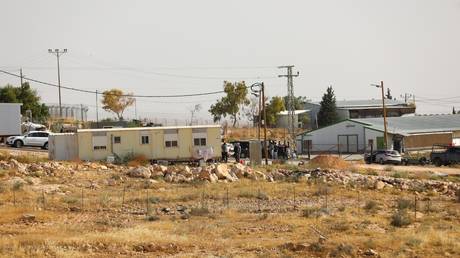
Israeli Prime Minister Benjamin Netanyahu has quietly ordered the removal of approximately 100 unauthorized West Bank settler outposts, bowing to intense diplomatic pressure from Washington over a surge in violent attacks against Palestinian communities. Yet the administrative directive exposes a deeper structural fracture within the right-wing governing coalition, pitting security imperatives and international demands against hardline ministers whose political survival depends on permanent territorial expansion.
The directive targets unauthorized sites—clusters of prefabricated caravans and shacks erected without official state permits—specifically focusing on locations within Areas A and B, where the Palestinian Authority nominally holds administrative or security control under the Oslo Accords. According to tracking data compiled by the Israeli human rights and anti-settlement organization Peace Now, roughly 340 such outposts dot the occupied territory alongside 146 formally recognized settlements. While these outposts violate domestic Israeli planning laws on paper, many have historically enjoyed tacit bureaucratic support, utility hookups, and defense funding funneled through various government ministries. For a closer look into this area, we recommend: this related article.
The timing of the order is no coincidence. Washington's frustration has boiled over following months of escalating friction on the ground. United Nations agencies report that settler violence averaged six incidents per day during the early months of the year, driving thousands of Palestinians from their homes and drawing sharp rebukes from international allies. The public condemnation reached a fever pitch when United States Ambassador Mike Huckabee publicly denounced violent extremist settlers as terrorists, demanding immediate, severe consequences from Israeli authorities. For a government heavily reliant on American diplomatic shielding and military aid, the status quo on the hills of the West Bank became an untenable diplomatic liability.
The Mechanics of Bureaucratic Defiance
Executing an eviction order of this scale in the West Bank is rarely a straightforward administrative process. The Israel Defense Forces and the border police must commit substantial manpower to clear sites that are frequently re-established within hours of demolition by radicalized activists. More importantly, the command structure overseeing these territories is heavily influenced by political appointees who have spent decades championing the settler movement. For additional information on this issue, comprehensive analysis can also be found at The Washington Post.
Finance Minister Bezalel Smotrich publicly confirmed the directive while expressing sharp opposition to it, highlighting the glaring internal contradictions of the cabinet. Smotrich and his allies operate with dual loyalties, serving inside a sovereign government while simultaneously acting as the political architects of the movement that builds these illegal structures. When the prime minister commands the dismantling of outposts in sensitive zones, he is directly challenging the core constituency of his own coalition partners.
This dynamic transforms every outpost demolition into a high-stakes political negotiation. Hardline ministers can stall enforcement through budgetary withholding, bureaucratic obstruction, or by shifting police priorities elsewhere. Consequently, past government vows to clear unauthorized construction have routinely withered under domestic political pressure, leaving thousands of illegal structures standing.
The Legal and Judicial Battleground
While the executive branch wrestles with coalition politics, the Israeli judicial system is carving out an increasingly confrontational path regarding West Bank accountability. In a parallel ruling, the High Court of Justice severely rebuked the government, the police, and the military for failing to curb extremist violence, explicitly declaring that the phenomenon violates foundational principles of Israeli law and Jewish heritage.
The court ordered security forces to guarantee the safe return of Palestinian families displaced by settler attacks in villages such as Jalud, mandating full protection and state assistance to repair destroyed property. This judicial intervention creates a multi-front crisis for Netanyahu. He faces a Supreme Court demanding adherence to the rule of law, an American administration tracking human rights abuses, and radical coalition partners threatening to detonate the government if state bulldozers roll too aggressively against their ideological projects.
The friction exposes the limits of managed conflict in the West Bank. For years, the official policy relied on a convenient fiction: distinguishing between "legal" settlements authorized by the state and "illegal" outposts built without permits, even though both serve the strategic objective of altering the demographic and territorial reality on the ground. By ordering the removal of these specific nodes, the state is forced to acknowledge that lawlessness within the hills has begun to threaten its broader strategic interests.
Whether these latest demolition orders translate into permanent clearance or merely cycle through another round of theatrical enforcement remains entirely dependent on how long Washington maintains its pressure and how far Netanyahu is willing to push his fractious cabinet toward a breaking point.