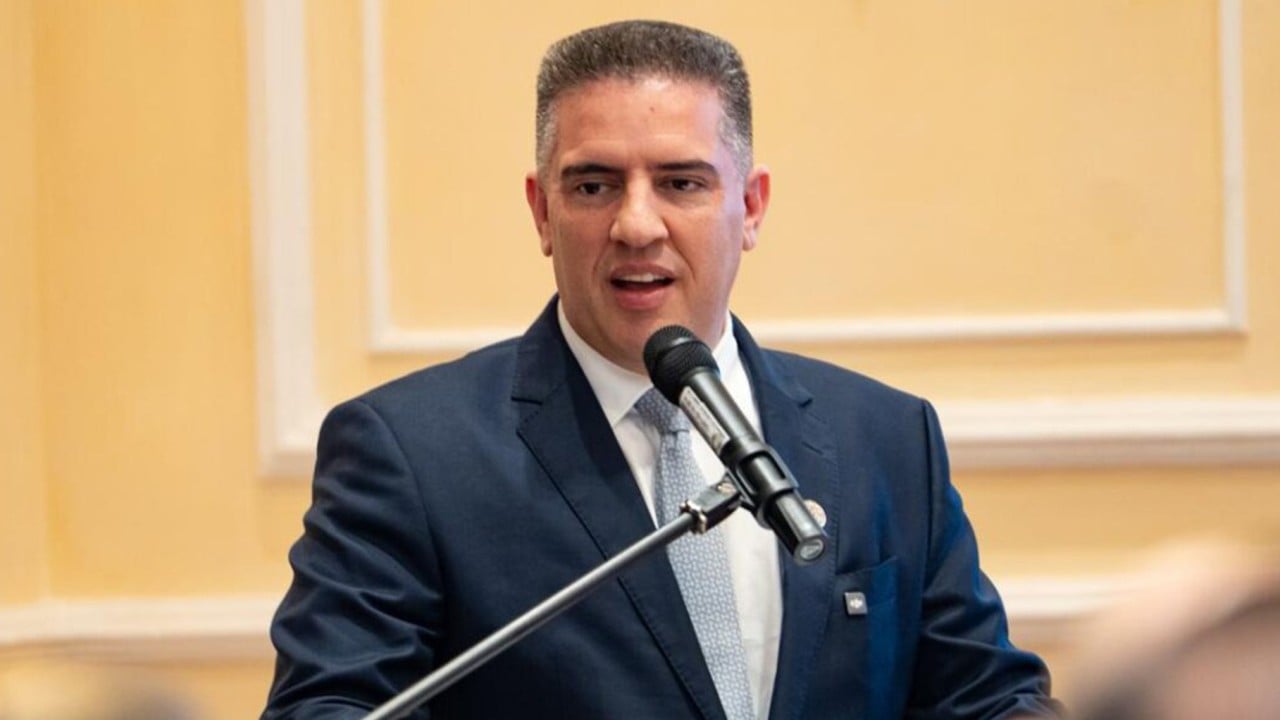
Microsoft President Brad Smith warned in mid-October 2026 that the Trump administration’s crackdown on H-1B visas and green card sponsorship could push top engineering talent out of the United States and weaken American tech leadership for more than a generation. The warning arrived days after Vice President JD Vance announced that the Department of Labor had suspended permanent labor certification—known as PERM—for Microsoft, Adobe, and six major IT outsourcing firms. At stake is not merely a legal dispute between Redmond and Washington, but the core talent engine powering artificial intelligence, cloud infrastructure, and semiconductor design.
For decades, the bargain looked straightforward. Brilliant engineers and researchers came to American universities or landed corporate roles, worked under temporary status such as the H-1B visa, and entered a multi-year queue for permanent residency. Now that queue has hit a brick wall for some of the sector's most visible sponsors.
How PERM Works and Why a Freeze Bites So Hard
Most headlines treat visa crackdowns as a simple hiring freeze. That misses the mechanics.
On October 8, 2026, the Labor Department suspended PERM processing for Microsoft, Adobe, Cognizant, Infosys, Tata Consultancy Services, Wipro, HCL Technologies, and Capgemini. Under PERM, an employer must test the U.S. labor market and prove there are not sufficient qualified, willing, and available American workers for a role before filing an I-140 immigrant petition. Halting new filings and freezing pending cases stops that first permanent-residency step dead in its tracks for affected employers.
Workers already inside the system do not lose their jobs overnight. Existing H-1B status, approved I-140s, and pending green card applications are not automatically erased by the PERM suspension itself. Yet the freeze creates real friction around six-year H-1B time limits, priority dates, and employer transfers. If an engineer’s path to permanent residency stalls, long-term career planning turns into a high-stakes gamble.
Consider a hypothetical example. Suppose a machine-learning engineer from abroad joins a major cloud team on an H-1B visa and expects her employer to file a PERM application within her first year. If that PERM filing is frozen indefinitely, her place in the green card line is delayed, and switching employers later carries heavier legal risk. Even when H-1B visas remain technically valid, uncertainty over permanence changes where ambitious people choose to build their lives.
The Clash Over Wages and Layoffs
Washington did not act in a vacuum. Critics of the H-1B program and employment-based green cards have argued for years that large corporations use foreign workers to suppress wages or replace domestic staff during layoffs.
Vance echoed that argument sharply in October 2026, accusing major employers of visa abuse and claiming H-1B workers earned roughly $20,000 less on average than U.S. workers in comparable roles. He also attacked Microsoft over layoffs versus foreign hiring. Other recent policy moves—including the September 2025 proclamation introducing a $100,000 payment on certain new H-1B petitions (later vacated by a federal district judge in June 2026 and left un-stayed by the First Circuit in July 2026) and proposed curbs on international student work authorization—have kept the entire immigration system in constant turbulence.
Smith pushed back directly on the wage and hiring claims. He stated that Microsoft uses a single compensation system regardless of whether an employee arrived on a visa or was born in the United States, and noted that Microsoft hired more than 9,000 U.S.-born workers the previous year. Labor Department filings also showed Microsoft leading major tech peers in PERM volume through fiscal 2025 and into fiscal 2026, even as some rival tech giants scaled back their filings after early 2023.
Both sides cherry-pick numbers because the real dispute is structural, not purely statistical.
💡 You might also like: Aeon and the Fantasy of the Silicon Valley Missile
A skeptical analyst has to look at both halves of that ledger. Tech companies have gone through waves of layoffs in recent years while simultaneously spending billions on AI infrastructure and specialized talent. Critics see a contradiction between cutting domestic headcount and sponsoring foreign workers. Defenders see a mismatch of specialized skills—particularly in AI systems, applied science, and advanced hardware—where domestic graduation pipelines alone cannot fill every opening quickly.
| Policy Lever | What It Targets | Immediate Practical Effect |
|---|---|---|
| PERM Suspension | Permanent labor certification for eight named employers | Freezes new and pending green card labor steps at those firms |
| H-1B Cap & Scrutiny | Specialty occupation temporary work visas | Raises friction on transfers, extensions, and new petitions |
| Student & OPT Rules | International graduates transitioning into U.S. jobs | Threatens early-career pipeline from U.S. universities |
What Happens When Talent Looks Elsewhere
Talent mobility is not a one-way street. When one country raises walls or adds unpredictability, rival hubs notice immediately.
Smith pointed out that immigrants make up an outsized share of top scientific and technological leadership, warning that blocking permanent residency routes risks sending the next wave of AI and software builders to competing economies. Other governments and regional tech centers have spent years refining visa pathways specifically to attract engineers who grow frustrated with U.S. backlogs and policy swings.
Some companies are already adjusting their playbooks. In mid-October 2026, IBM announced it would end visa and green card sponsorship for the majority of roles in its consulting unit. That kind of retreat does not mean work disappears; often it means work shifts toward offshore delivery centers or engineering hubs outside the United States.
The Gray Areas Nobody Wants to Admit
Anyone who has watched Silicon Valley, Seattle, and Washington debate immigration for twenty years knows neither extreme tells the whole story.
Tightening oversight where genuine fraud or wage undercutting exists is a legitimate goal of labor enforcement. If an employer abuses rules or inflates job requirements to push out qualified domestic applicants, regulators have a duty to investigate. Blanket suspensions and sudden policy whiplash, however, punish lawful applicants and long-term planners alongside bad actors—and erode confidence in the predictability of the American system.
There is also a deeper question for American boards and executives. For years, big tech treated immigration policy as a lobbying problem to manage rather than a long-term workforce risk to solve through domestic training, university partnerships, and clear career pathways for U.S. workers. Relying almost entirely on imported degrees and visa queues left the industry exposed the moment political winds shifted.
Washington may argue over fraud investigations, prevailing wages, and border enforcement in courtrooms and press briefings. Out in the real economy, engineers and researchers are making quiet, personal calculations about where they can build a career without living in permanent limbo—and every month of uncertainty gives competitors another opening to win them over.