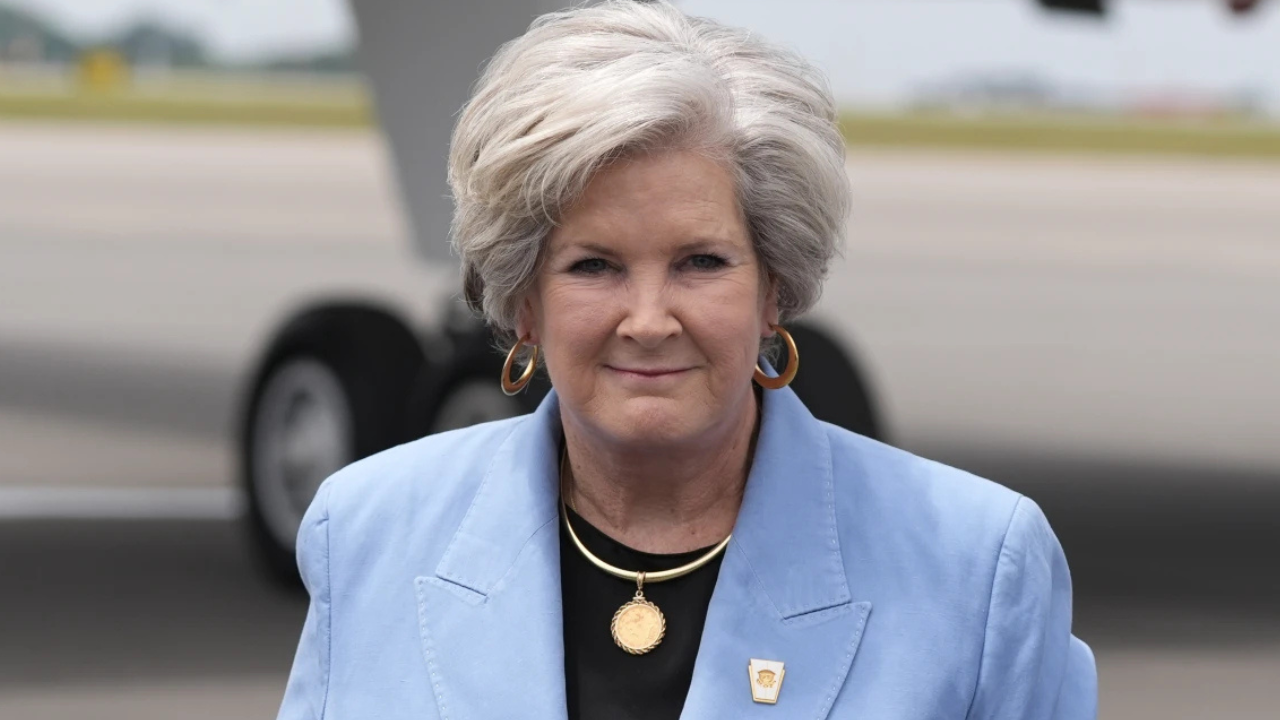
Susie Wiles was fired as White House Chief of Staff within seventy-two hours of the 2026 midterm elections because she became the immediate structural scapegoat for a stinging congressional defeat, ending a historic run as Donald Trump’s longest-serving top aide. While the public narrative centers on a simple electoral loss, the actual mechanics of her exit involve a long-brewing collision between traditional political discipline and an executive office that inherently resists institutional guardrails.
For nearly two years, the woman Trump nicknamed the "Ice Maiden" managed to do what Reince Priebus, John Kelly, Mick Mulvaney, and Mark Meadows could not. She survived. She outlasted the standard six-to-twelve-month shelf life of a Trump top lieutenant by operating in the shadows, avoiding Sunday morning talk shows, and refusing to compete with her boss for oxygen. Yet in the brutal arithmetic of Washington politics, survival is only rewarded until the first major electoral reckoning. When the ballots were counted in November 2026 and the midterm map turned against the administration, the very traits that kept Wiles in power became the exact liabilities used to push her out the door.
The Anatomy of a Seventy-Two-Hour Ouster
In political circles, midterm elections serve as a referendum on the sitting president, and historically, the president’s party almost always loses ground. That is standard operating procedure in American governance. What makes the aftermath of a midterm loss inside a Trump White House uniquely volatile is the refusal to accept structural political gravity as an explanation.
Someone had to own the loss.
During the 2024 presidential campaign, Wiles and co-campaign manager Chris LaCivita were hailed as tactical geniuses. They professionalized an operation previously defined by chaos, targeted low-propensity voters with surgical precision, and kept the candidate largely on message during critical stretches. When Wiles transitioned from the campaign trail in West Palm Beach to the West Wing in January 2025, expectations were sky-high that she would impose that exact same order on the federal bureaucracy.
By the autumn of 2026, however, the friction between campaign mechanics and governing reality had worn thin. A Chief of Staff does not control the macroeconomy, global supply chains, or the natural thermostatic backlash of the American electorate. Yet inside the West Wing, the Chief of Staff owns the calendar, the messaging apparatus, and the political operation. When vulnerable House incumbents began losing tight races in suburban districts, outside allies and rival factions within the administration immediately pointed toward the Chief of Staff's office. They argued that the White House political shop had failed to translate presidential enthusiasm into down-ballot victories. Within three days of the polls closing, the pressure reached a boiling point, and Wiles was out.
Why the Ice Maiden Method Eventually Melted
To understand why Wiles lasted longer than any of her first-term predecessors, one has to look at her operational philosophy. Unlike John Kelly, a retired four-star Marine general who attempted to treat the Oval Office like a military chain of command, Wiles understood that you cannot manage Donald Trump. You can only manage the environment around him.
Her approach relied on three distinct tactics:
- Total Ego Subjugation: Wiles famously declined the podium at Trump's 2024 victory night speech, literally stepping back when invited to the microphone. She understood that the moment a staffer becomes a media star, their days are numbered.
- Gatekeeping Without Confrontation: Rather than telling the president he could not take a meeting or make a specific statement, she worked to structure his schedule so that productive, policy-focused voices reached him first.
- Factional Neutrality: As a veteran Florida operative whose father was the legendary sportscaster Pat Summerall, Wiles grew up around massive egos and high-stakes competition. She maintained working relationships with competing wings of the conservative movement, from traditional institutionalists to aggressive populist outsiders.
This system worked brilliantly when the administration was riding the momentum of an electoral mandate. When things go well, the quiet operator looks like a master strategist.
When things go poorly, that exact same quietness looks like a lack of aggression. Following the November 2026 midterm setback, the vocal, combative wing of Trump’s inner circle—the media surrogates, outside informal advisors, and ideological hardliners—argued that Wiles had domesticated the operation too much. In their view, the administration had lost its populist edge by listening to pollsters and conventional consultants whom Wiles had empowered. Her refusal to wage public turf wars meant she had no external media apparatus defending her when the knives came out in the West Wing. She had built a fortress of quiet competence, only to find out that quiet competence offers zero protection during a populist storm.
The Historical Curse of the Second-Year Chief
Wiles’s departure fits neatly into a well-documented pattern in modern American political history, though accelerated by the unique dynamics of the Trump orbit. The White House Chief of Staff is widely considered the second hardest job in Washington, functioning essentially as a human shock absorber for the presidency.
Consider the historical precedent. Barack Obama’s first Chief of Staff, Rahm Emanuel, departed just weeks before the 2010 midterm "shellacking" to run for Mayor of Chicago, handing the keys to Pete Rouse before Bill Daley took over to reset the administration. Ronald Reagan’s original troika of James Baker, Ed Meese, and Michael Deaver survived the 1982 midterms, though the economic downturn forced massive strategic pivots. More recently, Joe Biden’s first Chief of Staff, Ron Klain, stepped down in early 2023—just months after the 2022 midterms—exhausted by the relentless grind of managing legislative battles and West Wing expectations.
The difference in 2026 was the velocity and the public framing. Modern presidents typically allow a respected Chief of Staff a graceful, choreographed exit months after an election cycle, complete with Rose Garden praise and a prestigious private-sector landing spot. Firing a Chief of Staff within seventy-two hours of an election signals panic, anger, and an immediate need to shift blame.
By severing ties with Wiles so abruptly, the White House signaled to donors, lawmakers, and the press that the midterm losses were an operational failure of staff rather than a rejection of presidential policy or rhetoric. It is a classic political sleight of hand. You fire the pilot to prove to the passengers that there is nothing wrong with the plane.
The Structural Impossibility of the Role
To evaluate whether Wiles actually failed, an honest analyst has to look at the structural realities of the job she accepted. Running a presidential campaign and running the executive branch are two fundamentally different disciplines, and almost nobody succeeds at both.
A campaign is a sprint toward a single binary outcome. Every decision, every dollar, and every speech is calibrated toward winning an election on a specific Tuesday in November. Wiles is arguably one of the finest campaign tacticians of her generation. Her work in Florida across multiple cycles—turning a perennial swing state into a solid Republican stronghold—is a textbook case in modern voter registration and turnout mechanics.
Governing, by contrast, is an endless, sprawling war of attrition. As Chief of Staff, Wiles was suddenly responsible for:
- Interagency Coordination: Managing cabinet secretaries with their own ambitions, legal mandates, and congressional oversight committees.
- Legislative Horse-Trading: Navigating razor-thin margins on Capitol Hill where a handful of ideological purists can derail an entire legislative agenda.
- Crisis Management: Responding to unpredictable geopolitical shocks, judicial injunctions, and economic fluctuations that no campaign playbook can anticipate.
- Personnel Vetting: Keeping thousands of political appointees aligned while fending off constant leaks to the Washington press corps.
In a standard administration, the Chief of Staff uses the power of the office to enforce discipline on cabinet members and senior advisors. In a Trump administration, authority flows entirely from proximity to the president. Informal advisors outside the building—wealthy donors, media personalities, and longtime friends—frequently bypass the Chief of Staff entirely, calling the president directly late at night to pitch ideas or complain about staffers.
Wiles knew this dynamic better than anyone, which is why she lasted nearly two years. Yet over time, the constant circumvention erodes the Chief of Staff's authority. When cabinet officials realize the Chief of Staff cannot actually stop an outside voice from whispering in the president's ear, internal discipline slowly fractures. By the time the 2026 midterm campaign entered its final stretch, the unified command structure that defined Wiles’s 2024 presidential run had largely dissolved into competing fiefdoms.
The Real Cost of Losing the Gatekeeper
The immediate aftermath of a high-profile firing always generates intense speculation about who will take the chair next. Names of loyalists, former cabinet members, and aggressive political operatives immediately circulate through the press. Yet focusing entirely on the replacement misses the deeper institutional consequence of Wiles's exit.
For all the criticisms leveled at her by ideological hardliners after the midterm defeat, Wiles provided something desperately scarce in modern Washington: institutional memory and procedural stability. She understood how to read a cross-tab, how to placate nervous Senate Republicans, and how to prevent unforced errors from dominating a news cycle for weeks on end.
Removing the primary gatekeeper in the wake of a congressional loss rarely leads to greater discipline. Instead, it typically triggers a period of intense internal jockeying as surviving aides rush to fill the power vacuum. Without a seasoned operational veteran controlling the paper flow and the daily schedule, decision-making becomes more reactive, more driven by cable news cycles, and far more susceptible to the whims of the last person in the room.
Susie Wiles survived longer than anyone expected because she treated the presidency like a high-wire act, carefully balancing competing forces while keeping her own profile invisible. In the end, she fell victim to the oldest rule in political power: you can manage the chaos, you can delay the reckoning, and you can outlast your rivals, but you can never outrun the scoreboard.