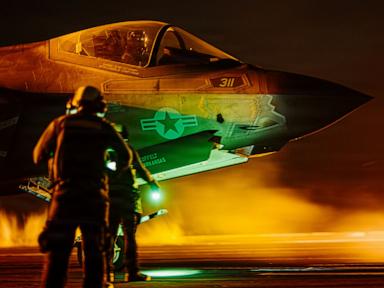
United States Central Command forces initiated a heavy wave of airstrikes against Islamic Revolutionary Guard Corps infrastructure across Iranian port cities, including Bandar Abbas, Sirik, and Qeshm Island. The military action, which commenced at noon Eastern Time, shatters a fragile, weeks-long lull in hostilities and signals the total collapse of the summer's provisional diplomatic framework. Washington maintains that the current kinetic response is a necessary retaliation for continuous IRGC harassment of commercial shipping and direct targeting of American service members deployed throughout the theater.
Behind the official military bulletins lies a much more complex operational reality. The fragile maritime architecture of the Persian Gulf has turned into a high-stakes attritional trap. This latest escalation was not an unpredictable flashpoint. It was the mathematical certainty of a naval blockade that attempted to freeze Iranian crude exports without establishing absolute, boots-on-the-ground territorial control over the southern Iranian coast.
The Anatomy of a Broken Understanding
To understand why American tactical aircraft are once again pounding radar installations and missile batteries along the littoral strip, one must examine the quiet failure of the June framework agreement. Mediated through regional channels in Qatar and Pakistan, that agreement was built on a fundamental contradiction. Washington wanted commercial supertankers to navigate the Strait of Hormuz unmolested while simultaneously enforcing a strict economic embargo designed to choke off every barrel of Iranian oil.
Tehran viewed the arrangement through an entirely different lens. For the Iranian military establishment, a blockade that permits Western-aligned energy transit while suffocating domestic revenue is an act of war by other means. When negotiations stalled over navigation rights and the enforcement of the naval quarantine, the security situation deteriorated rapidly.
Commercial shipping data reveals the immediate pressure points. Since the naval blockade fully restarted in mid-July, at least eight commercial vessels have been targeted within or near the maritime choke point. Traffic volume through the strait, which historically handled roughly twenty percent of the global petroleum supply, plummeted from a pre-war baseline of roughly one hundred thirty daily transits down to a sparse handful of high-risk commercial voyages. Shippers willing to brave the corridor do so only under immense insurance premiums and military escorts.
The Choke Point Calculus
The geography of the Persian Gulf favors asymmetric defense. Long before these latest strikes lit up the night sky over Bandar Abbas, military planners understood that eliminating the conventional Iranian navy did not secure the waterway.
The IRGC adapted quickly to sustained air campaigns by decentralizing its architecture. Instead of massed naval formations, they relied on mobile rocket launchers, fast-attack craft, and coastal surveillance networks hidden among the rocky inlets of islands like Larak and Qeshm. These assets do not need to win a pitched battle to achieve their strategic objective. They only need to introduce enough uncertainty to drive global crude prices upward and force commercial carriers to bypass the region entirely.
When U.S. forces struck rocket launchers on Larak Island, CENTCOM framed it as a precise pre-emptive intervention against imminent minelaying operations. Yet, each tactical strike against these decentralized mobile units triggers a predictable kinetic feedback loop.
Iran's military doctrine relies heavily on integrated response vectors across multiple regional theaters. Within hours of the Larak Island operation, ballistic missiles and suicide drones were inbound toward coalition-associated facilities, including bases in Jordan and the United Arab Emirates. Jordanian air defense systems intercepted multiple projectiles entering national airspace, demonstrating how rapidly a localized maritime dispute metastasizes into a theater-wide conflagration.
The Financial Weaponization Vector
While warplanes operate over the Persian Gulf, a parallel campaign is unfolding inside corporate boardrooms and international central banks. The economic strategy has shifted toward what Treasury officials openly characterize as financial violence.
The administration's newly minted enforcement mechanism targets international financial networks, leaning heavily on secondary sanctions. Institutions facilitating transactions with entities tied to the Iranian government face immediate exclusion from the Western financial architecture. Recent penalties levied against regional banking branches in the United Arab Emirates serve as an explicit warning shot to global financial hubs.
Treasury leadership has made it clear that G20 finance ministers will face immense diplomatic pressure to sever remaining commercial ties with Tehran. This financial containment strategy aims to degrade the Iranian state's capacity to fund proxy networks and reconstruct depleted military inventories.
However, aggressive financial enforcement carries its own structural risks. As secondary sanctions sweep through major trading corridors, traditional economic alliances face severe strain. Compliance costs skyrocket for multinational firms trying to navigate overlapping jurisdictions, further fragmenting global energy markets and injecting permanent volatility into commodity pricing.
The Limits of Airpower
The resumption of widespread bombing runs underscores a recurring strategic dilemma. Air campaigns and naval escorts can suppress tactical threats, but they cannot manufacture long-term political stability in a fractured theater.
The IRGC has absorbed months of targeted bombardment while retaining sufficient asymmetric capability to hold regional shipping hostage. Every time Washington pauses its campaign to appease regional partners or prioritize economic leverage, Tehran utilizes the operational breathing room to reconstitute its networks and reposition mobile assets.
As the conflict stretches past its half-year mark, the human and material toll continues to mount across the region. Eighteen American service members have lost their lives in the fighting, while regional infrastructure absorbs the recurring shockwaves of missile exchanges. The current escalation proves that neither targeted airstrikes nor sweeping financial sanctions have broken the structural stalemate at the mouth of the Persian Gulf.
The patrol boats continue to shadow tankers, the coastal batteries remain hidden within the rocky terrain of the southern Iranian shore, and the strait stays locked in a perpetual state of high-risk suspension.