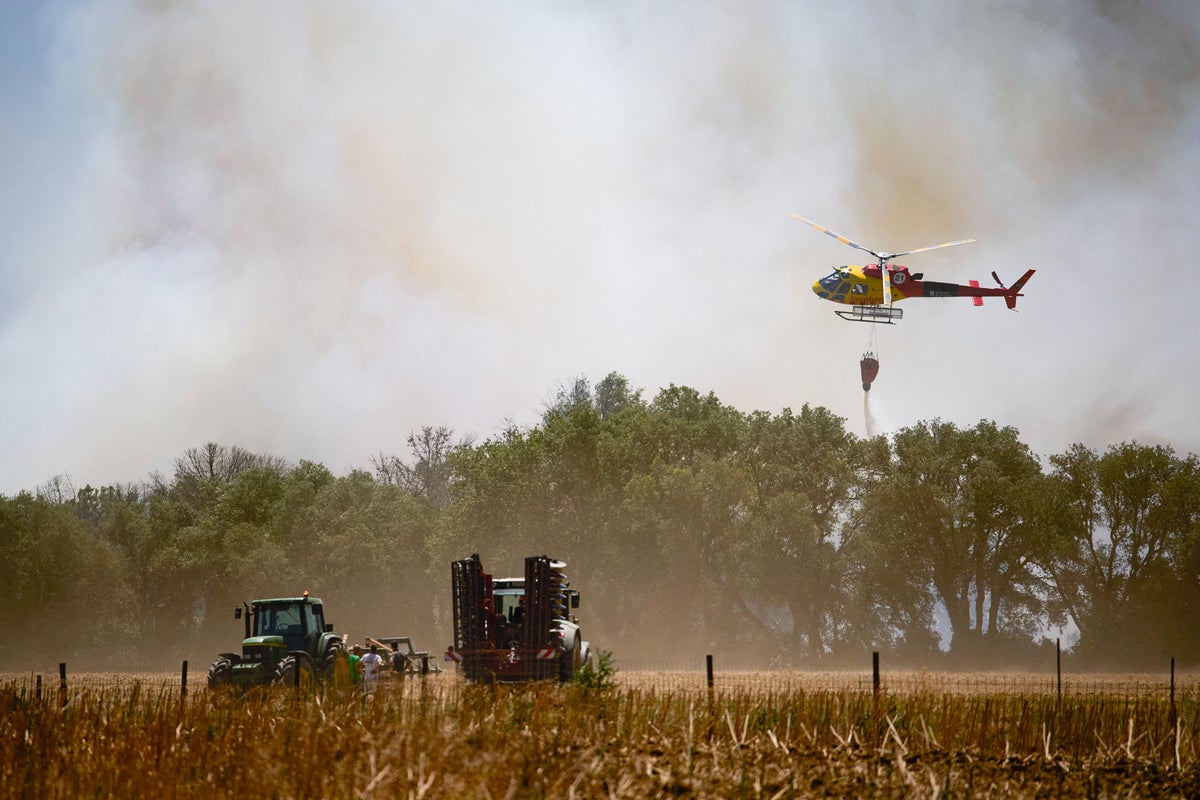
When wildfires tore through southern Spain, leaving at least twelve people dead, headlines blamed a familiar trifecta: extreme heat, severe drought, and human negligence. But the escalating body count and millions of euros in property damage are not merely the work of an angry climate. They are the direct consequence of systemic political neglect, obsolete risk assessment metrics, and a fatal institutional preference for spectacular firefighting operations over unglamorous, ground-level forest prevention. Spain is burning because its governing institutions have systematically ignored warnings that their fire management framework is dangerously broken.
The immediate tragedy of the twelve lives lost in Andalusia and surrounding regions obscures a much darker administrative failure. While emergency crews risk their lives on the front lines, the structural vulnerabilities that feed these infernos remain entirely unaddressed. The terrain has become a powder keg. Decades of rural depopulation, combined with a rigid bureaucratic culture that criminalizes proactive land management, have transformed the southern Spanish countryside into a contiguous mass of highly flammable fuel.
The Illusion of the Unavoidable Disaster
Politicians routinely describe these massive blazes as unpredictable anomalies caused by a changing global climate. This narrative serves a clear purpose. It shifts the blame from regional ministries to global forces beyond immediate local control. Yet internal assessments and European oversight reports paint a radically different picture. The catastrophic scale of these fires was not only predictable; it was explicitly foretold.
A scathing evaluation issued by the European Court of Auditors exposed a deeply flawed approach to wildfire management across the Mediterranean, with Spain singled out for its reliance on an outdated risk-assessment system. The criteria used by several Spanish regional governments to judge fire risk fail to account for modern vegetation density and altered weather patterns. Because the underlying data is flawed, the allocation of public funds becomes fundamentally distorted. Money is channeled into projects that do not reflect the actual vulnerabilities of the terrain.
The consequences of this analytical failure are visible on the ground. When a fire breaks out under extreme conditions, it quickly outpaces the containment capacity of even the most sophisticated aerial firefighting fleets. Firefighters find themselves facing fires that create their own localized weather systems, rendering traditional suppression tactics useless. The problem is not a lack of courage on the line. The problem is the sheer volume of combustible material that has been allowed to accumulate over decades.
The Fire Suppression Paradox
For more than a generation, Spain operated under a strict doctrine of total fire suppression. The historic campaign known as All Against Fire conditioned the public and forestry professionals to view every forest fire as an absolute evil that must be extinguished immediately. This approach seemed logical at the time. It protected property and saved timber investments in the short term.
However, aggressive suppression creates a profound long-term vulnerability. By immediately extinguishing every minor ignition, land managers inadvertently eliminate the natural, low-intensity fires that historically cleared the forest floor of dead wood, leaf litter, and dense underbrush. Without these regular cleanings, the fuel load builds up continuously. The ecosystem becomes a ticking time bomb. When an ignition inevitably escapes early containment during a summer heatwave, the resulting fire is exponentially more intense than the historical norm.
Experts refer to this as the wildfire paradox. The more successful a nation is at suppressing small fires, the more horrific and uncontrollable its future megafires become. In southern Spain, this paradox is amplified by the mass abandonment of traditional agriculture.
The Vacuum of the Empty Spain
Over the last fifty years, hundreds of thousands of small-scale farmers and goat herders abandoned the rural interior of Andalusia, Extremadura, and Castilla-La Mancha for urban centers. This demographic shift fundamentally altered the rural environment.
- Loss of natural firebreaks: Cultivated fields, vineyards, and heavily grazed pastures once formed a mosaic of open spaces that naturally slowed or stopped advancing fires.
- Encroachment of wild vegetation: As fields lay fallow, fast-growing brush and highly flammable scrubland took over the abandoned agricultural plots.
- Absence of forest maintenance: Rural communities used to harvest firewood, clear dead timber, and maintain local paths, keeping the forest biomass at manageable levels.
Today, those protective human interventions are gone. The modern southern Spanish forest is no longer a managed ecosystem. It is an overgrown, continuous carpet of fuel stretching right up to the edges of expanding tourist developments and rural villages.
Bureaucracy That Feeds the Flames
One might assume that the solution to this fuel accumulation is straightforward. Clear the brush, create managed firebreaks, and allow controlled, prescribed burning during the cooler winter months. In practice, Spanish bureaucracy makes these basic preventive measures nearly impossible to execute.
The regulatory framework governing land management in Spain is a maze of overlapping local, regional, and national jurisdictions. The administrative burden placed on private landowners and municipal governments is immense. Even clearing simple brush from a rural path or cutting down a handful of dead trees often requires multi-agency permits that take months, sometimes years, to secure.
The Prescribed Burn Bottleneck
Prescribed burning is a globally recognized method for reducing fuel loads safely. By intentionally setting low-intensity fires under strict weather conditions, forestry experts can eliminate the understory fuel without harming mature trees. Spain has the scientific expertise to utilize this tool effectively, yet institutional resistance remains high.
The administrative process for authorizing a prescribed burn varies wildly between autonomous communities. In regions where the agency responsible for fire suppression is separate from the agency that grants environmental permits, the paperwork frequently stalls indefinitely. Bureaucrats are terrified of the liability associated with an intentional fire, choosing instead to let the fuel build up rather than sign off on a controlled burn. The result is a tragic irony. The state makes it illegal to manage the forest safely, thereby ensuring that the forest will eventually burn catastrophically.
The Funding Asymmetry That Costs Lives
The most damning evidence of political neglect lies in the national budget allocations. High-end journalism requires following the money, and the financial trail behind Spain’s wildfire strategy reveals a glaring misallocation of resources. Spain consistently pours the overwhelming majority of its forestry budget into firefighting equipment, helicopters, and emergency personnel, while underinvesting in the tedious work of prevention.
A comparative analysis of how European Union recovery funds were deployed highlights this imbalance perfectly. Following recent economic relief packages, member states had a historic opportunity to reshape their environmental defense systems.
| Country | EU Recovery Funds Allocated to Fire Prevention | Total Forest Area (Hectares) |
|---|---|---|
| Greece | €837 million | ~3.9 million |
| Portugal | €615 million | ~3.3 million |
| Spain | €221 million | ~27.5 million |
The numbers reveal a catastrophic failure of prioritization. Spain, a country with a forest area multiple times larger than Greece and Portugal combined, allocated a fraction of what its neighbors spent on prevention. Of that paltry €221 million, only a small percentage actually reached the critical southern regions of Andalusia and Castilla-La Mancha before the current fire season began.
Pumping money into suppression while ignoring prevention is a politically convenient choice. A fleet of bright yellow water-bomber planes dropping retardant makes for excellent television coverage and reassures voters that the government is taking decisive action. A crew of laborers manually clearing brush with chainsaws in January does not generate headlines. But any seasoned fire analyst knows that fires are won or lost in the winter. By the time the water bombers are scrambled, the administrative battle has already been lost.
Broken Models of Regional Governance
Spain’s highly decentralized governance model further fractures the national response to these environmental emergencies. Responsibility for forest management and firefighting services lies entirely with the individual autonomous communities. While this allows for local adaptation, it has led to an inefficient, fragmented system characterized by turf wars, redundant contracts, and a total lack of standard operational procedures across regional borders.
An internal investigation revealed massive inefficiencies in how contracts are awarded to public and private entities. For instance, the state-owned environmental services company, Tragsa, frequently receives overlapping mandates from both central and regional administrations. Between 2021 and 2022, 242 separate contracts worth approximately €248 million were signed with Tragsa, many of which featured directly duplicating objectives.
This administrative fragmentation has severe real-world consequences on the fire line.
- Communication breakdowns: Regional fire crews often use different radio frequencies and digital mapping systems, making real-time coordination during a cross-border fire incredibly difficult.
- Resource hoarding: Autonomous communities are often hesitant to dispatch their elite firefighting assets to neighboring provinces, fearing that a fire might break out in their own territory while their crews are away.
- Fragmented procurement: Instead of purchasing equipment and aircraft at a national scale to secure better pricing and uniformity, individual regions negotiate separate, costly leases with private aviation firms.
When the Ministry for Ecological Transition was urged by European auditors to consolidate procurement and create a unified national command structure, the recommendations were flatly rejected. The justification offered was the preservation of regional autonomy. The true cost of that political posturing is measured in scorched earth and fresh graves in Andalusian cemeteries.
The True Cost of Inaction
The economic burden of this failed strategy is staggering. The European Court of Auditors estimates that the economic impact of wildfires across the Mediterranean exceeds €2 billion annually. This includes not just the immediate cost of extinguishing the fires, but the long-term destruction of timber resources, loss of tourism revenue, soil erosion, and the contamination of vital watersheds.
In southern Spain, where water scarcity is already a critical vulnerability, the environmental aftermath of a megafire is devastating. When winter rains finally arrive, they wash the ash and unprotected soil from the scorched hillsides directly into reservoirs. This ruins drinking water supplies and compromises irrigation systems for the agricultural sector. The financial resources required to clean these reservoirs and stabilize the hillsides dwarf the budget that would have been required to clear the forests beforehand.
Reversing the Inevitable
The twelve deaths in southern Spain should serve as a turning point, but history suggests that the political class will simply wait for the winter rains to wash away the public’s anger. To truly fix this broken system, Spain must abandon its obsession with total suppression and embrace a strategy centered on landscape resilience.
This requires an immediate rewrite of the regulatory framework to slash the red tape surrounding land maintenance. Private landowners should be incentivized, not penalized, for clearing fuel from their properties. Furthermore, the funding model must be inverted. At least half of the resources currently earmarked for emergency response should be legally diverted toward aggressive winter prevention programs, including extensive prescribed burning and the targeted subsidization of livestock grazing to keep firebreaks clear naturally.
The current path is entirely unsustainable. As summer temperatures continue to rise, the combination of an overgrown countryside and a dysfunctional administrative apparatus will ensure that each successive fire season is more lethal than the last. Firefighters cannot continue to bail out a broken political system with their lives. Spain must either learn to manage its land during the winter, or prepare to watch its southern territories burn to the ground every summer.