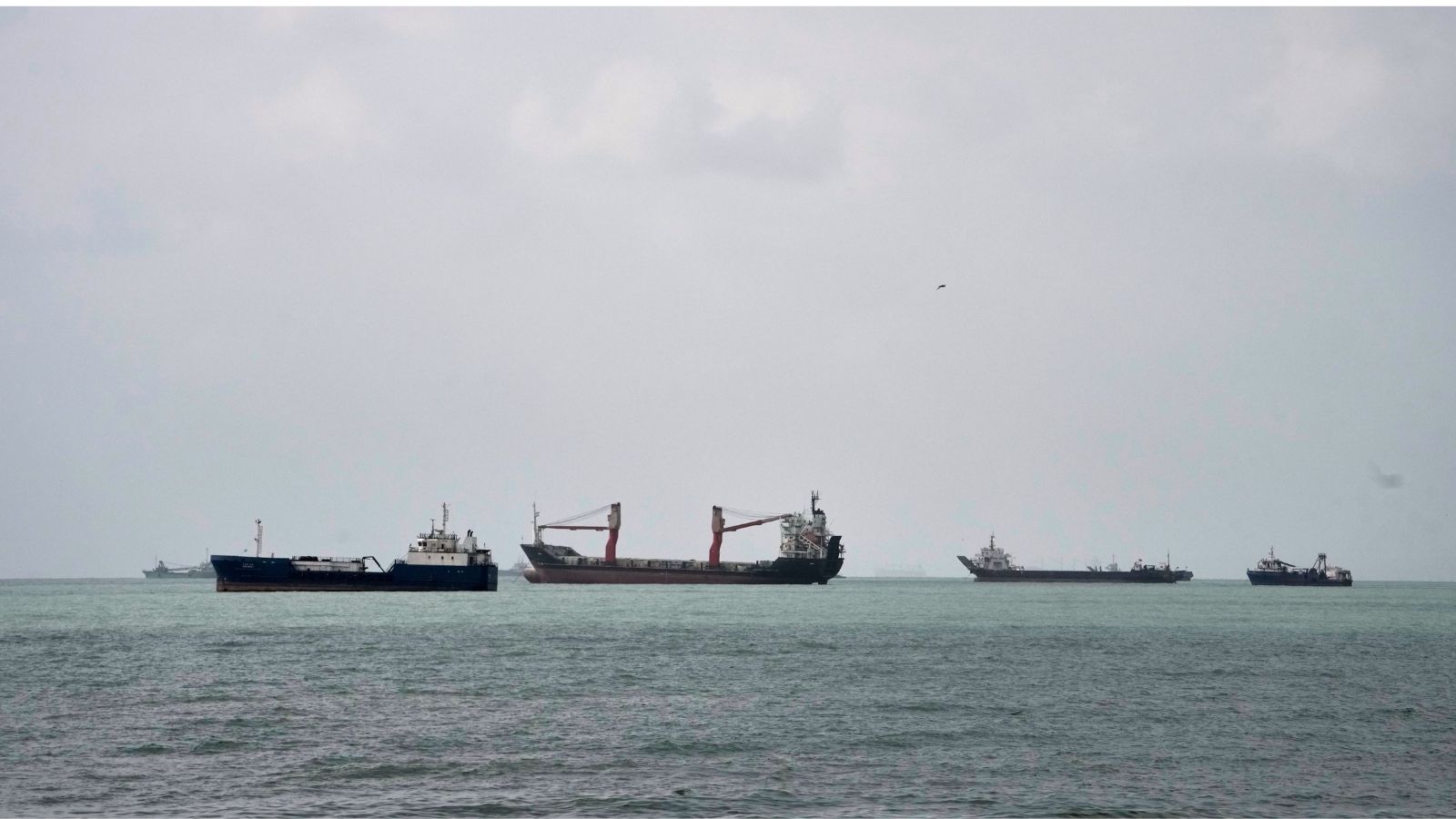
The maritime conflict in the Middle East has entered a structural phase of economic attrition, underscored by the United States Central Command releasing high-definition footage of the Comoros-flagged oil tanker M/T Kylo sinking beneath the surface of the Gulf of Oman.
When military authorities publish videos of commercial hulls sliding into the abyss, the target is never just the steel at the bottom of the sea. The message delivered by CENTCOM leadership following the exchange was explicitly arithmetic: if regional actors fire ballistic missiles at two American warships, the response will exact a triple penalty on their economic infrastructure. Two more vessels, the M/T Downy and M/T Stark 1, were permanently disabled in coordinated operations near Kharg Island and Jask. This theater of operations has shifted past traditional naval engagements into a deliberate campaign aimed at dismantling the shadowy petroleum conduits that fund the Islamic Revolutionary Guard Corps.
The Mechanics of the Shadow Fleet
Understanding why Washington has turned its crosshairs toward commercial hulls requires looking closely at how sanctioned states bypass global oversight. For years, Iran maintained an illicit export apparatus reliant on aging supertankers operating under flags of convenience, routinely turning off transponders and executing ship-to-ship transfers in international waters to mask the origin of crude.
These vessels are not standard corporate assets belonging to transparent multinational conglomerates. They function as floating balance sheets for paramilitary operations. When a VLCC like the M/T Downy takes a direct hit in ballast near its primary export terminals, the loss strikes directly at the liquidity pipeline feeding proxy networks across the region.
Naval analysts have long debated the efficacy of secondary economic sanctions, pointing out that determined sellers will always find willing buyers in opaque markets. Kinetic interdiction changes that equation entirely. Sinking or permanently disabling commercial tonnage introduces an immediate replacement cost that insurance markets cannot easily absorb. Shipowners willing to lease hulls to sanctioned entities now calculate the risk of total asset loss rather than minor regulatory fines.
The Strategic Escalation
The immediate catalyst for the current wave of sinkings was a direct ballistic missile volley launched by the IRGC targeting a United States aircraft carrier and a guided-missile destroyer. Those naval assets successfully evaded incoming fire, leaving zero American casualties, but the tactical failure by Tehran triggered an immediate doctrine shift within the Pentagon.
Retaliation transformed from defensive counter-battery fire into offensive economic denial. By hitting three tankers in a single sweep—destroying one outright in the Gulf of Oman and crippling two others near critical Iranian infrastructure hubs—the United States military signaled that the cost of challenging naval patrols in the Persian Gulf includes the systematic erasure of national export capacity.
Tehran's Ministry of Foreign Affairs swiftly condemned the operations as illegal under international maritime charters, characterizing the destruction of commercial shipping as an escalation of economic warfare. Yet, diplomatic protests carry little weight when military strategy prioritizes total asset denial. The confrontation has stretched from coastal waters out to the deep transit lanes, effectively shrinking the operational zone where Iranian petroleum can move with any degree of impunity.
Fallout in Global Energy Corridors
Energy traders are absorbing the reality of a permanent risk premium added to every barrel originating from the region. The closure of vital transit bottlenecks like the Strait of Hormuz, combined with the active destruction of tankers near primary loading terminals such as Kharg Island, forces a recalibration of supply chains that have spent decades optimizing for flow efficiency.
When insurance underwriters pull coverage from entire regional corridors, refineries thousands of miles away feel the pinch long before physical shortages materialize. The administration argues that crushing the state's export apparatus will eventually dry up the capital fueling broader hostilities, betting that structural economic collapse will outpace short-term commodity spikes.
That gamble carries immense volatility. As long as asymmetric missile exchanges are met with the systematic hunting of commercial carriers, the maritime approaches of the Middle East remain a high-stakes arena where a single miscalculation risks turning regional friction into a permanent fixture of the global economic landscape.