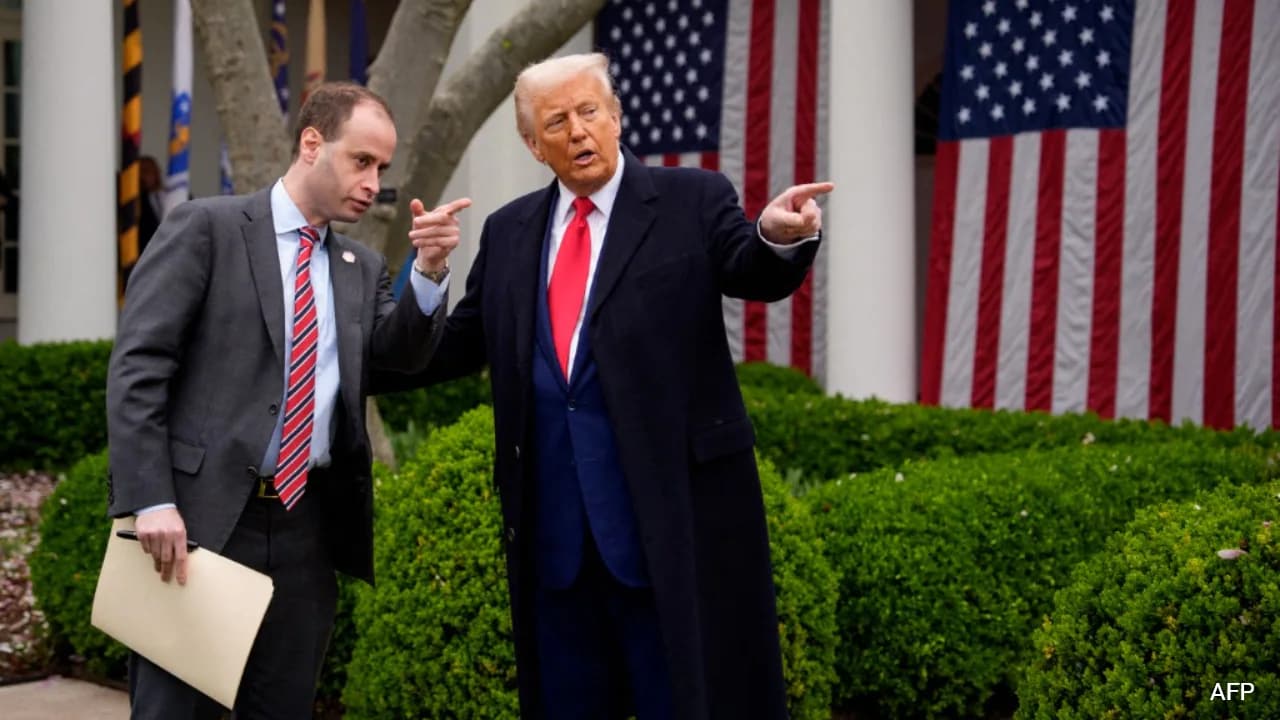
President Donald Trump has announced that White House Staff Secretary Will Scharf will take over as White House Counsel starting September 1, succeeding outgoing counsel David Warrington. Warrington is departing the administration for the private sector, leaving behind a tenure defined by intense legal battles and major judicial confirmations.
The transition places Scharf, a former federal prosecutor and defense attorney who represented Trump during high-stakes litigation including landmark Supreme Court immunity arguments, at the center of the executive branch's legal apparatus. This move comes at a critical juncture for the administration, arriving just months before the midterm elections as political lines harden and federal oversight intensifies.
The Mechanics of the West Wing Legal Transition
Stepping from the role of staff secretary into the office of the White House Counsel is no minor administrative shift. The counsel's office functions as the executive branch's primary liaison with the Department of Justice, manages judicial nominations, reviews executive orders, and oversees presidential pardons. It also acts as the legal shield against congressional oversight and civil litigation.
Scharf enters this office with deep familiarity concerning the inner workings of the current administration. As staff secretary, he controlled the paper flow to the Oval Office, managing the presentation of executive orders and policy documents. Observers note that this operational proximity uniquely positions him to coordinate executive actions with rigorous legal defense.
David Warrington’s departure for private practice marks the conclusion of a foundational phase for the legal team that helped secure major conservative judicial appointments and defend executive prerogatives. Warrington, who previously served as general counsel for the 2024 campaign, leaves structural foundations that Scharf must now manage against an increasingly complex legislative backdrop.
Navigating Imminent Congressional Scrutiny
The timing of Scharf's appointment is inherently tied to the electoral calendar. With midterm elections looming, political analysts anticipate that control of Congress will become a fiercely contested battleground. Opposition leaders have openly signaled intentions to launch aggressive investigations into executive branch operations should congressional majorities shift.
When subpoenas, document requests, and congressional hearings multiply, the White House Counsel becomes the chief strategist for executive privilege and administrative resistance. Scharf’s background as a litigator who has defended the president in elite appellate forums suggests a posture of active legal pushback. Rather than adopting a reactive stance, the counsel's office under Scharf is expected to aggressively assert constitutional boundaries against congressional overreach.
Controversies and Infrastructure Battles
Beyond traditional constitutional defense, Scharf’s recent portfolio includes high-profile administrative flashpoints. Serving concurrently as the chair of the National Capital Planning Commission, Scharf helped shepherd approvals for the administration's controversial $400 million White House ballroom project.
That construction effort recently encountered judicial friction when a federal appeals court ordered a temporary halt, ruling that congressional authorization was missing. The administration has vowed to appeal that decision to the Supreme Court. Managing the intersection of executive authority, federal property jurisdiction, and judicial injunctions will remain an immediate test of Scharf's dual capacity as a policy implementer and legal defender.
Furthermore, internal policy debates have occasionally tested the boundaries of executive power. Reports from earlier in the policy formulation cycle noted administrative friction over proposals involving immigration enforcement and statutory protections, where legal advisors urged caution to avoid constitutional deadlocks. Scharf's ability to balance ambitious executive agendas with sound legal risk management will dictate the administration's efficacy through the remainder of the term.
As September 1 approaches, the shift in legal leadership signals an administration preparing for trench warfare on multiple fronts—from federal courtrooms to Capitol Hill committee rooms. The legal strategy is set, and the execution now rests firmly in Scharf's hands.
:max_bytes(150000):strip_icc()/ar-American-Cheese-taste-test-horizon-4x3-54cc339550cd44b9a818c17bdfd5428d.jpg)