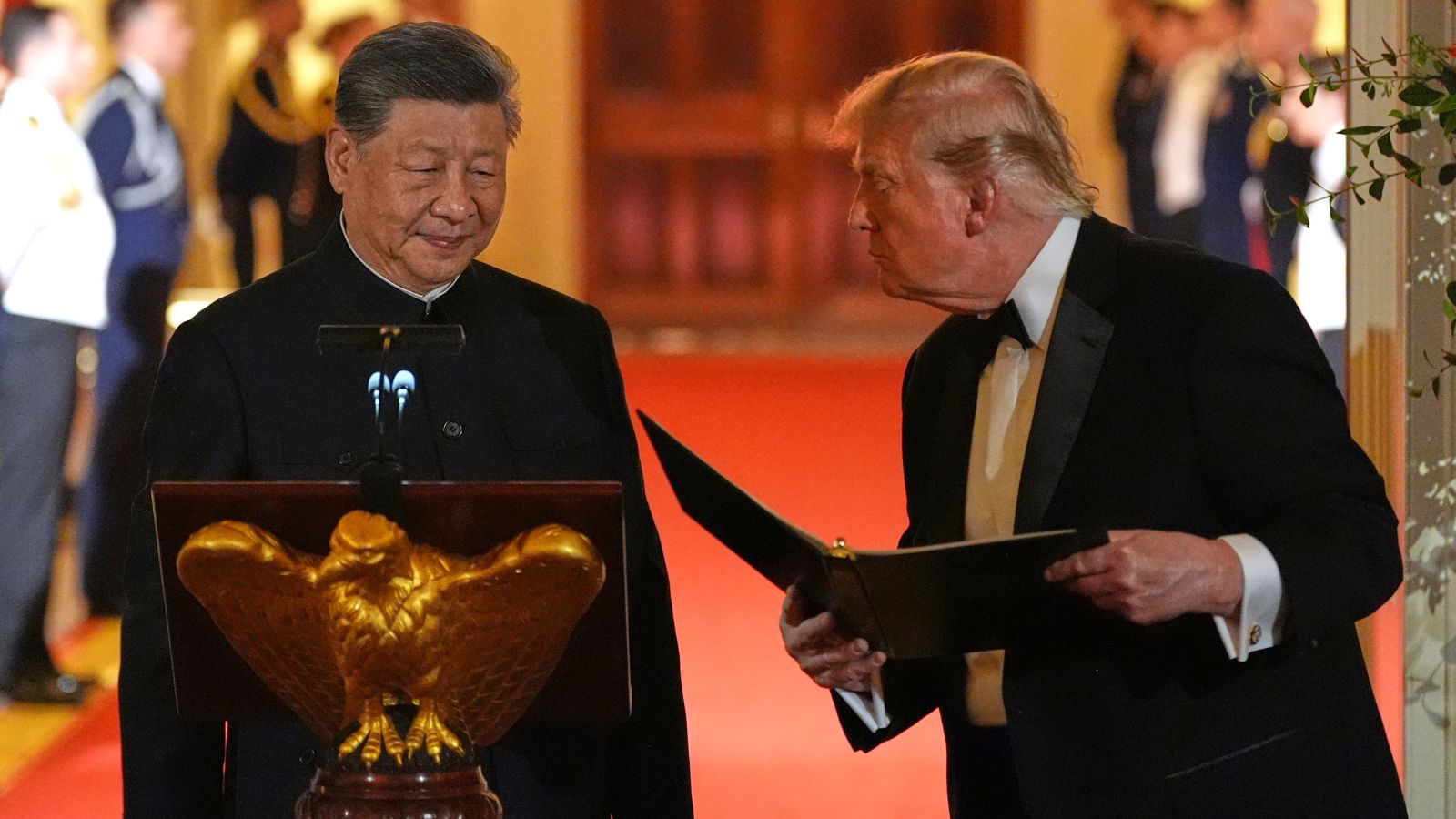
Silver clinked against fine bone china. Outside, Washington was gripped by the heavy, humid hush of a September evening, but inside the grand expanse of the East Room, the air smelled of lemongrass, aged bourbon, and the quiet, nervous tension of two superpowers measuring each other in the dark.
It was September 2015. President Barack Obama and First Lady Michelle Obama were hosting a state dinner for Chinese President Xi Jinping. On paper, it was a diplomatic milestone. A formal exchange of pleasantries, toasts, and protocol. But history is rarely made in the official communiques. History is made in the margins—in who sits next to whom, the unspoken words across a centerpiece of yellow roses, and the heavy weight of an alliance that the entire world watched with bated breath.
Let us step back into that room.
The Architecture of Hospitality
State dinners are not parties. They are theater. Every chair is a chessboard. Every napkin placement is a calculated signal.
When the guest list leaked ahead of time, political analysts didn't look at the menu first. They looked at the seating chart. Who gets placed within whispering distance of the leader of the world's second-largest economy? Who gets banished to the outer edges of the room?
Technology titans mingled with Hollywood executives, civil rights veterans brushed shoulders with venture capitalists, and veteran diplomats shared tables with modern innovators. Tim Cook sat just a few tables away from senior administration officials. Mark Zuckerberg was there. Jeffrey Katzenberg was there. Satya Nadella was there. This was not merely an assemblage of Washington insiders; it was a snapshot of a transactional world where geopolitical strategy and Silicon Valley algorithms were inextricably bound together.
Imagine being in their shoes for a moment. You adjust your black-tie lapel. You walk past Secret Service agents whose expressions are carved from granite. You enter a room where a single stray remark could ripple across global stock exchanges by morning. The food was exquisite—Maine lobster poached in butter, mushroom-infused beef, and a poppy seed bread-and-butter pudding crafted by guest chef Anita Lo. Yet, one had to wonder how many guests actually tasted it over the sound of their own racing pulses.
The Weight Across the Table
Diplomacy often gets sanitized in textbooks. We read about trade deficits, cyber espionage agreements, and territorial disputes in the South China Sea as if they were lines on a chalkboard. We forget that behind every policy memo are human beings sitting in stifling suits, trying to read the micro-expressions of their counterparts.
President Xi had arrived in the United States amid mounting friction. Tensions over intellectual property theft, maritime boundaries, and human rights hung over the capital like a low cloud. Yet, for three hours under the crystal chandeliers, the agenda shifted from confrontation to communion.
To understand why this matters, you have to look past the velvet ropes. When leaders break bread, they are performing an ancient tribal ritual. It says: We can sit at the same table without drawing swords.
Does a dinner stop a missile? No. Does it prevent a currency devaluation? Rarely. But what it does is buy time. It humanizes the adversary. When President Obama raised his glass to toast the enduring ties between the American and Chinese peoples, he was speaking to a domestic audience worried about economic decline, an international community terrified of a bipolar conflict, and a guest of honor who understood power as a long, unbroken lineage of dynastic strategy.
The Faces in the Crowd
Look closer at the guest list that night, stripped of its dry directory formatting.
There were Cabinet secretaries whose hair had turned gray managing crises nobody ever read about. There were artists who believed culture could bridge gaps that politics only widened. There were governors who cared less about Beijing's overarching doctrine and more about whether Chinese automakers would build plants in their home states.
Among them sat Madeleine Albright, the seasoned diplomat who knew better than anyone how fragile peace actually is. There was Susan Rice, balancing national security briefs with the logistics of an evening that had to project absolute confidence. Every single person in that room represented a constituency, a corporation, or a conflicting ideology.
And then there was the menu. It was a deliberate culinary bridge. It took American ingredients and filtered them through Asian techniques—a nod to mutual respect, a subtle admission that neither culture operates in isolation anymore.
The Morning After
The music faded. The limousines swept away into the damp D.C. night. The Secret Service swept the East Room for stray cufflinks and notes.
What remained?
The headlines the next morning were predictable. Headlines about cyber talks, emission targets, and diplomatic friction. Pundits on cable news tore apart the optics, arguing whether the administration was being too soft or too aggressive.
They missed the point.
The state dinner for President Xi Jinping was never about a single night of breakthrough agreements. It was about the architecture of coexistence. In a world hurtling toward fragmentation, where every ideological disagreement threatens to erupt into open hostility, the simple act of gathering in a room to eat, listen, and occasionally smile is a radical act.
The silver was polished and put away. The flowers wilted. But the dance continued, step by careful step, on a tightrope stretched across the Pacific.


