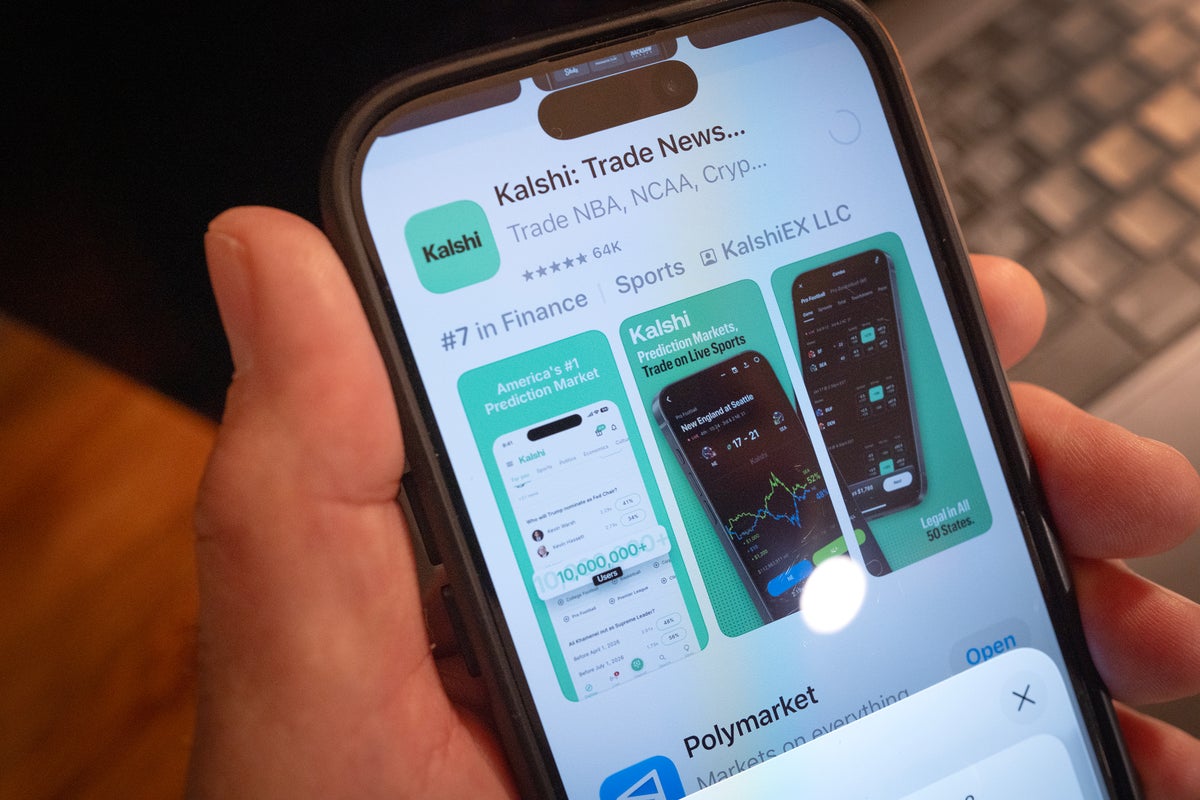
New York State has officially sued prediction market platform Kalshi, slapping the federally regulated exchange with a staggering multi-billion-dollar enforcement action that labels the company an illegal, unlicensed gambling operation. Filed jointly in Manhattan state court by Governor Kathy Hochul and Attorney General Letitia James, the lawsuit targets the very foundation of modern event trading. State authorities are demanding the total forfeiture of profits, consumer restitution, and triple damages totaling roughly $36 billion. This escalation marks a major flashpoint in an existential war between state gaming regulators and federal financial watchdogs over who gets to control the future of speculative betting.
At its core, this conflict is about definitions. Kalshi maintains it is a designated contract market governed exclusively by the Commodity Futures Trading Commission (CFTC). State officials counter that regardless of federal registration, offering contracts on elections, weather, and sports mimics traditional gambling.
The legal fault lines exposed by this lawsuit stretch far beyond the borders of New York. A patchwork of state and federal authorities are currently locked in a jurisdictional tug-of-war that threatens to fracture online trading altogether.
The Regulatory Jurisdictional Trap
For decades, financial derivatives and state-regulated wagering operated in separate silos. Futures exchanges handled agricultural commodities, interest rates, and foreign exchange. Casinos and racetracks handled local gambling.
Prediction markets collapsed that boundary. By packaging real-world outcomes into binary event contracts, platforms like Kalshi created a mechanism where anyone can trade on whether a politician will win office or how many inches of rain will fall tomorrow.
Federal oversight was supposed to provide a protective shield. Under the Commodity Exchange Act, the CFTC holds broad authority over swaps and financial futures. When federal courts and commission leadership backed the idea that event contracts are financial derivatives rather than games of chance, operators felt secure scaling nationwide.
State attorneys general saw a massive loophole. If a digital platform allows mobile users to stake money on uncertain outcomes without paying local gaming taxes or enforcing local age minimums, state leaders argue it is an unregulated sportsbook operating in plain sight.
The Economics of Evasion
State gaming commissioners are furious about lost revenue. Traditional sports betting platforms and commercial casinos generate billions in state taxes, funding local educational programs and public infrastructure.
Prediction market operators bypass these local structures entirely. Because Kalshi operates under federal commodities rules, it permits users as young as 18 to trade. New York law strictly mandates a minimum age of 21 for mobile sports wagering.
State leaders point to these discrepancies not just as regulatory violations, but as public safety hazards.
"No matter what they call themselves, prediction markets like Kalshi are gambling platforms, plain and simple," Attorney General James stated.
Industry analysts estimate that unlicenced event contracts have siphoned over a billion dollars from state-regulated gaming ecosystems nationwide. When trading volumes spike during major international events like the FIFA World Cup, the financial divergence between state coffers and private trading platforms becomes impossible for local politicians to ignore.
The Federal Pushback
The battle is far from one-sided. Washington has increasingly stepped in to block state-level interference. The CFTC has actively pushed back against state attorneys general, warning that allowing fifty distinct states to regulate federal exchanges will destroy national financial markets.
Federal agencies argue that state-level bans run roughshod over interstate commerce principles. If every state can sue a federally registered exchange out of existence, the entire structure of modern financial market regulation collapses into chaos.
Federal judges have already shown hesitation toward aggressive state crackdowns. In neighboring jurisdictions, federal courts have intervened to block state-level bans on prediction markets, setting up a supreme constitutional showdown.
Yet New York's decision to pursue astronomical financial penalties changes the calculus. Seeking tens of billions in damages shifts the dispute from a regulatory disagreement into an existential survival test for the company.
Where the Market Breaks
Kalshi has dismissed the state's actions as political theater, warning that heavy-handed enforcement will simply drive everyday traders into shadowy offshore alternatives where consumer protections do not exist at all.
That argument highlights a bitter reality of modern financial regulation. Digital liquidity ignores geographic borders with ease. When legal avenues close within a specific state, retail capital frequently migrates to unregulated crypto-based prediction protocols that offer zero transparency or recourse.
State regulators claim they are protecting citizens from predatory financial loss and addiction. Exchange operators counter that they are building the ultimate decentralized information network for human expectation.
The courts must now decide whether a digital contract tied to a political election is a sophisticated financial instrument or a digital slot machine. Until that distinction receives absolute legal clarity, every trade executed on these platforms remains balanced on a knife-edge.