The Persian Gulf is burning again, and the math governing international maritime trade has fundamentally fractured. When United States Central Command forces disabled three crude oil carriers linked to the Islamic Revolutionary Guard Corps following a missile exchange targeting American warships, Tehran immediately denounced the operation as a war crime.
Yet looking at this conflict purely through the lens of diplomatic posturing misses the underlying structural violence. This is not a sudden flare-up. It is the logical, brutal continuation of an economic chokehold that has slowly squeezed West Asia for years, transforming commercial vessels into frontline combatants.
The Calculus of Economic Retaliation
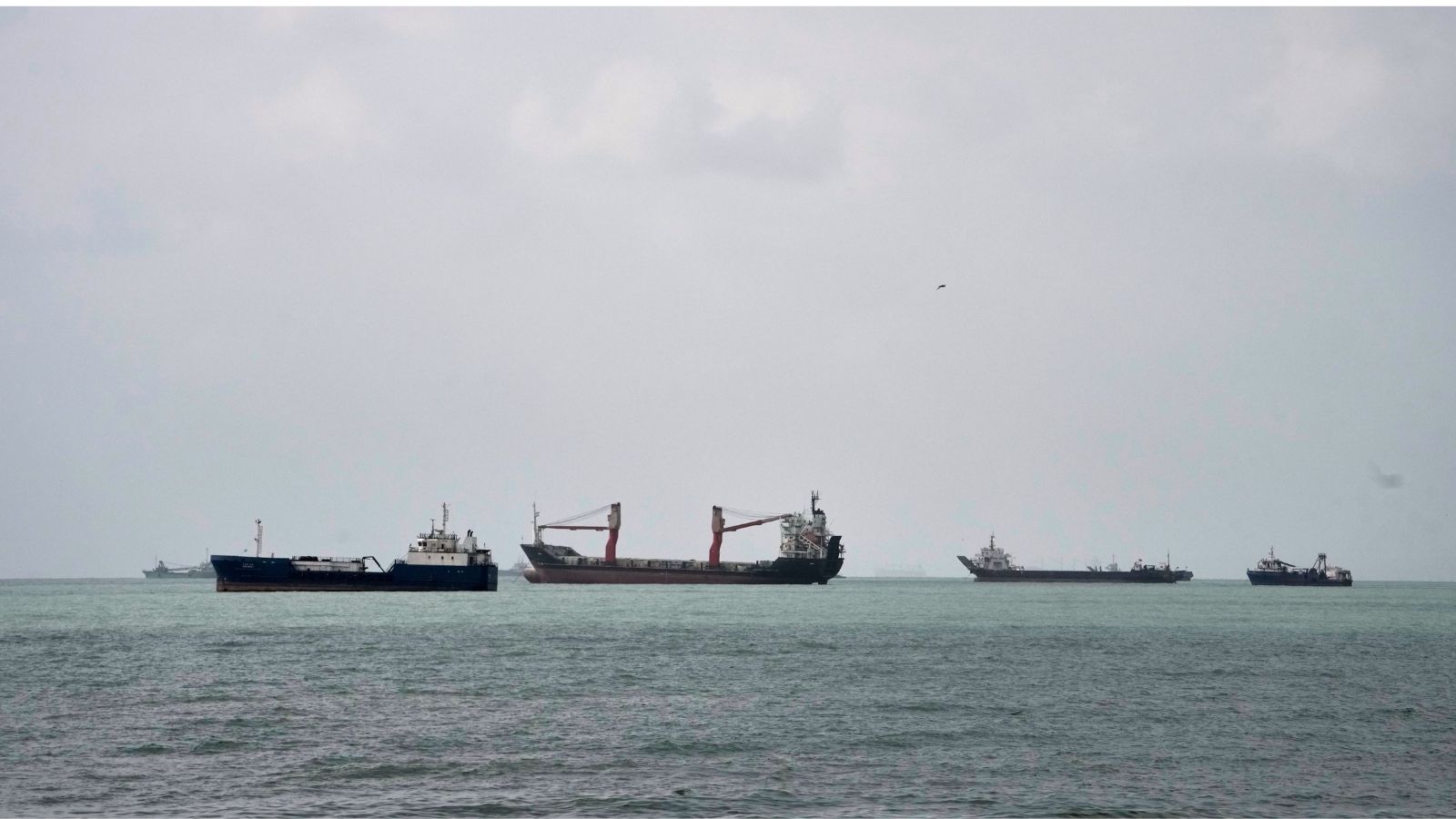
To understand why the conflict escalated to striking commercial hulls, one must examine the arithmetic of the shadow fleet. For months, Washington and its regional partners have tightened a de facto naval blockade designed to starve the Iranian state apparatus of petroleum revenue. In response, Tehran relied on an informal network of shuttle tankers, moving crude from primary terminals like Kharg Island out toward open waters.
When the IRGC launched ballistic missiles at a United States aircraft carrier and a guided-missile destroyer, the American response discarded traditional rules of proportional naval engagement. Admiral Brad Cooper articulated a stark doctrine of asymmetric economic punishment, noting that for every two American ships targeted, three Iranian commercial carriers would be disabled or destroyed.
This tit-for-tat kinetic exchange crosses a dangerous legal and logistical Rubicon. By explicitly targeting commercial oil carriers—such as the M/T Downy, M/T Stark 1, and M/T Kylo—under the justification that they fund state-backed proxy networks, the United States military has codified a new precedent. Commercial tonnage is no longer neutral. If a hull generates revenue for a sanctioned military apparatus, it is treated as a legitimate target of war.
The Strait of Hormuz Chokepoint Panic
Traffic through the Strait of Hormuz has plummeted to near historic lows. Maritime analytics paint a picture of an artery starved of normal commercial movement, replaced instead by aggressive posturing and unauthorized route designations.
Iran has issued sweeping warnings against vessels utilizing paths it deems illicit, raising the specter of widespread detentions and missile fire across the gulf. Concurrently, regional shippers from neighboring states find their own logistically vital tankers caught in the crossfire. Insurance premiums for passage through West Asian waters have surged past rational actuarial limits, forcing a massive rerouting of global energy supplies.
The human and mechanical cost of this standoff is tangible. Crews are given brief warnings to abandon ship before precision munitions tear through unladen steel hulls, turning multi-million-dollar assets into burning hulks in the Gulf of Oman. These actions guarantee that Brent crude remains volatile, punching past ninety dollars a barrel and feeding inflationary pressures across western economies.
The Domestic Political Horizon
Beneath the geopolitical rhetoric lies a stark domestic vulnerability for Western leadership. While political figures downplay the protracted nature of these engagements as minor friction, the creeping cost at the fuel pump tells a different story. Energy security is inextricably linked to electoral outcomes, and prolonged maritime warfare in the Gulf directly impacts household budgets thousands of miles away.
Iran accuses Washington of violating the United Nations Charter and executing state-sponsored economic sabotage. Washington counters that freedom of navigation must be defended through absolute kinetic deterrence. There is no diplomatic off-ramp currently visible on the horizon. Both sides have locked themselves into a cycle where escalation is met with heavier escalation, turning the waters off Jask and Kharg Island into an unyielding testing ground for twenty-first-century naval dominance.
The old guarantees of open sea lanes are gone, replaced by a permanent state of maritime hostility where every barrel of oil carries the shadow of a missile strike.