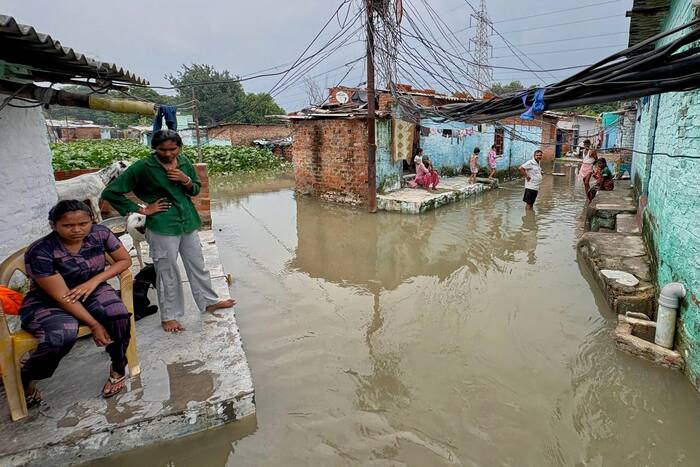
At least 62 people died across northern India's sprawling Uttar Pradesh state following days of relentless torrential downpours that submerged neighborhoods, compromised mud-brick structures, and turned rural thoroughfares into fast-flowing river channels. Yet behind the baseline statistics released by disaster management desks lies a far more complex institutional reality. Heavy rain and catastrophic floods do not happen in a vacuum. They expose the friction points between unyielding meteorological shifts and decades of compromised municipal planning.
When water levels swell past critical thresholds, the immediate response follows a familiar, tragic script. Rescue teams deploy inflatable boats. Relief camps open in hastily repurposed school buildings. Officials issue grim tallies of the fallen. But the structural vulnerabilities that transform seasonal monsoonal patterns into localized humanitarian emergencies rarely receive the same sustained scrutiny once the skies finally clear.
The Anatomy of a Man-Made Drainage Failure
Water must go somewhere. That fundamental law of physics routinely collides with the chaotic realities of rapid urbanization across the Gangetic plains. In cities like Lucknow, Kanpur, and Gorakhpur, decades of concrete expansion have systematically paved over natural drainage basins, wetlands, and ancient floodplains.
Consider a hypothetical municipal zone where a century ago, seasonal overflow soaked naturally into expansive marshlands and absorption basins. Replace those sponges with high-density commercial complexes, uncurbed residential colonies, and poorly graded asphalt. When a month's worth of rain drops within a seventy-two-hour window, the subterranean storm drains—many dating back to colonial designs or built with insufficient pipe diameters—choke almost immediately.
Water backs up through street grates. It pools in low-lying intersections. It enters ground-floor tenements before sleeping families realize the danger. The physical cause is precipitation, but the aggravating factor is concrete poured over the Earth's natural safety valves.
Rural Vulnerability and the Architecture of Collapse
While urban centers grapple with gridlock and waterlogged infrastructure, rural districts face an entirely different class of hazard. In agricultural belts across northern India, the primary killer during severe weather events is structural failure rather than drowning in open water.
Traditional rural dwellings constructed from sun-dried mud bricks, or unreinforced masonry bonded with weak mortar, offer little resistance against sustained water saturation. When foundations remain submerged for days, walls soften, lose structural integrity, and collapse without warning.
Furthermore, early warning systems often stutter before reaching isolated farming communities. While regional meteorological centers issue high-alert bulletins via digital portals and urban media channels, the last-mile transmission to remote villages depends heavily on local administrative hierarchies. By the time local alerts prompt evacuation orders, rising torrents have frequently severed access roads, trapping families inside compromised homesteads.
The Regional Ripple Effect
The crisis is rarely contained within state or national borders. Heavy weather systems moving across northern India frequently mirror conditions in neighboring Nepal, where river basins originate. Heavy rainfall in Himalayan foothills cascades downstream through international river systems, swelling tributaries that cross into the plains with terrifying speed.
When upstream barrages and reservoirs reach maximum capacity, engineers face an impossible choice. Retain the water and risk catastrophic dam failure, or release the excess, inundating downstream communities without adequate warning time. This transboundary dynamic turns meteorological events into diplomatic and logistical nightmares, where local authorities on the ground bear the brunt of decisions made miles away in regional control rooms.
Beyond the Immediate Aftermath
Counting the dead is the easiest part of disaster management. Rebuilding a shattered regional economy, restoring compromised sanitation systems to prevent post-flood waterborne disease outbreaks, and relocating vulnerable populations away from active flood zones requires political capital that rarely survives the changing news cycle.
As climate anomalies increase the frequency and ferocity of extreme weather events across South Asia, treating these disasters as isolated acts of nature becomes an expensive luxury. Until municipal master plans account for heavy water accumulation as a structural certainty rather than a statistical anomaly, the baseline tally of sixty-two lives lost will remain a recurring marker of a system perpetually caught off guard.