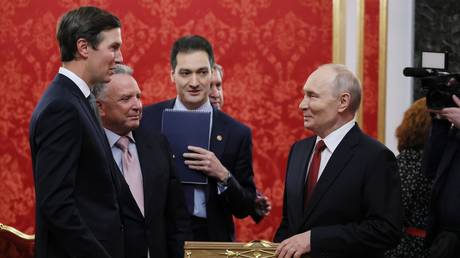
When special envoy Steve Witkoff and presidential advisor Jared Kushner touched down in Moscow for high-stakes diplomatic consultations, official channels in Washington and European capitals scrambled to decode the underlying agenda. This high-profile mission—framed by the White House as a concerted push to lay out substantive pathways for ending the war in Ukraine—transcended traditional statecraft. Behind closed doors at the Kremlin, where the delegation spent hours in deep discussions with Russian leadership, the diplomatic architecture relied far less on conventional bureaucratic channels and much more on transactional, high-level personal positioning.
To understand why this specific pairing matters, one must look past the polished press releases and examine the structural mechanics of backchannel diplomacy. Witkoff and Kushner do not operate with the standard playbook of career foreign service officers. They represent a distinct brand of personal diplomacy that bypasses regular State Department hierarchies. This approach brings immediate speed to negotiations, but it also carries severe systemic vulnerabilities. When foreign policy is outsourced to informal envoys, institutional memory vanishes. Vital nuances regarding regional security architectures risk being traded away in exchange for rapid, optics-friendly concessions.
The mechanics of the Moscow meetings revealed a calculated attempt to test red lines without committing formal administrative capital. Kremlin aide Yuri Ushakov acknowledged that the American delegation brought serious preparatory ideas to the table, noting that potential bilateral economic deals were touched upon in granular detail. This reflects a broader strategic pattern where Washington attempts to untangle deeply rooted geopolitical conflicts by introducing commercial incentives. Yet, treating a territorial war of attrition as a real estate negotiation fundamentally misjudges the ideological and security imperatives driving Moscow and Kyiv.
The Limits of Transactional Statecraft
Skeptics within the European security apparatus have long argued that economic carrots cannot override existential military objectives. When Vladimir Putin met with the American envoys, the conversation invariably drifted back to core structural grievances rather than temporary ceasefires. While a temporary, localized pause on capital strikes was successfully arranged for the duration of the visit, the broader war machine across the front lines continued unabated. This stark dichotomy exposes the inherent illusion of partial de-escalation. Stopping drones over Kyiv for seventy-two hours provides a temporary propaganda victory, but it changes nothing about the artillery duels grinding down the Donbas.
Consider a hypothetical corporate restructuring where management attempts to settle a hostile union strike by offering individual bonuses to select board members while ignoring the core contract demands. The strike continues because the underlying dispute remains unresolved. In the context of international relations, bypassing multilateral consensus to chase a bilateral quick fix often alienates crucial regional allies. Kyiv found itself once again in the precarious position of reacting to proposals hammered out between Washington and Moscow, forced to weigh security guarantees against foreign pressure for rapid territorial compromises.
The diplomatic sequence—moving swiftly from the Kremlin to consultations in Kyiv—was designed to project relentless momentum. Administration insiders pointed to the "meaningful" nature of the dialogue, emphasizing that structured follow-ups would materialize in the weeks ahead. However, previous high-level missions by the same delegation demonstrate a recurring gap between optimistic rhetoric and tangible diplomatic breakthroughs. Without a mechanism to enforce compliance on foundational issues like sovereignty and long-term demilitarization zones, high-level visits run the risk of becoming theatrical exercises rather than substantive peace processes.
Navigating the Post-Diplomatic Reality
As the dust settles on the latest round of closed-door talks, the fundamental parameters of the conflict remain stubbornly unchanged. Russia continues to insist on addressing what it terms the root causes of the crisis, while Ukraine demands ironclad post-war security guarantees that prevent any future resurgence of aggression. Introducing real estate moguls and family confidants into this volatile mix changes the texture of the negotiations, injecting a high-stakes, entrepreneurial spirit into an arena that usually demands glacial, legalistic precision.
The real test of this unconventional diplomatic offensive will not be measured by the temporary silence over capital skylines, but by whether either side is genuinely willing to alter its strategic endgame. Until that foundational shift occurs, backchannel missions from envoys flying in from Washington will remain high-risk gambles, trading institutional stability for the illusion of immediate progress.
For a closer look at the initial reporting surrounding these developments, watch Witkoff and Kushner Moscow talks coverage. This video provides context on the sequence of events leading up to the high-level meetings in the Russian capital.