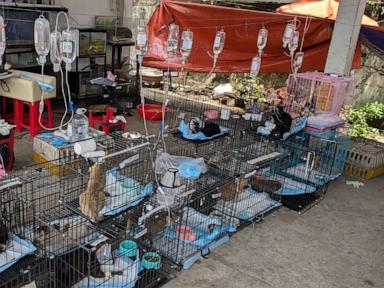
For three long years, a highly organized crime ring ran rampant across southern Vietnam, snatching family pets right from their doorsteps. The scale of the operation was staggering, but their run finally ended in a massive raid by the Ho Chi Minh City Criminal Police Division. Authorities didn't just stumble on a small-scale operation. They uncovered an industrial-sized pet theft pipeline, seizing more than 500 felines destined for slaughter.
The raid represents one of the largest animal welfare interventions in recent Vietnamese history. It exposed a highly lucrative, brutal underworld that directly targets beloved household companions to fuel the illicit cat meat trade.
The Takedown of a Three Year Syndicate
The multi-day sting operation unraveled after Ho Chi Minh City police decided to investigate a massive surge in local pet thefts. Residents had been complaining for months that their pets were vanishing into thin air. The trail eventually led investigators to a heavily secured yard used as a central collection hub by a nine-person criminal gang.
When the officers breached the property, they found a grim production line. The gang had stuffed roughly 400 live cats into 45 cramped wire cages. Nearby sat four massive, ice-filled styrofoam containers holding the bodies of 80 slaughtered cats. Another raid at a linked facility turned up 21 more live felines.
The suspects cracked under interrogation, admitting they spent the last three years trapping and collecting pets across Ho Chi Minh City, Tay Ninh, and An Giang. They operated like clockwork, transporting new shipments every two to three days to a distribution point in Tay Ninh Province. The financial incentives drive this ruthlessness. The black-market ring sold the stolen animals for 70,000 Vietnamese dong per kilogram, which comes out to roughly $2.70. For a heavy pet cat, that is a decent payday in a region where stray and stolen animals are converted into quick cash.
Reunions, Heartbreak, and the Cost of Survival
As news of the massive raid spread across social media, the Ho Chi Minh City police station transformed into a chaotic makeshift rescue center. Dozens of frantic families flooded the facility hoping to find their missing companions.
One local woman, Quach Thi Lan Anh, couldn't believe her luck when she walked into the compound and spotted both of her stolen pets alive. Others weren't so fortunate. Tuan Minh, who had been searching relentlessly for his missing British Shorthair for two weeks, scanned every single cage but left empty-handed.
The tragedy didn't end when the police broke the cages open. The sheer trauma and brutal conditions of the trafficking pipeline took a massive toll. According to Humane World for Animals, roughly 100 of the rescued animals died within days of the raid because of severe dehydration, suffocation, and injuries endured during their confinement.
Local veterinarians and volunteers from groups like Vietnam Cat Welfare have been working around the clock to save the remaining survivors. The temporary shelter even saw new life when several heavily pregnant rescued cats gave birth to litters of kittens in the middle of the police station.
The Elephant in the Room and Changing Laws
Let's be completely blunt about the legal reality here. Eating cat and dog meat is entirely legal in Vietnam. There is no blanket national ban on consuming these animals. On paper, vendors must possess valid permits that prove the legal origin of the meat. But tracking the origin of a butchered animal is next to impossible, which creates the perfect smoke screen for criminal rings to thrive.
The real problem isn't traditional culture, it's systemic pet theft. Organizations like FOUR PAWS note that over six million dogs and cats are slaughtered annually across Vietnam. The overwhelming majority of these animals are not farmed. They are snatched off the streets or stolen directly from backyards.
Change is finally bubbling up from the local level. The historic city of Hoi An in central Vietnam partnered with international animal welfare groups to phase out the sale and consumption of companion animal meat entirely. Following South Korea's historic 2024 ban on dog meat, Vietnamese officials publicly signaled plans to overhaul parts of the country's legal system. The goal is to stiffen penalties for pet theft and establish real legal frameworks protecting domestic animals.
If you want to support the ongoing rescue efforts or protect companion animals globally, you can take immediate action. Consider donating directly to on-the-ground groups like Vietnam Cat Welfare who are currently funding medical supplies, food, and fans for these specific survivors. On a broader scale, you can sign and share the official international petitions hosted by organizations like FOUR PAWS and Humane World for Animals to keep the pressure on the Vietnamese government to finalize their promised legal overhauls.