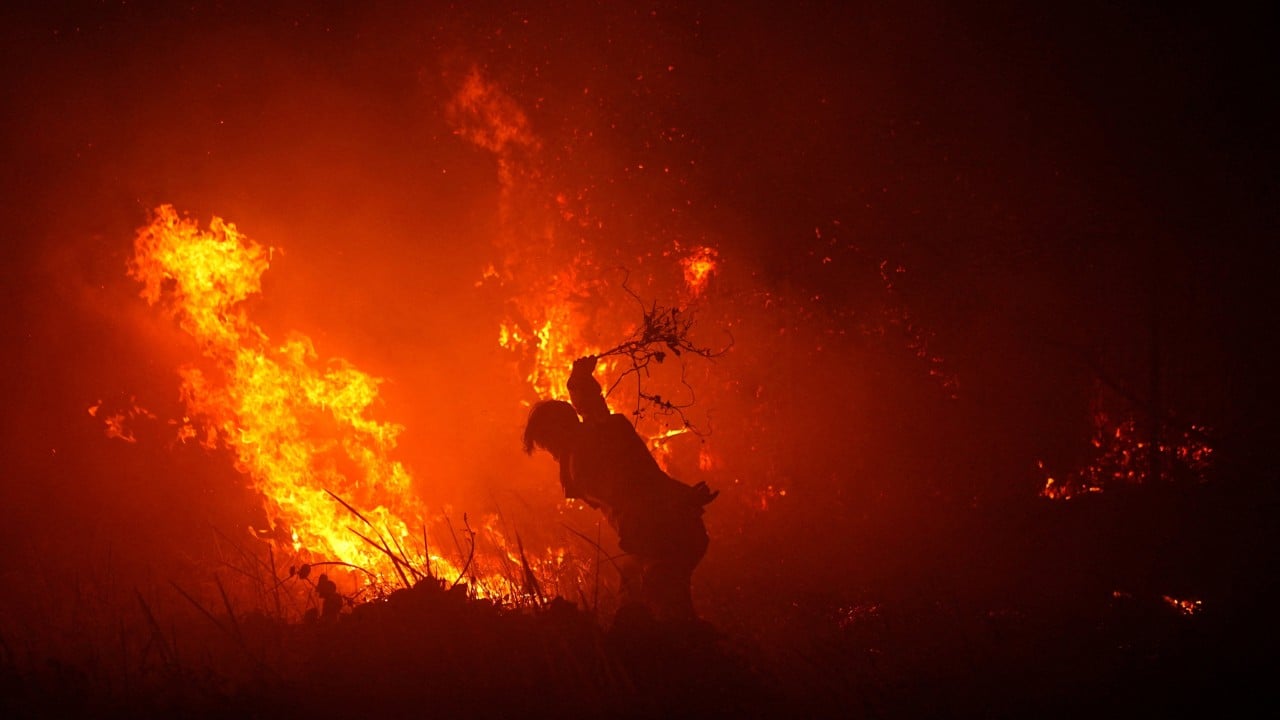
Indonesia has captured the grim distinction of recording the world's highest wildfire emissions, pumping 19.7 million metric tons of carbon dioxide into the atmosphere across a single week in September. Data from the European Union's Copernicus Atmosphere Monitoring Service reveals that the archipelago accounts for more than one-third of the global total, driven by an intense convergence of an active dry season and strengthening El Niño conditions across Borneo and Sumatra.
The Subsurface Engine of Destruction
Surface flames grab headlines, but the true driver of Indonesia's emission spike lies beneath the dirt. Peatlands cover vast expanses of Kalimantan and eastern Sumatra, acting as ancient carbon vaults built over millennia. When drainage canals cut for agriculture dry out these swamp forests, the organic matter transforms into concentrated tinder.
Unlike conventional timber fires that consume surface brush and die out, dried peat burns underground at low temperatures. These subterranean fires are notoriously difficult to detect with standard optical satellites. They smolder for weeks, releasing massive quantities of carbon monoxide, fine particulate matter, and carbon dioxide long after the surface blaze appears extinguished.
The intensity metric tells the real story. Copernicus data indicates that fire emission intensity exceeded 1,500 kilograms per square kilometer during the peak weekly surge—more than ten times the intensity recorded in Russia during the same period. Air quality in cities like Pontianak plunged into hazardous territory, forcing schools to close and sending regional haze drifting toward neighboring Malaysia and Singapore.
The Structural Failures Behind the Smoke
Blaming the weather on a super-El Niño offers a convenient shield for policymakers, yet it ignores decades of systemic land-use mismanagement. Year after year, agricultural expansion, palm oil conversion, and timber concessions destabilize the hydrological balance of these fragile ecosystems. Once peat is drained, it loses its natural resistance to fire.
Local authorities deploy water-bombing helicopters and ground crews whenever plumes billow, but these reactionary measures treat symptoms rather than the root cause. Fire prevention requires maintaining high water tables in peatlands, a policy that often clashes with short-term commercial agriculture profits. As long as commercial incentives favor dry land conversion, every drought cycle will trigger a carbon catastrophe.
The economic and human costs extend far beyond national borders. The 19.7 million metric tons released in a single week represent an immediate setback to global climate mitigation targets. When tropical peatlands burn, stored carbon that took ten thousand years to accumulate vanishes into the troposphere in a matter of hours, accelerating atmospheric warming and locking the region into a feedback loop of drier weather and more volatile fire seasons.
The smoke will eventually clear when the seasonal monsoon arrives, washing the particulate matter from the skies over Borneo and Sumatra. Yet the underlying vulnerability remains entirely unaddressed, waiting quietly beneath the dried earth for the next spark.


