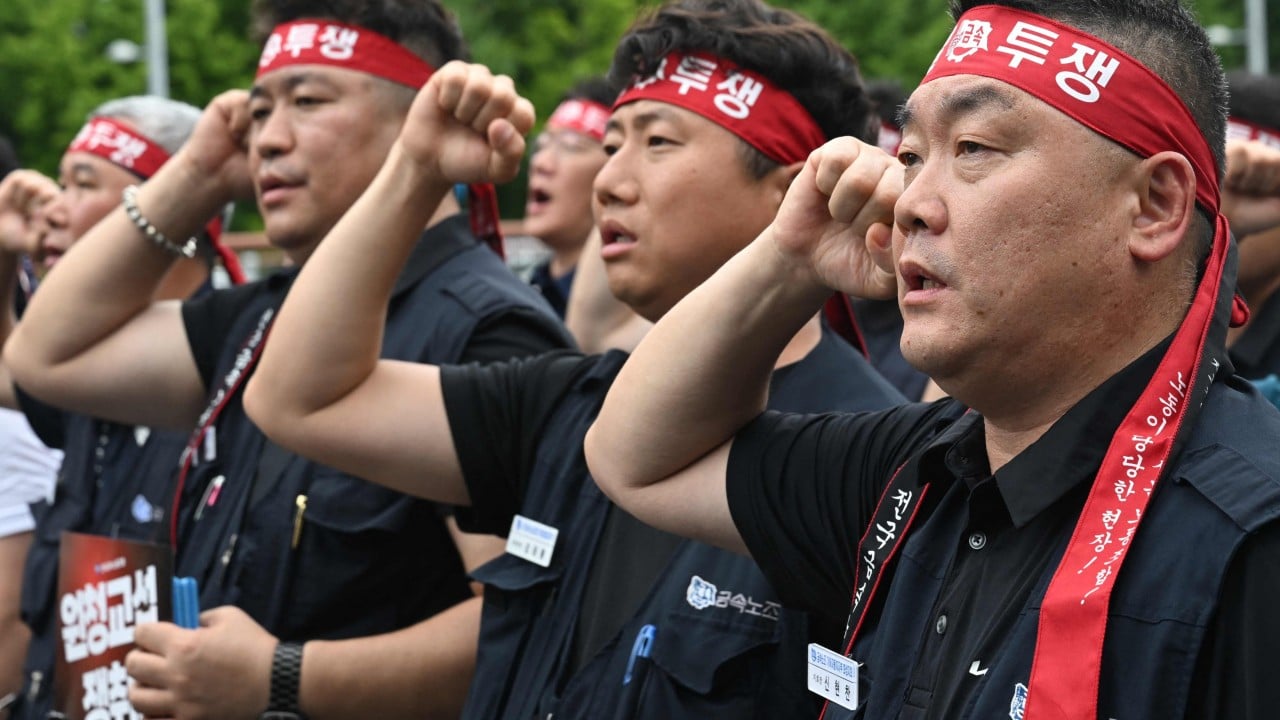
The assembly lines inside Hyundai Motor’s sprawling Ulsan complex fell dead silent. Forty thousand auto workers walked off the job, executing the manufacturer's first full-day strike in a decade.
Billions of won vanished from production ledgers in a matter of hours. The immediate catalyst was a bitter deadlock over annual wages, but beneath the surface noise of standard labor negotiations lies a far more profound industrial transformation. This standoff was never just about a cost-of-living adjustment. It was an existential collision between traditional manufacturing labor and the rapid encroachment of physical artificial intelligence.
Understanding why this flashpoint happened requires looking past corporate press releases and union slogans.
The Anatomy of a Billion-Dollar Breakdown
For months, negotiations sputtered through bureaucratic inertia. The union demanded a massive injection of cash, pointing to record profits across South Korea's automotive sector and matching the windfall bonuses handed out by domestic tech and semiconductor giants. Management dug in their heels. They cited mounting global market volatility and the necessity of preserving capital reserves.
A series of partial stoppages escalated rapidly into the historic 24-hour walkout, freezing output across the firm's primary domestic footprint. Industry estimates place the total production deficit at more than 55,000 vehicles, translating to cumulative sales losses exceeding two trillion won.
Then, the sudden breakthrough occurred. Management and union leadership hammered out a tentative agreement featuring a 4.1% base salary increase, performance bonuses equivalent to four hundred percent of base pay, and structural commitments for future hiring.
Surface-level reporting calls this a standard salary victory. Veterans of the South Korean industrial sector know better.
The Silicon Ghost on the Assembly Line
The true driver of this crisis sits quietly in corporate research labs rather than negotiation rooms. Hyundai owns Boston Dynamics, the robotics firm famous for agile bipedal movement. Corporate leadership recently formalized plans to deploy humanoid robots like Atlas directly onto manufacturing floors, starting with upcoming international facilities before expanding globally.
Workers smelled blood and displacement.
When an automaker introduces physical artificial intelligence and advanced robotics into heavy production, human headcount becomes a primary target for reduction. The union recognized that winning a temporary cash bonus meant nothing if their members engineered their own obsolescence.
Consequently, the core of the Ulsan agreement shifted from simple currency to defensive architecture. Both sides established joint frameworks to discuss employment impacts as new manufacturing technologies roll out. They agreed to transparency measures regarding future technological transitions, effectively forcing management to negotiate automation deployment step-by-step.
Demographic Pressures and the Retirement Cliff
Compounding the technological anxiety is an immutable biological reality. South Korea faces the fastest-aging population in the developed world.
The union pushed aggressively to lift the official retirement age from sixty to sixty-five, aligning it with pending legislative revisions. Older workers face a precarious gap where mandatory retirement arrives long before national pension eligibility kicks in. Management resisted the open-ended financial liability of extended senior tenure, particularly in heavy manufacturing roles where physical stamina dictates daily output.
The compromise required threading a needle. The retirement age extension will proceed dynamically, tied strictly to upcoming legislative amendments rather than immediate corporate decree. To offset structural aging, the company committed to hiring five hundred new technical workers through the coming years, injecting fresh blood into aging assembly ecosystems.
Yet hiring younger workers does not solve the underlying math. Traditional union power relies on collective physical presence on the floor. As automation absorbs repetitive structural tasks, the leverage derived from mass labor walkouts begins to erode.
The Ripple Effect Across Global Supply Chains
What happens inside Ulsan rarely stays in Ulsan. Hyundai acts as the structural anchor for an immense ecosystem of sub-contractors, tier-one parts suppliers, and global logistics networks. Every hour of lost production ripples immediately into shipping schedules across North America, Europe, and domestic ports.
International dealers depend on predictable inventory flow. Sudden industrial action throws regional sales targets into chaos, forcing dealerships to juggle depleted lots while competitors step in to capture market share.
Furthermore, Hyundai's settlement sets the operational baseline for every other heavy manufacturer in the region. Sister companies like Kia watch these outcomes with intense scrutiny, ready to leverage the newly established precedents for their own ongoing labor disputes. When the biggest player caves on technology protections and base wage bumps, the remaining industrial landscape must follow suit or face perpetual operational paralysis.
The ink on the tentative agreement awaits final ratification by the broader union membership vote. Even if approved, the underlying friction remains entirely unresolved.
The factory floor is changing forever, and the machinery of labor relations is straining under the weight of the automated future.