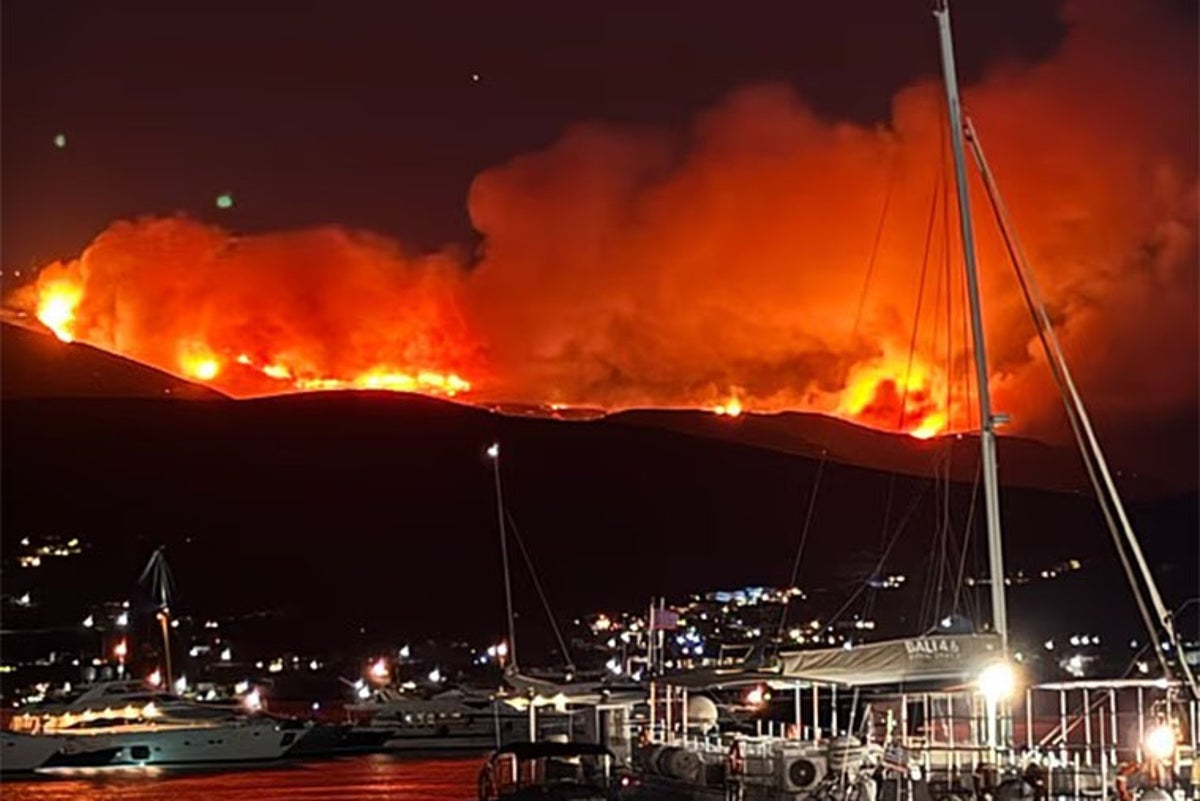
Summer in the Mediterranean has evolved into a high-stakes emergency drill. When a major wildfire broke out on a popular Greek tourist island, forcing emergency evacuations of coastal villages, it was not an isolated anomaly. It was the predictable collision of dry climate trends, vulnerable island infrastructure, and an unsustainable tourism model. Thousands of travelers found themselves trading holiday itineraries for frantic midnight boat evacuations, staring at red skies from crowded beaches while local authorities fought shifting winds.
The immediate headlines focused on the rescue operations, the chartered ferries, and the temporary shelters set up in gymnasiums and schools. But the emergency response is only the visible surface of a much deeper vulnerability. Behind the smoke lies a structural crisis that Mediterranean destinations have spent years ignoring. Islands built for charm and seasonal capacity are now facing environmental pressures they were never engineered to withstand.
The Infrastructure Deficit on Island Destinations
Greek islands operate on a delicate logistical balance. Water supplies are already strained during peak July and August heatwaves. Power grids run near maximum capacity to feed air conditioning units across thousands of hotel rooms, short-term rentals, and tavernas. When a wildfire strikes, that fragile infrastructure collapses almost instantly.
Power lines snap under the heat or fall victim to flying embers, plunging entire evacuation zones into darkness. Communication networks overload as panicked tourists try to reach family members or airlines, turning cell towers into useless bottlenecks. Local fire brigades, often relying on volunteer support and aging equipment, face impossible geography. Narrow coastal roads, designed for donkeys and vespas centuries ago, quickly become gridlocked death traps when thousands of rental cars attempt to flee inland fires simultaneously.
Emergency plans exist on paper, drafted by regional ministries in Athens. Implementing them on the ground during a fast-moving front is entirely different. Municipalities struggle with multilingual communication, leaving foreign tourists dependent on fragmented social media translation apps while sirens wail in the background.
Climate Realities Meet Mass Tourism Economics
The Greek tourism economy depends heavily on continuous growth. Record visitor numbers are celebrated annually by regional chambers of commerce. Yet every additional hotel bed and rental villa increases the fuel load sitting directly in or adjacent to flammable pine forests.
Decades of fire suppression policies, combined with rural depopulation, mean that undergrowth has accumulated unchecked in many Mediterranean forests. When unmanaged scrub meets prolonged summer drought, temperatures regularly exceeding forty degrees Celsius, and high seasonal winds known locally as the meltemi, the resulting fires behave with terrifying unpredictability. They do not merely burn; they throw embers hundreds of meters ahead, creating spot fires that outpace the movement of ground crews.
Tourists arrive expecting an idyllic postcard experience. They do not anticipate active hazard zones. Travel insurance policies frequently carry clauses excluding natural disaster evacuations, leaving stranded visitors to absorb unexpected flight change fees, alternative lodging costs, and lost vacation days out of pocket.
Tour operators and booking platforms have been slow to adapt. While airlines issue automated alerts for volcanic ash clouds or political unrest, wildfire risk warnings rarely reach the average traveler until the flames are visible from their balcony. This information vacuum creates dangerous delays in voluntary evacuation decisions.
The Economic Fallout for Local Communities
The human cost during the active emergency is catastrophic, but the financial hangover lasts long after the smoke clears. Local economies rely entirely on a condensed three-month window to generate the revenue necessary to survive the off-season. When a major fire hits mid-season, cancellations cascade through the remaining weeks.
Small business owners face ruin. A taverna owner whose season is cut short by mandatory evacuation orders does not recover those lost weeks in autumn. Olive farmers and livestock breeders watch centuries-old groves and grazing lands turn to ash, wiping out intergenerational assets in a single afternoon.
Insurance payouts for agricultural loss in Greece are historically slow and bureaucratic. Many small-scale operators lack comprehensive commercial coverage, viewing it as an unaffordable luxury during tight economic years. The government steps in with emergency relief packages, but these funds are typically modest bandages on deep financial wounds.
Rethinking Island Safety Standards
If Mediterranean island tourism is to survive the decade, a fundamental overhaul of risk management is mandatory. Early warning systems must be integrated directly into the travel booking experience. Visitors should receive standardized safety briefings upon check-in, detailing evacuation routes, assembly points, and emergency contact procedures in multiple languages.
Zoning laws near forested areas require stricter enforcement. Properties embedded in high-risk woodland interfaces need mandatory defensible space clearance, fire-resistant building materials, and independent water reservoirs. Relying solely on municipal water trucks during a crisis is a failing strategy.
Furthermore, destination marketing organizations must pivot away from endless volume expansion. Carrying capacity limits are no longer an environmental luxury; they are a public safety prerequisite. Allowing island populations to swell far beyond municipal service limits during peak fire season creates an unacceptable risk profile for residents and visitors alike.
The red glow over the Mediterranean horizon is a warning signal. Ignoring it guarantees that the next evacuation will be larger, more chaotic, and potentially far more tragic. The islands must choose between adapting their infrastructure to a harsher climate reality or watching their seasonal paradise burn.