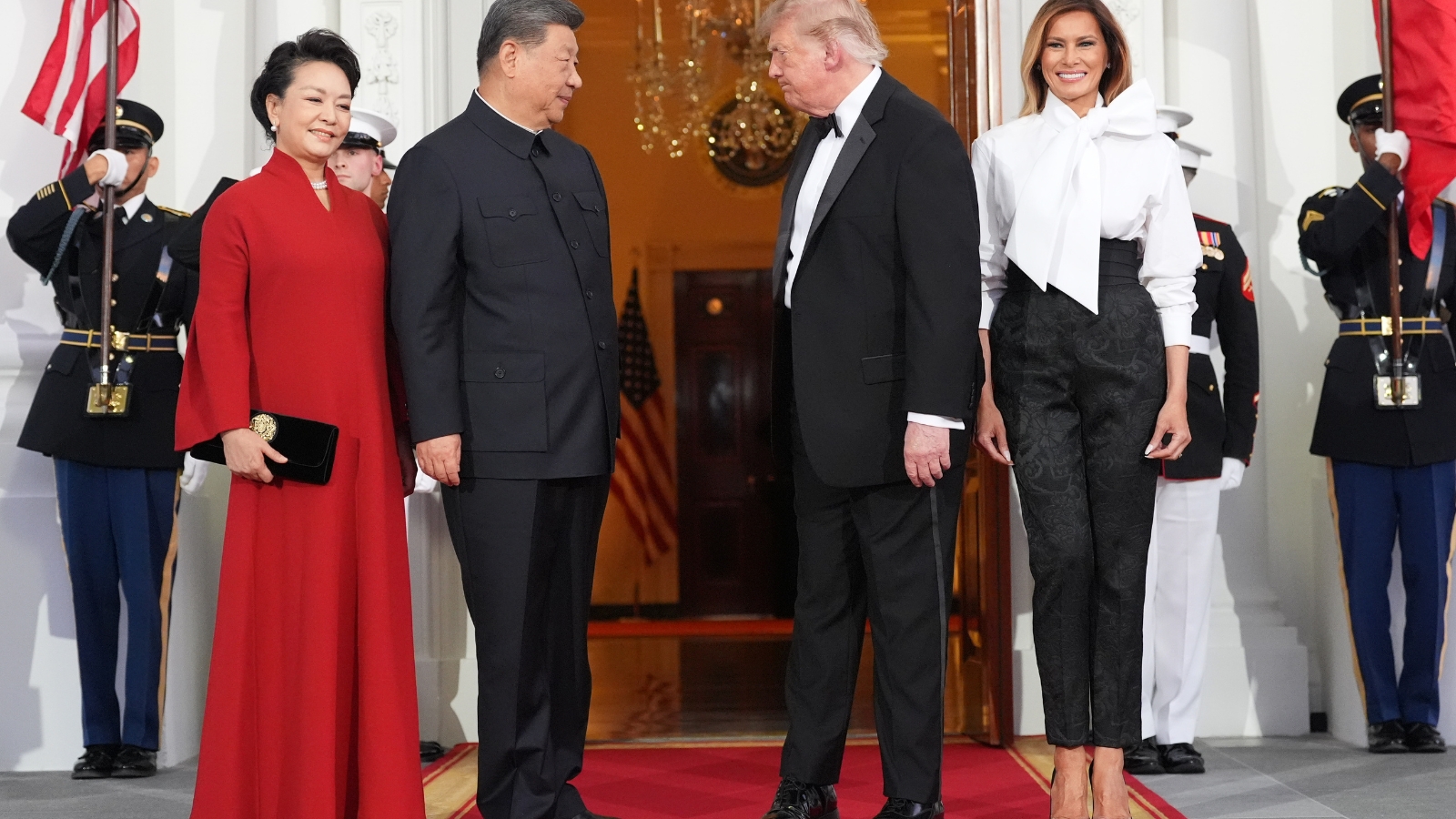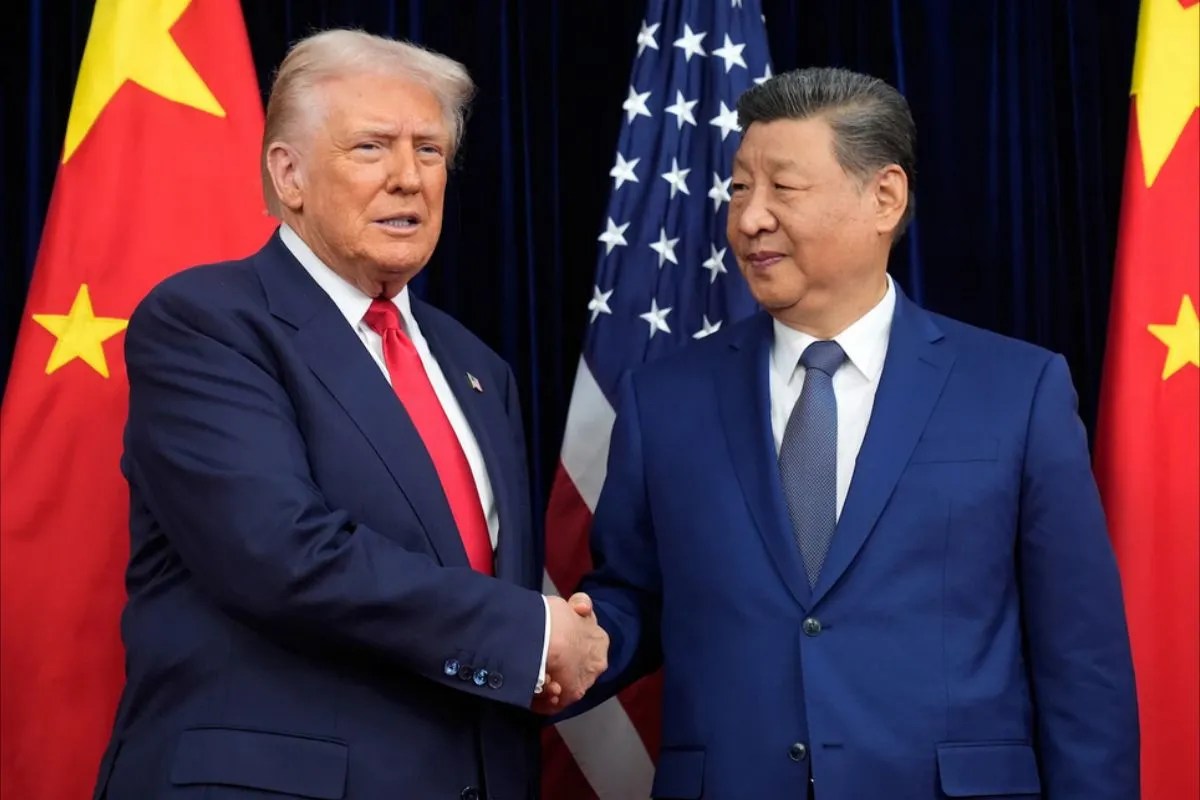
When Donald Trump walked Chinese President Xi Jinping into the rotunda of the United States National Archives, the public-facing narrative was a theatrical display of historic proportions. Cameras captured the leaders gazing at the Declaration of Independence and the Constitution, while Trump quipped to reporters about the vast arithmetic of time: two hundred and fifty years of American statehood weighed against six thousand years of Chinese civilization. It looked like high-stakes political pageantry designed for the evening news.
Beneath the polished marble and the solemn aura of America's founding documents, however, a quiet diplomatic collision was fracturing the itinerary.
The friction point was not found in the display cases housing the Bill of Rights, but in the archival documents quietly prepared for the background of the visit. According to diplomatic sources in Washington, the original blueprint for the tour included historical texts designed to test the boundaries of sovereignty and historical grievance—most notably the 1951 Treaty of San Francisco.
For Beijing, that single document represents a minefield. Signed by Japan and forty-eight Allied nations after the Second World War, the treaty forced Japan to renounce all rights and claims to Formosa and the Pescadores without explicitly assigning sovereignty over Taiwan to any specific government. That calculated ambiguity serves as the foundational text for modern legal arguments regarding the undetermined status of Taiwan. To the Chinese Communist Party, whose foreign policy doctrine treats Taiwan as a non-negotiable core interest, parading that specific piece of paper before a visiting paramount leader is not an educational exercise. It is a calculated provocation.
The delegation from Beijing registered immediate and severe objections. Whispers in the capital's press circles indicated that the friction caused the high-level visit to be abruptly truncated. What was scheduled as an extended walkthrough of historical texts shrank into a rushed, ten-minute appearance focused solely on the safest shared artifacts. Secondary plans—which reportedly toyed with displaying artifacts like Qing dynasty imperial scrolls or historical objects from the Great Wall—were quietly shelved as tensions mounted behind closed doors.
This episode exposes the fragility of modern superpower diplomacy, where physical spaces and archival heritage are weaponized as instruments of psychological positioning. In high-level statecraft, nothing is merely decorative. Every gallery wall, every document case, and every omission in a state itinerary sends a deliberate signal.
When superpowers negotiate, they do not just argue over tariffs, export controls, or artificial intelligence guardrails. They fight over the ownership of history itself. The brief, tense encounter at the National Archives proved that even a simple museum tour can turn into a geopolitical battleground when the texts on display strike too close to the raw nerves of territorial sovereignty.