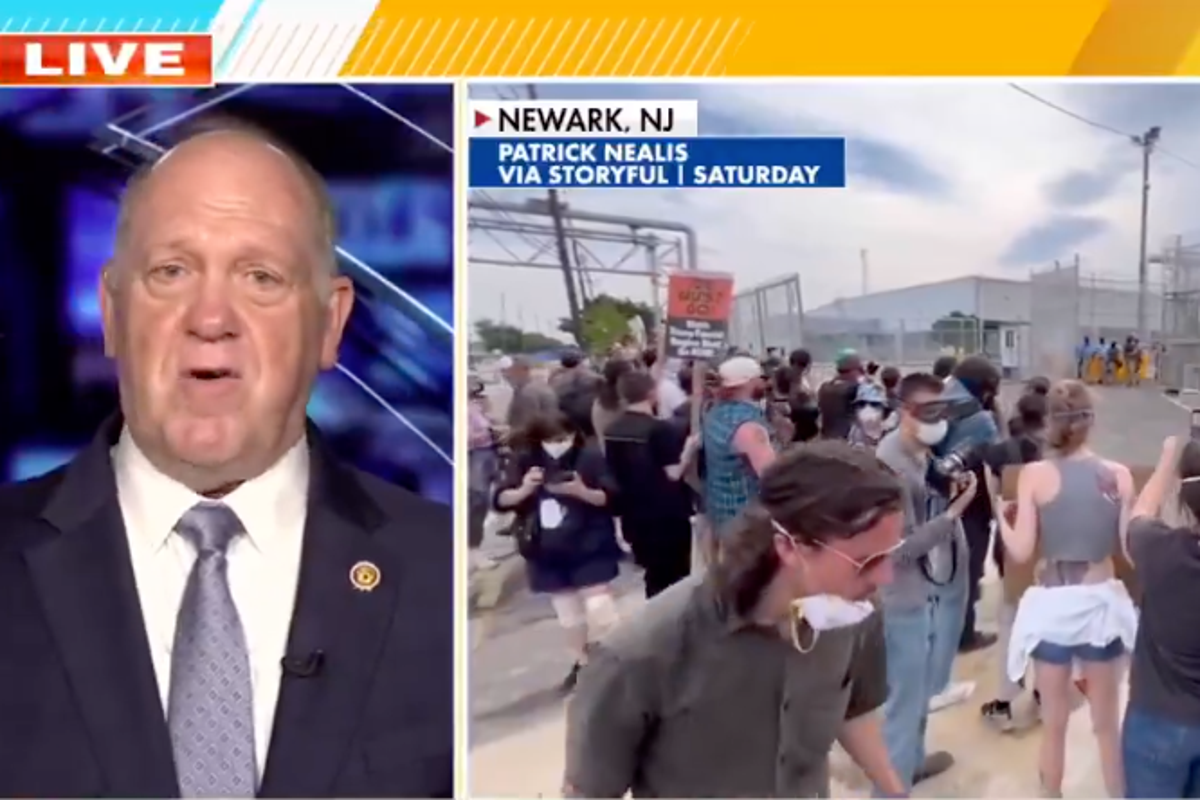
The federal government cannot dismiss a massive hunger strike inside an American detention facility by reviewing the lunch menu. When White House border czar Tom Homan brushed aside reports of systemic neglect at Delaney Hall in Newark, New Jersey, by publicly praising a plate of institutional spaghetti, he highlighted a deep disconnect between federal oversight and ground-level operations. More than 300 detainees began refusing meals over Memorial Day weekend to protest spoiled food, severe medical neglect, and unchecked disease outbreaks. The escalating stand-off between the Department of Homeland Security, state health inspectors, and a multi-billion-dollar private prison contractor reveals a deeply troubled immigration enforcement infrastructure.
This crisis goes far beyond a single bad kitchen. The unrest at Delaney Hall exposes a broader, systemic strategy where corporate profit margins and federal deportation goals intersect to shield private operators from local transparency.
The Reality Behind the Photo Op
A carefully managed tour will always yield a favorable impression. When federal officials visit a site like Delaney Hall, they see a facility prepared for inspection, not the daily reality of those confined within its walls. Homan told reporters that the 1,000-bed facility was clean, orderly, and housing just over 700 individuals, dismissing claims of overcrowding and structural decay as political theater designed to dismantle federal law enforcement.
Human rights organizations and legal advocates tell a completely different story. Documentation compiled from interviews with detainees describes an environment where basic human needs are treated as secondary expenses. Independent accounts detail instances of spoiled food, rationed water, and extreme indoor temperatures caused by failing ventilation systems. The contrast between official rhetoric and internal testimony shows how easily bureaucratic PR can obscure severe operational failures.
Corporate Walls and State Sovereignty
The core of the crisis at Delaney Hall rests on a fundamental question of jurisdiction. The facility is operated by GEO Group, a massive, for-profit correction corporation under a lucrative contract with Immigration and Customs Enforcement. When the New Jersey Attorney General filed a lawsuit against the firm, it exposed a dangerous legal gray area. State health inspectors trying to investigate reports of communicable diseases and unsanitary food preparation were flatly denied full access to the building.
Private contractors frequently use their federal status as a legal shield against local health and safety regulations. This dynamic creates a dangerous lack of accountability.
- Corporate Cloaking: For-profit prison operators routinely argue that federal contracts exempt them from local and state oversight.
- Information Blackouts: Freedom of Information requests involving private facilities face lengthy corporate legal challenges that do not apply to public institutions.
- Profit-Driven Incentives: Every dollar saved on facility maintenance, medical staffing, or food quality directly improves corporate profit margins.
By denying state health officials entry, the facility operators effectively created a sovereign corporate zone inside Newark. This makes it almost impossible for independent observers to verify internal conditions, leaving the public to rely entirely on official statements or the desperate protests of the detainees themselves.
The Strategy of Force Feeding
The official response to the hunger strike has fluctuated between complete denial and severe threats of intervention. Department of Homeland Security officials initially downplayed the protest, claiming only a small group of individuals were refusing food due to dietary preferences. Yet, almost simultaneously, federal leadership warned that the administration would seek court orders to force-feed individuals if the strike continued.
Force-feeding is an extreme medical intervention fraught with legal and ethical complications. International human rights bodies view the practice as a violation of bodily autonomy when used to break peaceful political protests. Threatening this measure while claiming everything is fine reveals the high stakes involved. The administration cannot afford the political fallout of a prolonged hunger strike just as Congress prepares to infuse tens of billions of dollars into the broader deportation system.
Crumbling Infrastructure and Rising Budgets
The problems at Delaney Hall are not isolated incidents. They are the predictable outcome of an enforcement system that prioritizes rapid physical expansion over operational oversight. As the federal government scales up detentions and deportations, the rush to secure bed space benefits private contractors who are poorly equipped or unmotivated to maintain decent living standards.
+------------------------------------------------------------+
|                THE PRIVATE DETENTION CYCLE                 |
+------------------------------------------------------------+
|                                                            |
|    [Federal Mandate] ---> Multi-Billion Dollar Funding    |
|            ^                                |              |
|            |                                v              |
|    State Lawsuits <--- [GEO Group / Private Operators]     |
|    & Local Protests       Reduced Staffing & Budget Cut     |
|                                             |              |
|                                             v              |
|                     Detainee Hunger Strikes & Unrest       |
|                                                            |
+------------------------------------------------------------+
When local politicians call for the closure of these facilities, federal officials often label them as partisan actors trying to obstruct federal law. This rhetorical defense bypasses the actual complaints regarding infrastructure failure, medical neglect, and rancid food containing insects. Framing basic health and safety inspections as partisan attacks makes real accountability impossible.
Defending institutional food while ignoring a lawsuit from a state attorney general shows a dangerous disregard for transparency. Immigration detention does not require luxury, but it does demand basic human decency and adherence to public health standards. As long as private entities can lock out local health inspectors behind a shield of federal contracts, the conditions inside facilities like Delaney Hall will continue to degrade, no matter what is being served for lunch.