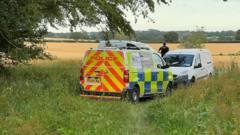
When a light aircraft plunges into a field during an introductory "flight experience," the public reaction follows a predictable pattern. People express shock, local news broadcasts footage of crumpled aluminum, and aviation authorities promise an investigation that will take up to two years to complete. The immediate assumption is that flying is inherently risky, or that this was a freak piece of bad luck.
That assumption is wrong. The uncomfortable reality is that these introductory flight experiences, often sold as experience vouchers or "discovery flights" for aspiring pilots, operate within a regulatory gray zone that exposes unsuspecting members of the public to risks they do not understand. Passengers sign up for a fun afternoon activity, unaware that they are stepping into an ecosystem driven by underpaid instructors, aging machinery, and oversight mechanisms designed for private hobbyists rather than commercial operations.
The tragedy is not that these accidents happen. The tragedy is that the aviation industry knows exactly why they happen and continues to look the other way.
The Illusion of Commercial Safety Standards
Most people assume that if you pay money to board an aircraft, the operation is bound by the same rigorous safety standards that govern major airlines. You expect the pilot to be a seasoned professional, the aircraft to be meticulously maintained, and the weather margins to be conservative.
In the world of the flight experience, none of these assumptions hold true.
When you buy an airline ticket, you are protected by stringent commercial aviation rules. These regulations mandate strict rest periods for pilots, redundant communication systems, and exhaustive maintenance schedules. However, when a flight school sells a discovery flight, the legal framework shifts dramatically. In many jurisdictions, these flights are classified under general aviation rules rather than commercial air transport regulations.
This classification matters immensely because it shifts the burden of safety. General aviation assumes that the participants are aware of the risks and are actively involved in managing them. A student pilot is supposed to be learning the ropes, which implies an acceptance of the inherent hazards of flight training. But a casual consumer who bought a voucher online to celebrate a birthday does not possess the knowledge to evaluate whether the cloud ceiling is too low, whether the wind shear is too aggressive, or whether the aircraft engine sounds right during the pre-flight run-up.
The industry exploits this regulatory gap. By labeling a scenic ride or an adrenaline experience as an "instructional flight," operators bypass the expensive certifications required for true commercial charter operations. It is a legal backdoor that keeps ticket prices low and profit margins viable, but it strips away the safety net that passengers believe they are purchasing.
The Hour-Building Meat Grinder
To understand why these flights fail, you have to look at the person sitting in the left seat. In a commercial airliner, the captain has thousands of hours of experience dealing with emergencies, severe weather, and system failures.
In a flight experience aircraft, the person in charge is frequently a young instructor with barely two hundred hours of total flight time.
The economics of becoming a commercial airline pilot are brutal. Aspiring pilots must self-fund expensive licenses, racking up massive debt in the process. Once they obtain their commercial license, they face a classic catch-22. Airlines require hundreds or thousands of hours of flight time before they will even consider an application, but flying privately to build those hours is prohibitively expensive.
The solution for most is to become a Certified Flight Instructor. This role is rarely chosen out of a passion for teaching. It is treated as a grueling, low-paying stepping stone. Instructors are paid only for the hours their engines are running, leading to severe financial pressure to fly even when environmental conditions or personal fatigue suggest they should stay on the ground.
This environment creates a dangerous psychological dynamic. You have a pilot who is exhausted, undercompensated, and hyper-focused on accumulating hours as quickly as possible. When a customer turns up with a flight experience voucher on a gusty, marginal weather day, the instructor faces a terrible choice. Cancel the flight and lose the income, or push the boundaries of safety to log another 1.5 hours in their logbook.
Too often, they push the boundaries. Because these instructors lack deep operational experience, they have less margin for error when things go wrong. They have spent most of their flying lives in perfect practice environments. When faced with an actual engine failure at five hundred feet or an unexpected aerodynamic stall during a low-level turn, their reactions are not always second nature. They are learning on the job, and the paying passenger is the unwitting test subject.
Maintenance in the Shadows of General Aviation
The aircraft used for these experiences are rarely new. Walk onto the ramp of any local flight school, and you will likely see a fleet of aircraft manufactured in the 1970s or 1980s. These machines are the workhorses of the industry, built from simple, durable designs.
Age itself is not a death sentence for an aircraft, provided the maintenance is flawless. But flawless maintenance requires significant capital, and flight schools operate on razor-thin margins.
Commercial airliners undergo continuous, predictive maintenance where parts are replaced long before they fail, based on complex data analytics. General aviation maintenance is often reactive. While flight schools are legally required to perform 100-hour inspections on aircraft used for hire, these inspections are only as good as the mechanic performing them and the budget of the school's owner.
There is a constant temptation to defer non-essential repairs. A temperamental fuel gauge, a slightly sticky flap lever, or an intermittent radio might be flagged by an instructor but left unaddressed by management to avoid taking the plane out of service during peak weekend hours. Over time, these minor deficiencies stack up.
Aviation safety relies on the Swiss cheese model. Accidents rarely happen due to a single failure. Instead, they occur when multiple small flaws align. An old engine that loses partial power, combined with a distracted, low-time instructor, flying in strong crosswinds, results in a fatal spiral. When investigators sift through the wreckage, they often find a paper trail of minor issues that had been tolerated for weeks.
The Myth of the Dual Control Safety Net
Proponents of the current system argue that flight experience flights are inherently safe because the aircraft are equipped with dual controls. If the passenger panics or makes a mistake, the instructor can instantly take over and rectify the situation.
This argument ignores human factors and physical reality.
During a discovery flight, the instructor will often encourage the passenger to place their hands on the yoke and their feet on the rudder pedals to give them the authentic sensation of flying. This is a powerful marketing tool, but it introduces an immediate physical hazard. If the aircraft encounters unexpected turbulence or an abrupt maneuver, an untrained passenger's natural instinct is to tense up and grip the controls tightly.
A panicked human possesses surprising physical strength. If a passenger freezes and locks their muscles while pulling back on the control column, a young instructor sitting in a cramped cockpit may struggle to overpower them in time to prevent a stall.
Furthermore, the physical layout of these light aircraft means the instructor has a compromised view of the instruments and a less ergonomic position from which to fly the plane during a crisis. They are looking sideways at the instrument panel, trying to manage a stranger’s anxiety while simultaneously diagnosing a mechanical anomaly or wrestling with turbulent air. The idea that dual controls make the flight foolproof is a comforting myth used to placate insurance companies and customers alike.
The Financial Mechanics of Risk
To fix a systemic problem, you have to follow the money. The flight experience industry relies on high-volume, low-cost operations. Vouchers are sold via third-party websites that take a massive cut of the revenue, leaving the flight school with very little profit per flight.
To break even, schools must keep their planes in the air as many hours a day as possible. This high utilization accelerates mechanical wear while simultaneously draining the energy reserves of the instructional staff.
It also distorts the relationship between the customer and the operator. The customer views the flight as entertainment, akin to a roller coaster ride or a skydiving experience. The operator views it as a marketing expense or a quick cash-flow injection. Nowhere in this transaction is there a frank assessment of the operational risks involved.
If flight schools were forced to insure these flights under the same liability structures as commercial tour operators, the prices would skyrocket overnight. The industry would argue that this would kill general aviation, destroying the pipeline for future airline pilots.
That argument is an admission of guilt. It suggests that the pipeline for professional pilots must be subsidized by exposing the general public to unadvertised levels of risk. If a business model cannot survive while providing a transparent, verifiably safe environment for its customers, then that business model deserves to fail.
Rethinking the First Hour in the Air
Change will not come from within the flight school industry. The financial pressures are too entrenched, and the culture of normalization of deviance is too widespread. True reform requires a fundamental restructuring of how introductory flights are regulated and sold.
First, regulatory bodies must remove the "instructional" exemption for flights sold to individuals who do not hold a student pilot medical certificate or a formal training record. If a flight is marketed to the general public as an experience, a gift, or a bucket-list item, it must be subject to commercial air taxi maintenance schedules and pilot experience minimums. This single change would eliminate the practice of using two-hundred-hour novices to carry members of the public.
Second, third-party voucher platforms must be held accountable for auditing the safety records of the operators they promote. Currently, these platforms act as simple middlemen, washing their hands of liability through lengthy terms of service hidden behind a checkbox.
Until these measures are taken, the burden falls entirely on the consumer. Before purchasing a flight experience, look past the glossy photography and the promises of unforgettable views. Ask the hard questions. Ask for the total flight hours of the instructor who will be flying the aircraft. Ask when the plane last underwent a 100-hour inspection. Look at the physical condition of the hangar and the other aircraft on the line.
If the answers are vague, or if the operation feels chaotic, walk away. A missed afternoon in the air is infinitely better than becoming another statistic in an investigation report that concludes, two years too late, that the crash was entirely preventable.