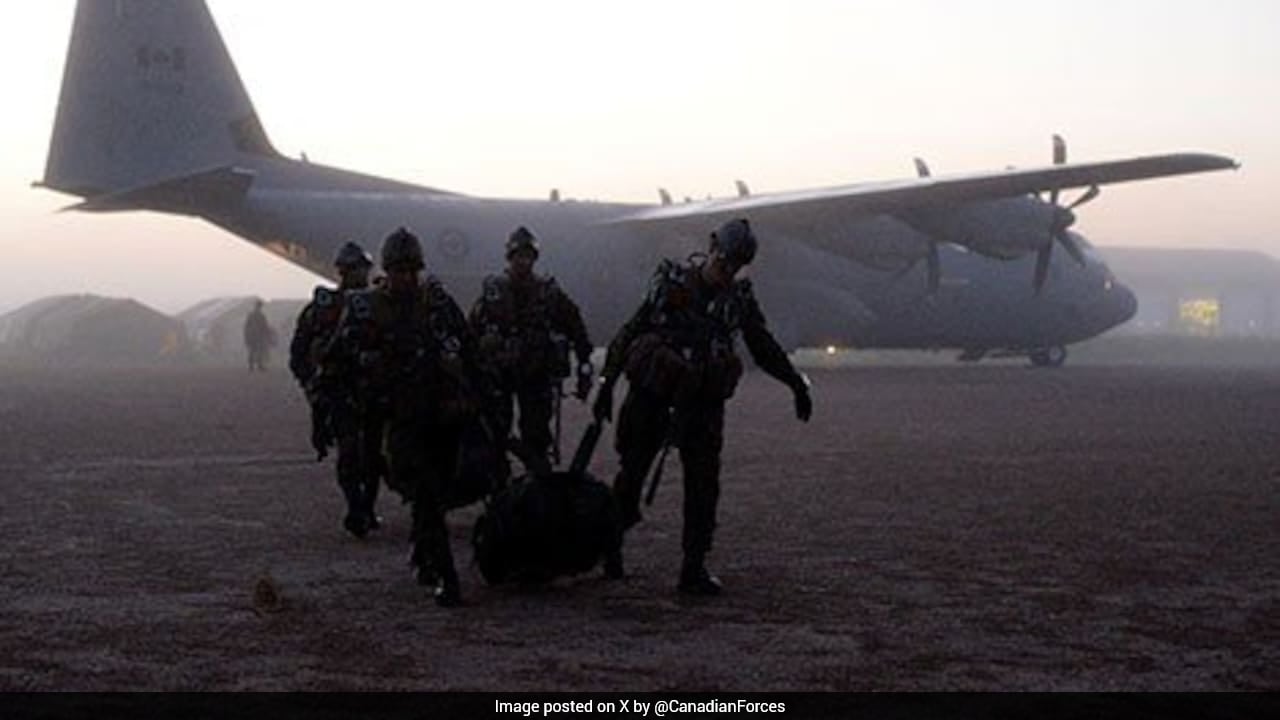
Five Canadian Armed Forces members are dead and dozens more have suffered severe injuries following a catastrophic live-fire training exercise at Canadian Forces Base Wainwright in Alberta. What began as routine tactical preparation for troops from the 3rd Battalion, Princess Patricia's Canadian Light Infantry, devolved into one of the worst peacetime military disasters in modern Canadian history.
The disaster unfolded when a fire ignited during tactical operations on the base range. Unforgiving weather conditions compounded the hazard instantly. High-velocity winds, which had prompted severe weather warnings across parts of Alberta that day, caught the flames and turned them into a violent, fast-moving wall of fire. Rather than burning slowly across predictable lines, the blaze overtook the unit administrative area with terrifying speed. Troops caught in the path faced an environment where escape routes vanished within seconds.
Four soldiers lost their lives on the day of the incident: Sergeant Morgan Wong, Private Shaun Farrell, Private Aidan Goulding, and Private Hayden Lykkemark. Weeks later, the tragedy claimed a fifth life when Private William Douglas Dal Bianco succumbed to his injuries in an Ontario hospital. Alongside the fatalities, 38 personnel sustained injuries, requiring a massive multi-provincial medical evacuation effort that severely strained regional healthcare infrastructure. Hospitals in Edmonton declared mass-casualty protocols, receiving patients suffering from severe burns and trauma while emergency air ambulances moved critical cases across provincial lines.
Military analysts and veterans point out that live-fire exercises inherently carry an irreducible margin of risk. Modern infantry training requires troops to operate under conditions that mimic actual combat stress as closely as possible. Speed, high explosives, and live ammunition leave zero room for environmental variables like sudden wind shears. When natural weather anomalies intersect with high-energy military hardware, the safety margins built into standard operating procedures can evaporate instantly.
Public speculation following the incident quickly zeroed in on potential infrastructure failures, with rumors circulating about nearby oil and gas pipelines. However, the Canadian Forces Provost Marshal and Department of National Defence officials quickly dismissed those theories, confirming that energy infrastructure was neither involved nor impacted. Investigators instead face the arduous task of reconstructing how a routine range fire outpaced human reaction times and bypassed established tactical defensive buffers.
Military police investigations and a separate board of inquiry are currently examining the exact chain of events. These probes will scrutinize weather monitoring protocols, communication lags during the fast-moving blaze, and the decision-making matrices that govern when live-fire exercises must be scrubbed due to escalating environmental hazards.
The human toll extends far beyond the immediate casualty lists. Scores of families, fellow service members, and first responders are grappling with the psychological fallout of a disaster born not from hostile action, but from the brutal unpredictability of nature colliding with the demands of military readiness. As investigators comb through the scorched earth of the Wainwright range, the institution is forced to confront difficult questions about how to protect those who train to protect others.