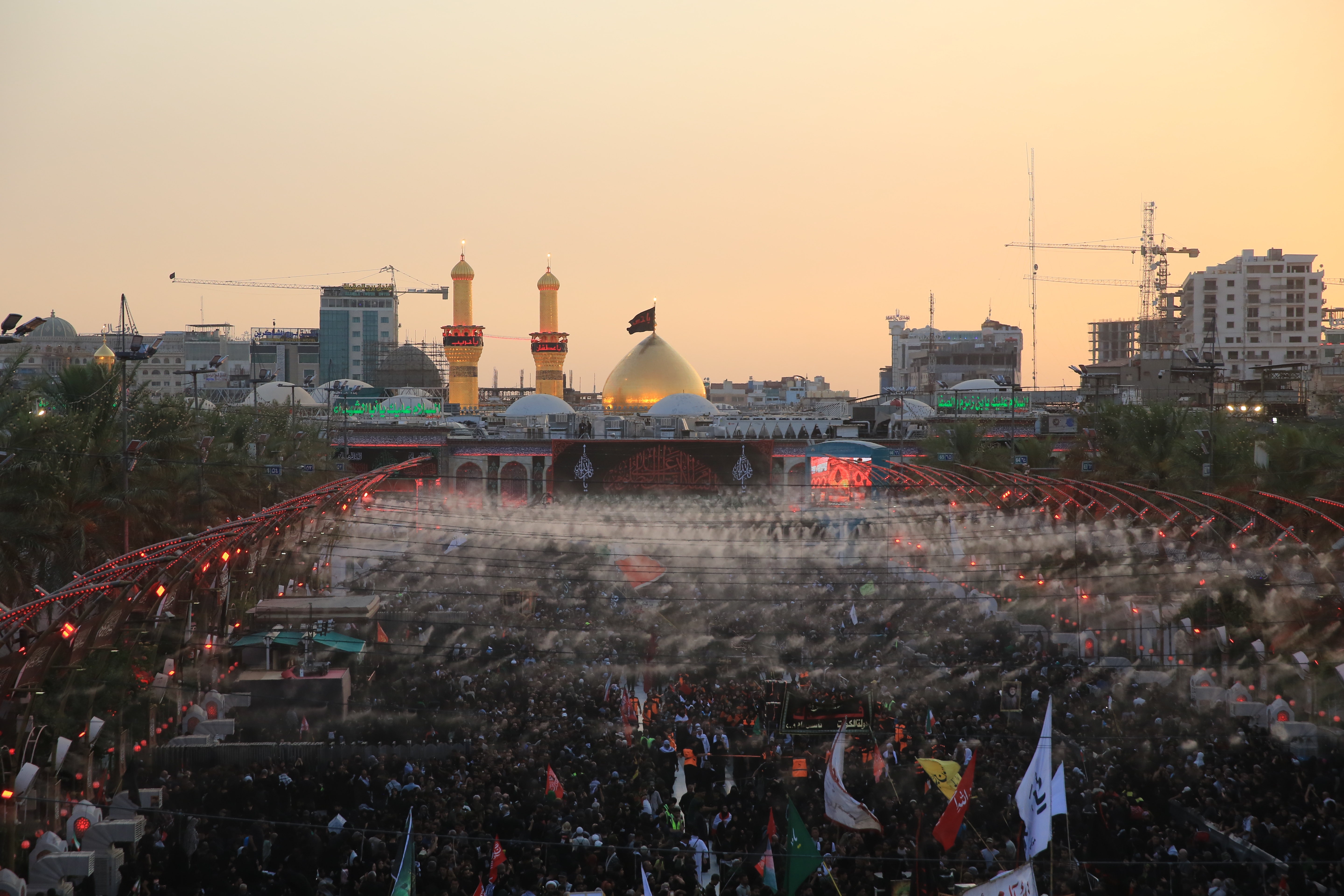
Every single year, twenty million people converge on foot across the scorched plains of Iraq, creating the largest annual peaceful gathering on planet Earth, yet mainstream international media consistently relegates this monumental human migration to a minor cultural footnote. While global news networks obsess over geopolitical friction, economic volatility, and regional instability, an unprecedented logistical operation unfolds quietly in the shadows of the Middle East. This is the Arbaeen pilgrimage, a forty-day mark commemorating the martyrdom of Imam Hussein, the grandson of the Prophet Muhammad.
Understanding this phenomenon requires discarding standard Western frameworks of event management, crowd control, and state infrastructure. There are no corporate sponsors, no pre-sold tickets, no government-issued itineraries, and no centralized commercial oversight. Instead, an entire population mobilizes from Najaf to Karbala, a grueling eighty-kilometer trek through searing heat, sustained entirely by grassroots charity.
The Economics of Absolute Generosity
To witness the financial architecture of Arbaeen is to witness a direct contradiction of modern capitalist logic. Millions of people walk for days, and every single meal, bottle of water, medical treatment, and place to sleep is provided completely free of charge.
Local families and wealthy benefactors alike set up roadside stations known as mowakeb. These tents stretch uninterrupted along the entire highway network leading to Karbala.
- Volunteers pool their life savings to feed thousands of strangers daily.
- Local homeowners leave their front doors unlocked, inviting exhausted travelers to sleep in their living rooms.
- Mobile repair shops, shoe shiners, and pharmacies operate open-air clinics refusing any form of payment.
Economists frequently struggle to quantify this ecosystem because it operates outside monetary exchange. It runs on a deeply ingrained cultural and religious duty known as khidmat, or service. The sheer volume of resources distributed daily dwarfs major global sporting events like the Olympics or the FIFA World Cup, yet it happens without a single point-of-sale terminal.
Logistics Without Bureaucracy
How do you feed, water, and shelter twenty million people in a nation recovering from decades of infrastructure decay? Conventional urban planners would demand a multi-year task force, billions in public funding, and militarized security cordons.
Iraq manages this through decentralized communal ownership. The state provides basic security along the perimeter, but the heavy lifting of crowd management belongs to ordinary citizens.
Security threats from regional conflicts have historically failed to deter the crowds. In past decades, extremist groups targeted the procession with bombings, attempting to sow terror and fracture the resolve of the participants. The response from the pilgrims was defiance through numbers. When the risk multiplies, attendance often increases. This psychological resilience stems from the historical narrative of the pilgrimage itself, which centers on standing against tyranny regardless of the personal cost.
The infrastructure scales organically. If a stretch of road experiences a bottleneck, local volunteers immediately construct temporary kitchens and rest stops to divert and feed the overflow. It is an evolving, breathing organism composed of human bodies moving in unison.
The Global Media Blindspot
Why does an event larger than the combined populations of several European nations receive minimal sustained coverage from major Western outlets?
Partly, the answer lies in editorial bias and geographical distance. Newsrooms based in London, New York, or Washington frequently view the Middle East exclusively through the lens of conflict, violence, and state-level diplomacy. A story about millions of people walking peacefully, sharing food, and practicing radical hospitality disrupts the established narrative of perpetual regional dysfunction.
Furthermore, the lack of a corporate entity or official spokesperson makes it difficult for traditional broadcast producers to package the story. There is no press office issuing daily soundbites, no CEO to interview, and no product launch to hype. It is an unvarnished, raw human experience that resists commercialization.
The Cultural Anatomy of the March
Walking the highway from Najaf to Karbala reveals a micro-society built entirely on empathy. You see elderly grandparents walking unsupported despite severe physical ailments, carried along by the collective energy of the crowd. You see doctors from Baghdad volunteering their annual leave to bandage blistered feet on the dusty roadside.
The social hierarchy vanishes entirely during these forty days. Wealthy merchants walk barefoot alongside impoverished day laborers. Tribal leaders serve tea to foreign visitors who cannot speak a word of Arabic. This temporary suspension of social stratification is precisely why participants return year after year, enduring physical exhaustion and real security risks.
The pilgrimage serves as an annual reset button for community solidarity. In a fractured world increasingly defined by digital isolation and political polarization, Arbaeen offers a stark, physical reminder of what human cooperation looks like when stripped of transaction and profit. The twenty million who gather in Iraq are not merely observing a historical anniversary; they are actively constructing an alternative reality where hospitality is absolute, generosity has no ceiling, and human connection outweighs every geopolitical division