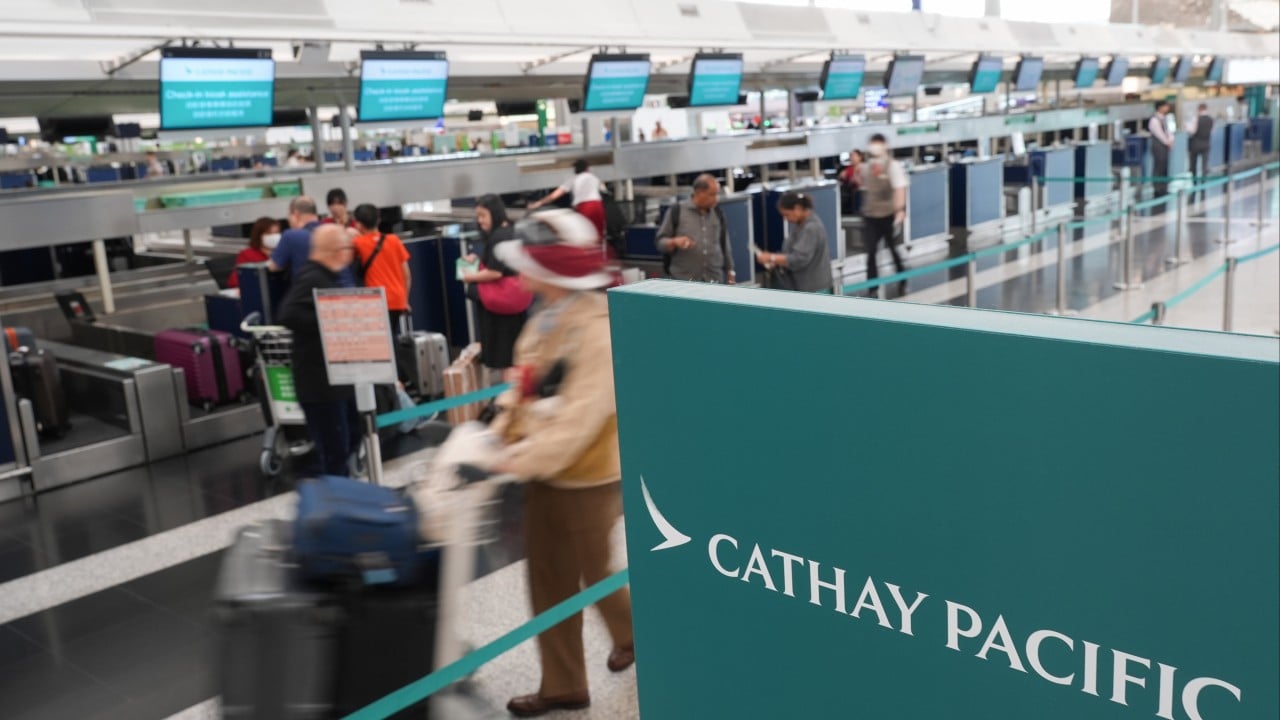
Cathay Pacific confirmed that a cyberattack targeting its third-party technology provider, Amadeus, compromised the personal data of approximately 53,000 passenger bookings. The breach exposed passenger names, contact details, and travel itineraries, though the airline stated that credit card numbers, passwords, and passport details remained untouched. While 53,000 records might seem modest compared to Cathay Pacific's infamous 2018 breach of 9.4 million passengers, the incident exposes a far more systemic vulnerability in global aviation. Airlines no longer control their own digital borders, and the centralized booking infrastructure that keeps modern air travel running has become a single point of failure.
To understand how an attack on a vendor in Madrid compromises a traveler in Hong Kong, you have to look under the hood of the commercial aviation industry. Airlines do not build their own reservation systems from scratch. Doing so would be financial suicide, and it would make interline ticketing—where you buy one ticket from Cathay Pacific but fly one leg on British Airways or American Airlines—nearly impossible. Instead, carriers outsource the heavy lifting to a handful of massive technology conglomerates known as Global Distribution Systems (GDS) and Passenger Service Systems (PSS).
Amadeus IT Group is the undisputed titan of this sector. Along with Sabre and Travelport, Amadeus forms an oligopoly that processes the vast majority of global airline reservations, check-ins, and inventory management. When you book a flight, your data does not just sit on a server in the airline's basement. It flows through Amadeus's central architecture, specifically its Altéa suite, which Cathay Pacific and dozens of other major carriers rely on to manage reservations and departure control.
This architecture is brilliant for operational efficiency. It is a nightmare for cybersecurity.
The Anatomy of a Third-Party Aviation Breach
When attackers target an airline directly, they run into hardened perimeter defenses built specifically to protect a high-profile brand. When they target a third-party vendor, they exploit the trust relationships that bind the industry together. In cybersecurity circles, this is known as a supply chain attack, and it has become the preferred method for sophisticated threat actors looking to maximize their return on investment.
Why kick down a hundred reinforced doors when you can pick one lock at the central utility company?
In the case of the Amadeus incident affecting Cathay Pacific, the compromised data centered on Passenger Name Records, or PNRs. Every time you book a flight, the reservation system generates a PNR—that six-character alphanumeric code printed on your boarding pass. Inside the digital file attached to that code sits a goldmine of behavioral and personal intelligence:
- Full legal names of every passenger on the itinerary
- Email addresses and phone numbers used to book the trip
- Exact flight numbers, dates, origin and destination airports
- Special service requests, which can inadvertently reveal medical conditions, mobility issues, or religious dietary restrictions
- Frequent flyer numbers and loyalty tier statuses
Threat actors love PNR data even when financial details are absent. A credit card can be canceled in thirty seconds with a single phone call. You cannot cancel your travel history, your frequent flyer number, or your email address.
Consider a hypothetical scenario to see how this plays out in the real world. Suppose a cybercriminal group obtains the PNR database from a breach like this one. They filter the records for passengers flying first or business class between major financial hubs like Hong Kong, London, and New York. Armed with the traveler's full name, loyalty tier, email address, and exact flight dates, the attackers do not need to guess passwords. They simply send a spoofed email disguised as an urgent gate change, an itinerary update, or a frequent flyer mileage expiration notice timed precisely to the passenger's real trip. Because the email contains accurate, non-public details about an upcoming flight, even a cautious executive is far more likely to click a malicious link or surrender their corporate login credentials.
Why Airline Legacy Systems Are So Hard to Defend
If you have spent any time investigating aviation IT infrastructure, you quickly realize that the shiny mobile apps passengers use to check in are merely a modern coat of paint slapped over ancient machinery. Beneath the slick user interfaces sit mainframes running code written in the 1960s and 1970s.
The core protocols governing how airlines communicate with travel agencies, airports, and each other—such as EDIFACT and Type B messaging—were designed in an era when the internet did not exist and security meant locking the door to the server room. Retrofitting zero-trust security architecture onto a global network built on decades-old messaging standards is like trying to replace the engine of an airliner while it is cruising at thirty-five thousand feet. You cannot simply take the system offline for a weekend to patch everything. If Amadeus goes down for four hours, airports across four continents grind to a halt, planes sit stranded on tarmacs, and airlines lose tens of millions of dollars per hour.
Furthermore, the sheer number of endpoints touching a single PNR makes containment nearly impossible. A standard booking record might be accessed by:
- The airline's own website and mobile application
- Third-party online travel agencies like Expedia or Booking.com
- Corporate travel management companies
- Ground handling agents at foreign airports
- Alliance partners sharing codeshare flights
- Customs and border protection agencies
Every single one of these connections represents a potential entry point. In 2019, security researchers demonstrated how easily attackers could access PNR records across major airlines using Amadeus systems simply by brute-forcing the six-character booking reference alongside a passenger's last name, because many portals lacked basic rate-limiting protections. While Amadeus patched that specific flaw, the underlying reality remains unchanged. The system is optimized for open access and rapid data sharing, not strict compartmentalization.
Cathay Pacific's Ghost of 2018
For Cathay Pacific, any data breach carries heavy historical baggage. The airline is still recovering its reputation from the catastrophic 2018 breach, where attackers gained unauthorized access to its internal network and exposed the personal records of 9.4 million customers. That incident included roughly 860,000 passport numbers, 245,000 Hong Kong identity card numbers, and hundreds of expired credit card numbers.
The fallout from 2018 was brutal. Cathay Pacific waited seven months after discovering suspicious activity before notifying the public, triggering outrage from passengers, lawmakers, and regulators. The UK Information Commissioner's Office fined the carrier £500,000—the maximum penalty allowed under the pre-GDPR data protection laws in effect at the time—citing glaring failures in basic security hygiene, such as unencrypted backups and unpatched internet-facing servers.
Against that backdrop, the handling of the Amadeus incident shows a markedly different corporate posture. By isolating the breach to a third-party vendor and communicating the scope quickly—53,000 bookings, zero payment or passport data—Cathay Pacific avoided the regulatory ambush that crippled it years earlier.
Yet for the affected passengers, the distinction between an internal failure and a vendor failure is purely academic. When you hand your personal information to an airline, you expect that carrier to safeguard it regardless of which subcontractor processes the bits and bytes on the backend. Regulators share that view. Under modern privacy frameworks like Europe's GDPR and Hong Kong's Personal Data (Privacy) Ordinance, outsourcing data processing does not allow a company to outsource its legal accountability.
The Illusion of Vendor Diversification
The aviation industry's response to repeated supply chain incidents has been heavy on compliance paperwork and light on structural change. Airlines routinely force vendors like Amadeus to sign rigorous data protection agreements, undergo annual SOC 2 audits, and submit to penetration testing.
None of these contractual checkboxes alter the fundamental concentration risk. There are roughly 300 major commercial airlines in the world, and the overwhelming majority rely on the exact same handful of backend providers. In 2021, a breach at SITA—another aviation IT giant that handles passenger processing and messaging—compromised data belonging to passengers of Singapore Airlines, Lufthansa, Malaysia Airlines, Cathay Pacific, and dozens of other carriers simultaneously. Because SITA sits at the crossroads of airline alliance data sharing, a single intrusion rippled across the entire Star Alliance and Oneworld networks.
The Amadeus incident follows the exact same pattern. Consolidation has made aviation technology cheaper and more interoperable, but it has also created a monoculture. In agriculture, a monoculture guarantees high yields until a single blight wipes out the entire crop. In cybersecurity, a technology monoculture guarantees operational efficiency until a single zero-day vulnerability or compromised vendor credential exposes millions of travelers across competing brands.
What Affected Travelers Actually Need to Do
Standard corporate breach notifications almost always end with the same boilerplate advice: monitor your bank statements and consider placing a fraud alert on your credit report. When payment data was never exposed, that advice is useless. It distracts victims from the real threat.
Because this breach compromised booking details rather than financial accounts, the primary danger is targeted social engineering. Attackers who hold PNR data do not go to the dark web to buy electronics with your credit card; they come directly to your inbox to trick you into handing over something far more valuable.
If you flew with Cathay Pacific or booked a ticket through their systems around the window of the incident, take three concrete steps immediately:
- Treat every flight-related email and text message with extreme hostility. Do not click links inside messages claiming your flight is delayed, your seat assignment has changed, or you are eligible for a refund or compensation voucher. If you receive an urgent notification about an upcoming trip, open a fresh browser window, navigate directly to the airline's official website, and check your booking manually.
- Lock down your frequent flyer account. Airline loyalty accounts are treated like liquid currency on cybercrime forums because miles can be quietly converted into gift cards, hotel stays, or electronics before the account holder notices. Change your Cathay loyalty password immediately—especially if you reuse passwords across different websites—and enable multi-factor authentication if it is not already active.
- Watch for credential stuffing across unrelated accounts. Cybercriminals routinely cross-reference stolen airline PNR databases with older, unrelated password dumps. If your email address appears in the Amadeus breach and also appears in a five-year-old breach from a retail website, automated scripts will test that old password against your current email, banking, and corporate accounts. Use a dedicated password manager to ensure every single account relies on a unique, randomly generated string.
Airlines will continue to assure the public that their core systems remain secure while quietly shifting blame down the supply chain whenever a vendor gets hit. Until regulators force airlines and their technology providers to break up centralized data repositories and purge historical PNR records the moment a flight lands, your travel history will remain an open target sitting on someone else's server.