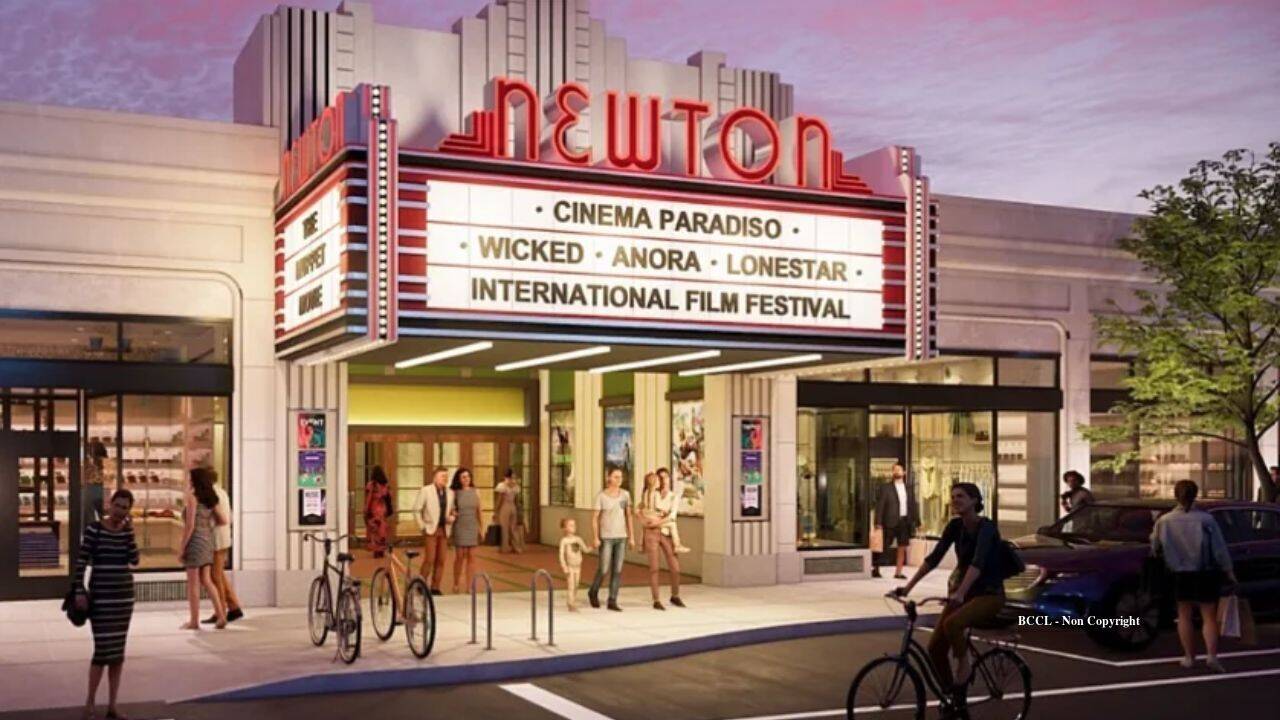
A historic Massachusetts cinema just landed a $10 million philanthropic gift, pushing its $23 million restoration campaign from a distant dream into an actionable construction reality. While press releases celebrate the generosity of deep-pocketed donors, the real story lies in the brutal economics of modern theatrical exhibition. Saving a century-old movie palace requires far more than patching plaster and upgrading projectors. It demands an aggressive business model overhaul to survive in an era where streaming platforms and rising operational costs routinely bankrupt independent venues.
The gift arrives at a critical inflection point for regional arts institutions across New England. Across the Commonwealth, historic single-screen and small-multiplex theaters face a binary choice: secure massive capital injections to reinvent themselves as multi-use cultural hubs, or succumb to deferred maintenance and real estate developers. When a capital campaign reaches the $23 million threshold, the money rarely goes toward mere cosmetic nostalgia. Instead, it funds structural life support—modernizing electrical grids, installing compliant fire suppression systems, overhauling HVAC infrastructure, and carving out revenue-generating hospitality spaces that subsidize the losing proposition of showing films.
The Brutal Math of Historic Theater Restorations
Anyone who has spent decades tracking theatrical exhibition knows a simple, uncomfortable truth. Ticket sales do not keep historic theaters alive.
In the traditional exhibition model, film distributors claim the lion's share of box office revenue during a movie's opening weeks, often taking between 50 and 65 percent of gross ticket receipts. For an independent or nonprofit cinema operating out of a historic building, the remaining fraction barely covers basic utilities, staffing, and insurance. When you add the specialized maintenance required for a 1920s or 1930s structure—ornate plasterwork, aging masonry, non-standard sightlines, and obsolete plumbing—the math breaks down entirely.
Consider a hypothetical example to see how this plays out on a balance sheet. Imagine a 600-seat historic theater selling 300 tickets at $14 each for a Friday night screening. Gross revenue hits $4,200. After the distributor takes half, the theater retains $2,100. Subtract nightly labor, credit card processing fees, heating or cooling a massive auditorium, and routine upkeep, and the house might walk away with a few hundred dollars in net margin. That tiny surplus evaporates the moment a boiler fails or a roof leak threatens interior ornamentation.
This financial reality explains why a $23 million price tag is the baseline entry fee for survival rather than an extravagance. Modernizing a legacy cinema in Massachusetts involves navigating strict state building codes, Americans with Disabilities Act compliance mandates, and historic preservation guidelines. Installing an elevator to reach a balcony level, widening aisles to meet modern safety standards, and replacing asbestos-wrapped pipes routinely consume half of a restoration budget before a single seat is upholstered or a sound system is calibrated.
Why Philanthropy Steps In Where Commercial Capital Flees
Commercial banks do not finance historic cinema restorations. Private equity firms avoid them entirely. From a strictly return-on-investment perspective, pouring $23 million into a single entertainment venue in a mid-sized Massachusetts market makes zero sense. The payback period on construction debt would stretch beyond the lifespan of the equipment installed.
Consequently, these projects rely almost exclusively on philanthropic capital stacks—a mix of anchor gifts from wealthy individuals, private family foundations, state historic tax credits, and municipal grants. A $10 million gift acts as a psychological and financial catalyst. In nonprofit fundraising, donors rarely want to be the first to write a seven-figure check for a project that might stall halfway through demolition. An eight-figure commitment de-risks the campaign for smaller donors, signaling that the project has crossed the threshold of inevitability.
Yet heavy reliance on mega-donors introduces its own set of structural vulnerabilities. When one or two benefactors underwrite nearly half of a $23 million restoration, the institution risks becoming tethered to the tastes and longevity of a tiny circle of patrons. Furthermore, capital campaigns often suffer from a dangerous blind spot: donors love funding bricks, mortar, and marquee lights, but they rarely endow the operational budgets required to run the building once the ribbon is cut.
The Multi-Use Survival Blueprint
To justify a $23 million investment, the restored Massachusetts cinema cannot operate simply as a movie house. The industry standard for surviving historic venues is the hybrid cultural anchor model. Under this framework, cinema programming serves as the brand identity, while higher-margin activities pay the bills.
Successful restorations across New England follow a predictable blueprint to diversify revenue:
- Expanded Food and Beverage Operations: Traditional popcorn-and-soda stands yield high percentage margins, but total dollar volume remains low. Renovated venues increasingly build full-service bars, lounges, and café spaces accessible even to patrons not attending a screening. Alcohol sales carry dramatically higher average transaction values and turn a two-hour movie visit into a four-hour evening out.
- Flexible Auditorium Configurations: Fixed, sloped seating limits a room to passive viewing. Modern restorations often incorporate removable seating sections, upgraded theatrical rigging, and concert-grade acoustic treatments. This allows the venue to host touring musicians, comedy acts, podcasters, and community lectures—events where the venue retains a much higher percentage of ticket and merchandise revenue than Hollywood studios allow.
- Private Rentals and Corporate Buyouts: A restored historic auditorium with modern audiovisual capabilities becomes an instant magnet for regional conferences, film festivals, weddings, and corporate events. Charging a flat facility rental fee of several thousand dollars for a Tuesday afternoon corporate summit generates predictable, risk-free cash flow that requires zero marketing spend.
- Educational and Community Programming: Securing ongoing municipal support and foundation grants requires proving broad civic utility. Restored cinemas routinely partner with local school districts for media literacy programs, host sensory-friendly screenings, and offer subsidized space for regional arts nonprofits.
The Hidden Risks of the $23 Million Overhaul
Crossing a major fundraising milestone does not guarantee smooth execution. Construction projects involving century-old buildings in Massachusetts are notorious for budget overruns and schedule delays. Once contractors open up walls behind ornate plaster facades, they routinely discover structural steel corrosion, unmapped electrical conduits, or foundation water intrusion that forces immediate, expensive engineering revisions.
Inflation in commercial construction materials and specialized union labor adds further pressure. A budget drafted two years ago at $23 million can easily swell to $26 million or $27 million before the certificate of occupancy is signed. If the organization exhausts its $10 million gift and matching funds just to cover structural surprises, it risks opening the doors with a depleted cash reserve—the exact scenario that triggers operational crises within the first twenty-four months.
There is also the programming trap. Reopening a pristine, multimillion-dollar venue creates immense pressure to fill seats every night. Independent cinemas often struggle to balance art-house integrity with commercial necessity. Booking obscure foreign retrospectives or local documentaries fulfills a cultural mission, yet empty seats do not buy drinks at the new lobby bar. Conversely, chasing mainstream studio blockbusters puts the historic theater in direct competition with suburban multiplexes equipped with recliner seating and aggressive subscription passes.
What Happens to the Surrounding Downtown
Municipal leaders and state economic development agencies back these projects not out of love for cinema, but because of the multiplier effect on surrounding commercial districts. A dark, shuttered theater on a Main Street acts as an economic dead zone, depressing foot traffic after 5:00 PM and driving down adjacent retail property values.
When a restored cinema brings 500 people downtown on a rainy Thursday night, nearby restaurants, pubs, and boutiques capture immediate spillover spending. Economic impact studies conducted across similar New England downtown revitalizations consistently show that every dollar spent on a theater ticket generates between two and three dollars in ancillary local spending on dining, parking, and retail. For Massachusetts towns competing to attract remote workers and young families away from the Boston metro core, a vibrant, anchor arts venue serves as essential civic infrastructure.
The Operational Reality After the Ribbon Cutting
The true test of this $23 million investment will not happen on opening night when the marquee lights flash on for the cameras. It will happen three years later, on a quiet Tuesday in February, when the novelty of the restoration has faded and the reality of facility management sets in.
Sustaining a restored palace requires disciplined executive leadership that treats the venue with the rigor of a hospitality enterprise rather than a hobbyist film society. It requires relentless donor cultivation to build an operational endowment alongside the capital fund. Most of all, it demands programming agility—knowing when to screen a 35mm classic, when to book a touring indie band, and when to rent the hall to a local biotech firm.
The $10 million gift proves that deep-pocketed believers are willing to bet on the survival of communal cinema in Massachusetts. Now comes the harder part: proving that a century-old business model, rebuilt with modern concrete and steel, can actually pay its own way once the applause stops.


