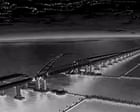
Military logistics depend on throughput capacity, redundancy, and repair velocity. When Ukrainian forces strike a primary transit artery connecting mainland Russia to occupied Crimea, the strategic impact extends far beyond the immediate structural damage to concrete and steel. Rendering a bridge unusable forces an immediate reconfiguration of the entire theater supply chain, shifting mass transit from high-efficiency rail and highway corridors onto vulnerable maritime routes, longer overland detours, and degraded secondary roads.
Standard media coverage treats bridge strikes as isolated tactical events, focusing on immediate visual damage and official statements regarding traffic closures. This perspective misses the systemic cascade. To evaluate the actual operational cost of losing a primary Crimean transit link, analysts must examine three distinct variables: tonnage displacement, transit time expansion, and air defense saturation.
The Mechanics of Chokepoint Degradation
A supply network functions like a hydraulic system; blocking a primary pipe increases pressure across all remaining channels. The primary arteries linking Russian territory to the Crimean peninsula—specifically the Kerch Strait Bridge and the overland bridges spanning the Chongar and Henichesk straits—serve as the foundational nodes for sustaining southern military operations.
When precision strikes—typically executed via long-range air-launched cruise missiles such as Storm Shadow or SCALP-EG, or ballistic systems like ATACMS—compromise the load-bearing spans of these structures, the defender faces an immediate binary problem. Passenger vehicles can often be rerouted onto temporary pontoon structures or low-capacity ferries. Heavy military logistics cannot. Main battle tanks, self-propelled artillery, and bulk ammunition pallets require high-tonnage rail lines or reinforced highway decking.
The degradation of a single bridge triggers four immediate operational penalties:
- Modal Shift Friction: Moving cargo from continuous rail transit to roll-on/roll-off ferries or heavy flatbed trucks introduces loading and unloading delays at every transfer point. Each transfer multiplies labor requirements and increases the window of vulnerability to overhead reconnaissance.
- Route Elongation: Diverting traffic from the Chongar corridor to the western Armiansk isthmus, or forcing reliance on the coastal highway through occupied Melitopol and Mariupol, adds hundreds of kilometers to round-trip transit times. This increases fuel consumption per ton of delivered cargo and accelerates mechanical wear on transport fleets.
- Convoy Compression: Secondary routes lack the lane width and structural reinforcement of primary highways. Heavy vehicles must travel at reduced speeds with greater spacing to prevent roadbed collapse, compressing total daily throughput.
- Maintenance Deficits: Rolling stock and heavy transport trucks operating beyond their designed duty cycles experience higher failure rates. Without adjacent rail yards and heavy repair depots, minor mechanical breakdowns stall entire convoys.
The Three-Tiered Supply Chain Impact
Evaluating the loss of a bridge requires separating immediate tactical disruptions from long-term operational attrition.
Tier 1 Immediate Interdiction (0 to 72 Hours)
During the first three days following a strike, the primary effect is command paralysis and inventory freeze. Local commanders halt inbound traffic to assess structural integrity and clear debris. Ammunition and fuel already inside Crimea must be rationed immediately, as replenishment timelines become uncertain. Repair crews deploy to evaluate whether damage is restricted to the road surface—which can be patched with steel plates within days—or extends to the underlying piers and girders, which requires specialized heavy cranes and months of reconstruction.
Tier 2 Rerouting and Bottleneck Formation (Days 4 to 30)
Once engineers confirm a bridge is unusable for heavy transport, logistics officers execute contingency routing. Traffic concentrates at bottleneck nodes such as ferry terminals or narrow land corridors. At this stage, the defender's vulnerability to secondary strikes peaks. Static concentrations of trucks waiting for ferry crossings or navigating narrow causeways present high-value targets for follow-on strikes. The cost of moving a single ton of supplies rises sharply due to increased fuel burn, extended driver hours, and the diversion of engineering units from frontline fortification work to rear-area road maintenance.
Tier 3 Systemic Attrition (Beyond 30 Days)
If a primary bridge remains out of service for more than a month, the cumulative deficit begins to degrade frontline combat power. Artillery units experience reduced daily shell allocations. Armored formations face delays in receiving replacement engines and transmissions. The defender is forced to establish decentralized forward supply dumps to mitigate the risk of single-point failures, which in turn requires more personnel to guard, manage, and distribute smaller batches of inventory.
The Economic and Tactical Cost Function of Repair
Rebuilding a damaged bridge under active threat conditions represents a negative-sum resource drain. The defender cannot simply allocate civilian construction crews and standard materials; the operation demands specialized military engineering battalions, heavy lift equipment, and continuous air defense coverage.
Every surface-to-air missile battery positioned to protect a bridge repair site or a temporary pontoon crossing is a battery removed from the front lines or strategic rear installations. This creates an asymmetric exchange ratio. The attacker expends a limited number of precision munitions to force the defender into a continuous, high-cost defensive posture. Even if the defender successfully intercepts subsequent waves of missiles, the expenditure of expensive interceptor rockets to protect static infrastructure represents an unsustainable financial and inventory drain.
Furthermore, temporary engineering solutions carry inherent physical limitations. Pontoon bridges are highly sensitive to weather conditions, water currents, and ice formation. They impose strict weight limits and speed restrictions, reducing throughput to a fraction of a permanent structure's capacity. Unlike reinforced concrete spans, floating bridges can be severed by a single near-miss from a standard artillery shell or a naval drone, requiring constant replacement of damaged sections.
Analytical Limitations and Fog of War Constraints
Assessing the true state of a damaged bridge from open-source reporting involves significant uncertainty. Satellite imagery provides clear visual evidence of surface scarring, scorched decking, or collapsed spans, yet it cannot reliably detect internal structural fatigue, micro-fractures in concrete pilings, or compromised steel reinforcement cables.
Official statements from both belligerents routinely distort operational reality. The attacking force has an incentive to declare a bridge completely destroyed to maximize psychological impact and force premature logistical panic. Conversely, the defending force frequently claims rapid repair timelines and uninterrupted traffic flow to project resilience, often opening a single lane to light civilian vehicles while quietly prohibiting heavy military transport. Analysts must therefore rely on indirect indicators—such as shifts in commercial shipping patterns, changes in railway timetable data, and the emergence of new supply depots along secondary highways—to verify whether a bridge is genuinely unusable for military purposes.
Strategic Execution for Sustained Interdiction
To maximize the operational value of infrastructure strikes, military planners must treat bridge interdiction as a continuous campaign rather than a one-off event. Striking a bridge once creates a temporary delay; striking the repair crews, the alternative ferry terminals, and the congested reroute corridors transforms a temporary delay into a permanent logistical failure.
Future targeting priorities should focus on synchronizing strikes against primary fixed bridges with simultaneous interdiction of maritime ferry assets and rail junctions. By denying the defender the ability to shift cargo between road, rail, and sea, the attacker collapses the redundancy of the theater logistics network, forcing frontline units to fight with depleting reserves and severed lines of communication.