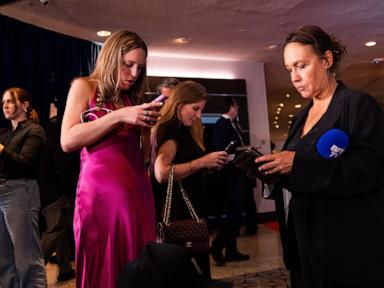
The proliferation of conspiracy theories following highly documented, real-time events is not a failure of reporting but a predictable outcome of the Information-Attention Paradox. When a high-stakes event—such as a shooting at a high-profile gathering—occurs under the gaze of a professional press corps, the volume of immediate, verifiable data should, theoretically, preclude the formation of alternative narratives. However, the structural velocity of digital platforms creates an "Information Vacuum" in the seconds between an event occurring and the first verified report. Within this window, the absence of official detail is filled by speculative synthesis, which sets the cognitive anchor for all subsequent information processing.
The Triad of Narrative Destabilization
To understand why real-time journalism fails to suppress misinformation, we must categorize the mechanics of narrative destabilization into three distinct pillars:
- The Temporal Gap (The Zero-Hour Window): The period between the kinetic event and the first verified journalistic output. In a digital economy, this gap is the primary breeding ground for "First-Mover Narratives" that leverage speed over accuracy.
- The Source-Authority Decay: A sociological shift where centralized media entities are viewed as curated actors rather than objective observers. This creates a "Trust Deficit" where professional proximity to an event is interpreted as complicity rather than evidence of accuracy.
- Algorithmic Feedback Loops: The technical architecture of discovery engines that prioritizes high-engagement (often high-outrage or high-novelty) content over low-engagement (factual, dry) verification.
The Anatomy of the Zero-Hour Window
In the specific context of the White House Correspondents' Association (WHCA) events or similar high-security environments, the presence of hundreds of journalists does not prevent misinformation; it inadvertently fuels it. This occurs through a phenomenon known as Fractured Witnessing.
When a crisis unfolds, different observers capture different segments of the event. A reporter in the foyer sees a crowd running; a reporter in the ballroom hears a muffled sound; a bystander outside sees security personnel drawing weapons. Each individual "node" provides a factual but incomplete data point. When these nodes are published to social media in real-time, they lack a unifying context.
The "Conspiracy Entrepreneur" then aggregates these fractured data points to build a cohesive, albeit false, narrative. They utilize the Coherence Necessity of the human brain—the biological drive to resolve ambiguity—to link unrelated occurrences. For example, a security guard tripping becomes "a tactical retreat," or a muffled sound becomes "a secondary explosive device." Because these claims are built upon fragments of real footage or reports, they possess a "veneer of veracity" that makes them harder to debunk than pure fabrications.
The Mathematical Impossibility of Real-Time Debunking
The spread of crisis-related conspiracy theories can be modeled through the Truth-to-Reach Ratio. Verified reporting requires a verification cycle ($V$) involving multi-source confirmation, legal vetting, and editorial oversight. Misinformation requires only an imagination cycle ($I$), which approaches zero.
$$R_m = \frac{E \times S}{V_c}$$
Where:
- $R_m$ is the rate of misinformation spread.
- $E$ is the Emotional Valence (outrage, fear, or shock).
- $S$ is the Simplicity of the Narrative (easily digestible vs. complex truth).
- $V_c$ is the Verification Constraint (the time taken to check facts).
Because $V_c$ for professional journalists is high (minutes to hours) and $V_c$ for bad actors is zero, the misinformation narrative will always achieve a broader "Initial Reach" than the verified truth. Once the Initial Reach is established, the Continued Influence Effect ensures that even after a claim is retracted or debunked, the initial false premise remains influential in the subject’s mental model.
Institutional Blind Spots in Crisis Communication
Standard journalistic and governmental responses to crisis misinformation often rely on "The Deficit Model of Communication." This model assumes that people believe conspiracies because they lack information. In reality, modern conspiracy theorists often suffer from an Information Overload, leading them to seek "hidden patterns" as a way to regain a sense of agency.
The primary institutional failure lies in the Static Correction Strategy. When a news outlet issues a correction or a "Fact Check," it usually targets the specific claim (e.g., "There was no second shooter"). This is ineffective because it fails to address the underlying narrative (e.g., "The event was a staged distraction").
Structural Bottlenecks in Fact Verification
The bottleneck in modern reporting is not the lack of data, but the Verification Throughput. During a live shooting or similar crisis, the volume of incoming digital signals—videos, tweets, live streams—exceeds the capacity of newsrooms to process them.
- Signal Noise: For every 1 frame of useful video, there are 10,000 frames of redundant or misleading footage.
- Verification Latency: Confirming the identity of a suspect or the nature of a weapon requires coordination with law enforcement, who operate on a "Need-to-Know" protocol, often lagging behind the public's "Want-to-Know" demand.
- The Aggregation Trap: News outlets often aggregate social media posts to show "what people are saying." This elevates fringe theories to the mainstream under the guise of "reporting the conversation," inadvertently validating the existence of a "controversy" where there is only a fabrication.
The Cognitive Architecture of the "Staged Event" Allegation
The most persistent conspiracy theory in modern American crises is the "Crisis Actor" or "Staged Event" trope. This narrative is structurally resilient because it is unfalsifiable.
If there is a high volume of footage, the conspiracy theorist claims the event was over-produced. If there is a low volume of footage, they claim the event was covered up. If the victims are emotional, they are "acting"; if they are stoic, they are "repressed or complicit." This creates a logical "Deadlock" where every piece of evidence—regardless of its nature—is repurposed to support the central thesis.
This persistence is driven by Identity-Protective Cognition. For many, the conspiracy theory is not a logical conclusion but a social signal. Believing the theory confirms their membership in an "in-the-know" group and reinforces their distrust of perceived enemies (the government, the media, or political rivals).
Technical Vulnerabilities in Information Distribution
The architecture of social platforms creates a Visibility Asymmetry. Algorithms are designed to maximize time-on-site. High-tension, high-uncertainty content (conspiracy theories) generates significantly more interaction—comments, shares, debates—than a settled fact.
- The Engagement Tax: A factual headline like "Police Confirm Single Suspect" is socially "expensive" to share because it offers no new social capital.
- The Novelty Premium: A headline like "Security Footage Shows Third Person Entering the Room" is socially "cheap" because it provides the sharer with the status of a "truth-seeker" or "first-mover."
Consequently, the truth is effectively "taxed" by the platform's focus on engagement, while the conspiracy is "subsidized."
Strategic Shift: Moving from Debunking to Pre-bunking
The current methodology of addressing misinformation is reactive. To achieve narrative stability, institutional actors must move toward a Proactive Information Architecture.
Instead of waiting for a conspiracy to take root, organizations must employ "Pre-bunking"—explaining the mechanics of how a conspiracy will likely be formed before it happens. This involves:
- Predictive Narrative Modeling: Identifying the standard tropes (e.g., "the second shooter," "the suspicious security guard") that appear in 90% of these incidents.
- Transparency of Process: Rather than just reporting the "What," newsrooms must report the "How" and the "Why Not." They must explain why certain information is being withheld (e.g., "We are not naming the suspect until X occurs to prevent Y") to minimize the appearance of a "cover-up."
- The Direct-to-Source Feed: In a crisis, the delay between a source (the police/witness) and the distributor (the news) is the danger zone. Direct, unedited, but verified feeds of raw data can bypass the "curation" criticism, though they carry their own risks of misinterpretation.
The Fragility of the Truth in a High-Velocity Environment
The fundamental reality is that truth is a "Slow Asset" in a "Fast Market." In the context of a high-profile event like a correspondents' dinner, the presence of the media actually increases the Surface Area for Distortion. Every camera angle is a potential source of a "suspicious glint" or a "hidden signal."
The goal of the strategic analyst or the sophisticated news consumer should not be to "solve" the misinformation problem—it is a byproduct of our digital infrastructure. Instead, the focus must be on Cognitive Hardening. This requires a shift in how we value speed versus accuracy.
The final strategic move for organizations operating in this space is to abandon the race for the "First Post" and instead compete for the "Final Record." This involves a pivot toward high-context, long-form verification that specifically addresses the structural gaps used by bad actors. By mapping the specific "logic leaps" found in initial speculative threads, journalists can systematically dismantle the connective tissue of a conspiracy rather than just disputing its individual facts.
Establishing a "Red Team" within newsrooms to anticipate how a story could be weaponized by bad actors before it is even published is the only way to mitigate the damage of the Zero-Hour Window. Verification is no longer just about the facts of the story; it is about the security of the narrative itself.